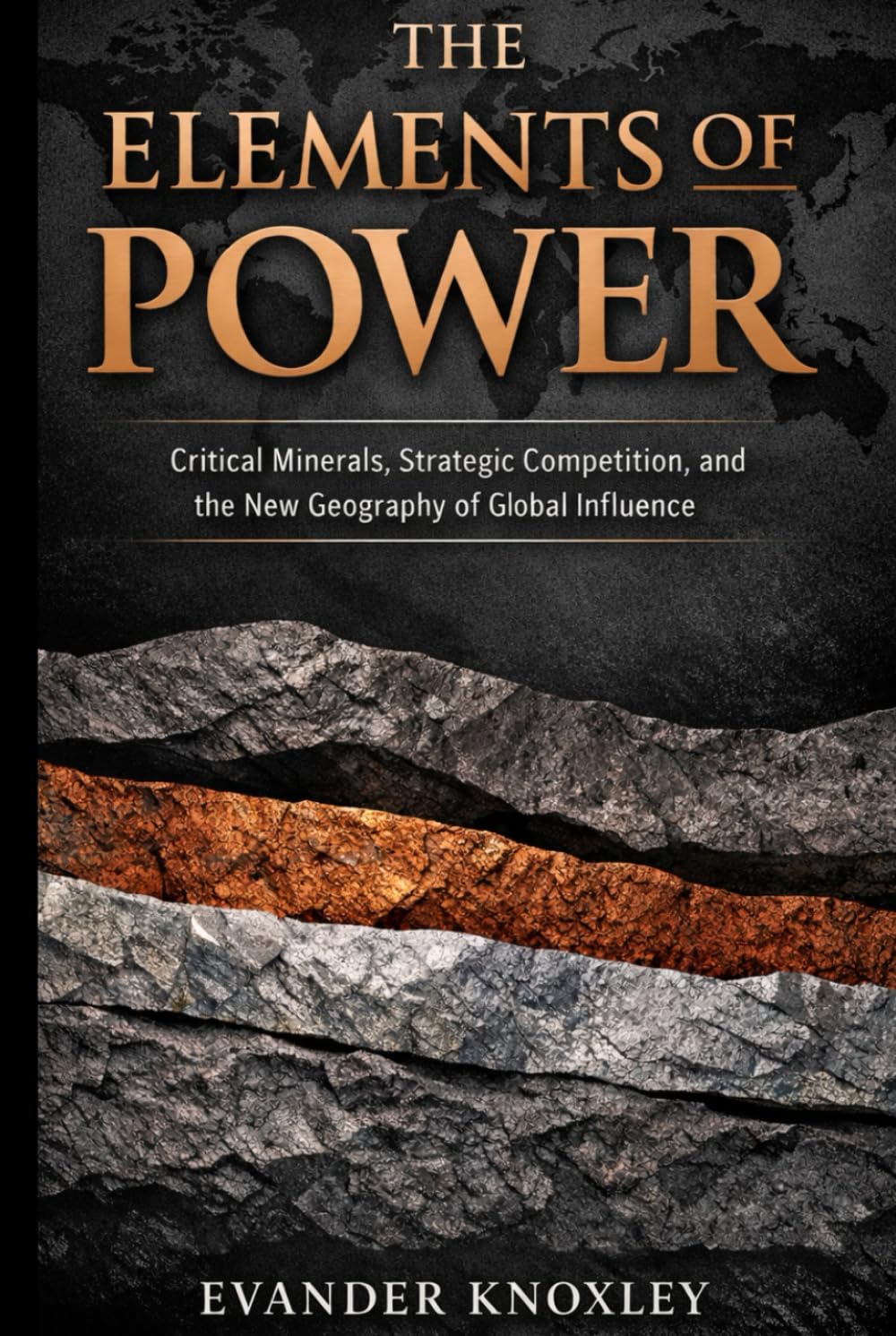
THE ELEMENTS OF POWER: Critical Minerals, Strategic Competition, and the New Geography of Global Influence (The Geopolitics of Critical Materials)
$24.99
by Evander Knoxley



Advanced economies depend on materials most citizens cannot name. That dependence is now a strategic liability. Lithium, rare earth elements, cobalt, and graphite enable everything from smartphones to stealth aircraft. But their supply chains concentrate in a handful of countries, creating structural vulnerabilities that traditional geopolitical frameworks fail to explain and conventional policy responses struggle to address. The Elements of Power provides the analytical foundation for understanding why physical materials extracted from the earth's crust now shape relations among the world's most powerful states and why this dynamic will define strategic competition for decades. In this book, you will discover: Why supply concentration creates strategic vulnerability distinct from simple scarcity and how states respond through diversification, stockpiling, and industrial policy How China achieved processing dominance in rare earths, lithium, and critical minerals despite not holding majority geological endowments The mechanisms through which mineral dependencies affect defense systems, energy transition pathways, and alliance politics simultaneously Why the gap between deposit location and production control matters more than resource ownership itself What trajectories are plausible given material constraints, technological change, and observable state behavior The analysis maintains symmetrical treatment of all actors, explaining strategic logic without presuming moral superiority or inevitable conflict. It distinguishes carefully between empirical evidence and contested claims and acknowledges where projections involve genuine uncertainty. This book is for: Policy professionals, graduate students in international relations and security studies, strategic analysts, and serious readers who need rigorous frameworks for understanding mineral geopolitics beyond headlines and investment narratives. The Elements of Power is Book 2 of The Geopolitics of Critical Materials Series by Evander Knoxley. Begin with The Mineral Map for an accessible introduction to the global resource landscape, or read this book as a standalone analytical framework.