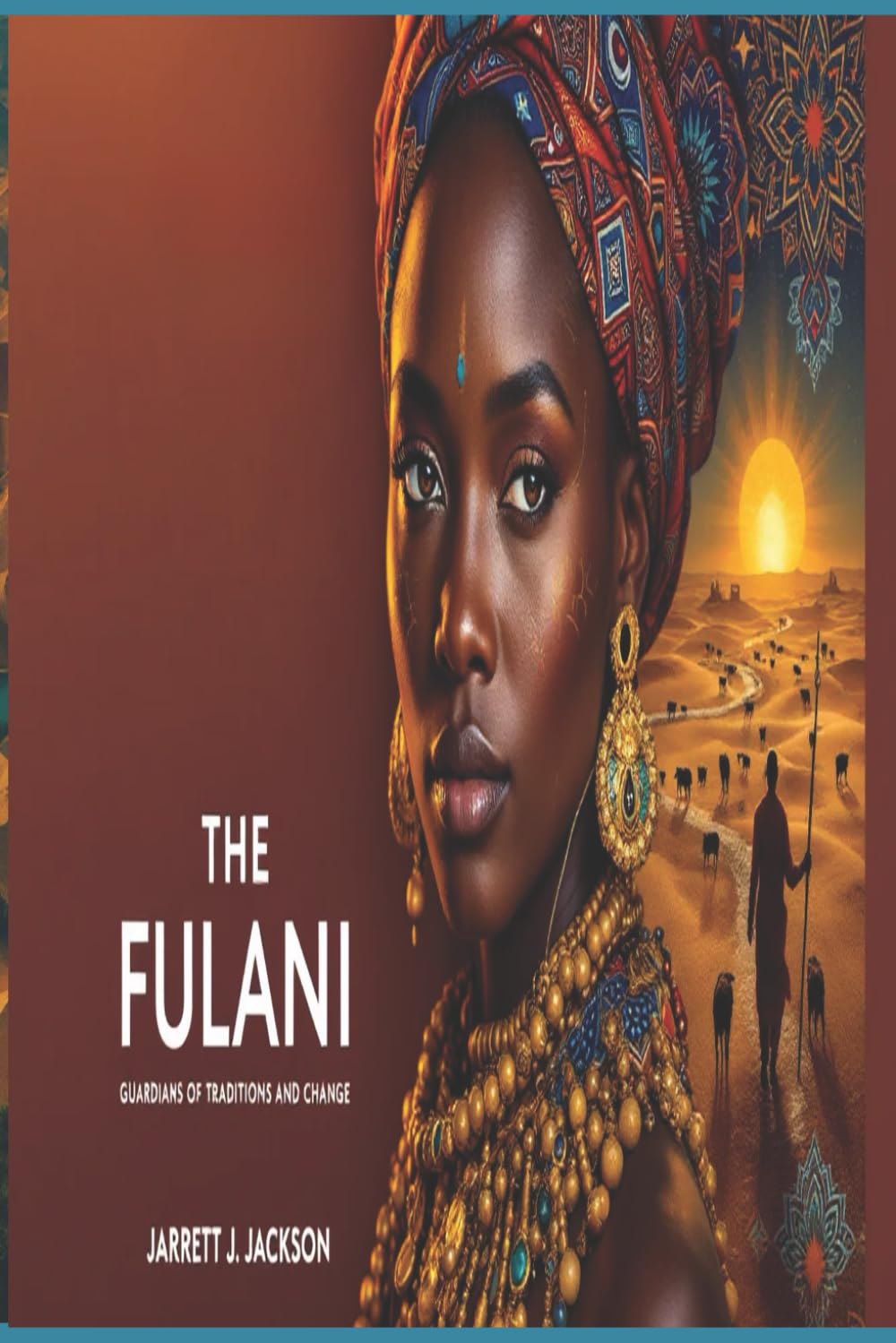



The Fulani people, one of West Africa's most significant and widespread ethnic groups, boast a vibrant cultural heritage, deeply ingrained traditions, and a dynamic historical narrative. With over 20 million members, the Fulani predominantly reside in countries such as Nigeria, Senegal, Guinea, Mali, and Cameroon, but their influence stretches across the Sahel region and into Northern Africa. Traditionally nomadic herders, the Fulani's way of life has long centered around cattle, which play a vital role in their social structure, economic practices, and cultural identity. This book delves into the enduring legacy of the Fulani people, exploring how their customs, born out of the necessity of nomadic existence, have survived and evolved over centuries. Despite the pressures of modernization and the shift to more stationary lifestyles, the Fulani uphold traditions that remain deeply connected to their pastoral roots. Their rich cultural practices, spiritual beliefs, and language—preserved through generations via oral tradition—bind their diverse communities together, even as they span multiple nations and regions. Through a comprehensive historical lens, this volume traces the Fulani's migratory routes, their early interactions with neighboring groups, and their pivotal role in trans-Saharan trade and the spread of Islam across West Africa. Their ability to navigate an ever-changing landscape, marked by environmental challenges, political shifts, and social transformations, highlights the Fulani's resilience and adaptability. The Fulani have demonstrated an enduring spirit by modifying their practices while maintaining core cultural values, allowing them to flourish across centuries. This work offers a nuanced portrayal of the Fulani, blending historical analysis with a deep exploration of their contemporary realities. It examines the complexities of the Fulani's identity, from their nomadic origins to their current challenges. It provides rich insights into the ongoing struggle to preserve their cultural heritage in a rapidly changing world. By tracing the Fulani's migrations and exploring the cultural traditions that have defined them throughout their journeys, the book provides a layered understanding of their identity and role in shaping the broader African civilization. Beyond being a unique ethnic group, the Fulani have played an integral role in the history and culture of West Africa, influencing not only trade, religion, and politics but also the social fabric of the continent. Aimed at scholars and general readers, this book offers an in-depth look at the Fulani's historical and cultural evolution, underscoring their enduring impact on African society and the world. It is a scholarly tribute to the Fulani people's remarkable journey and continued efforts to preserve and pass on their rich legacy to future generations. Key Features: A detailed history of the Fulani people, from their migratory roots to modern-day challenges. - An exploration of the Fulani's unique cultural traditions, including their pastoral way of life and spiritual practices. - Insights into the Fulani's role in trans-Saharan trade and the spread of Islam across West Africa. - This is a reflection of the Fulani's resilience and adaptability to environmental, political, and social changes. - A multidisciplinary approach that will appeal to both academic scholars and general readers interested in African history and culture. This book is essential for anyone seeking to understand the complexities and enduring significance of one of Africa's most influential ethnic groups.