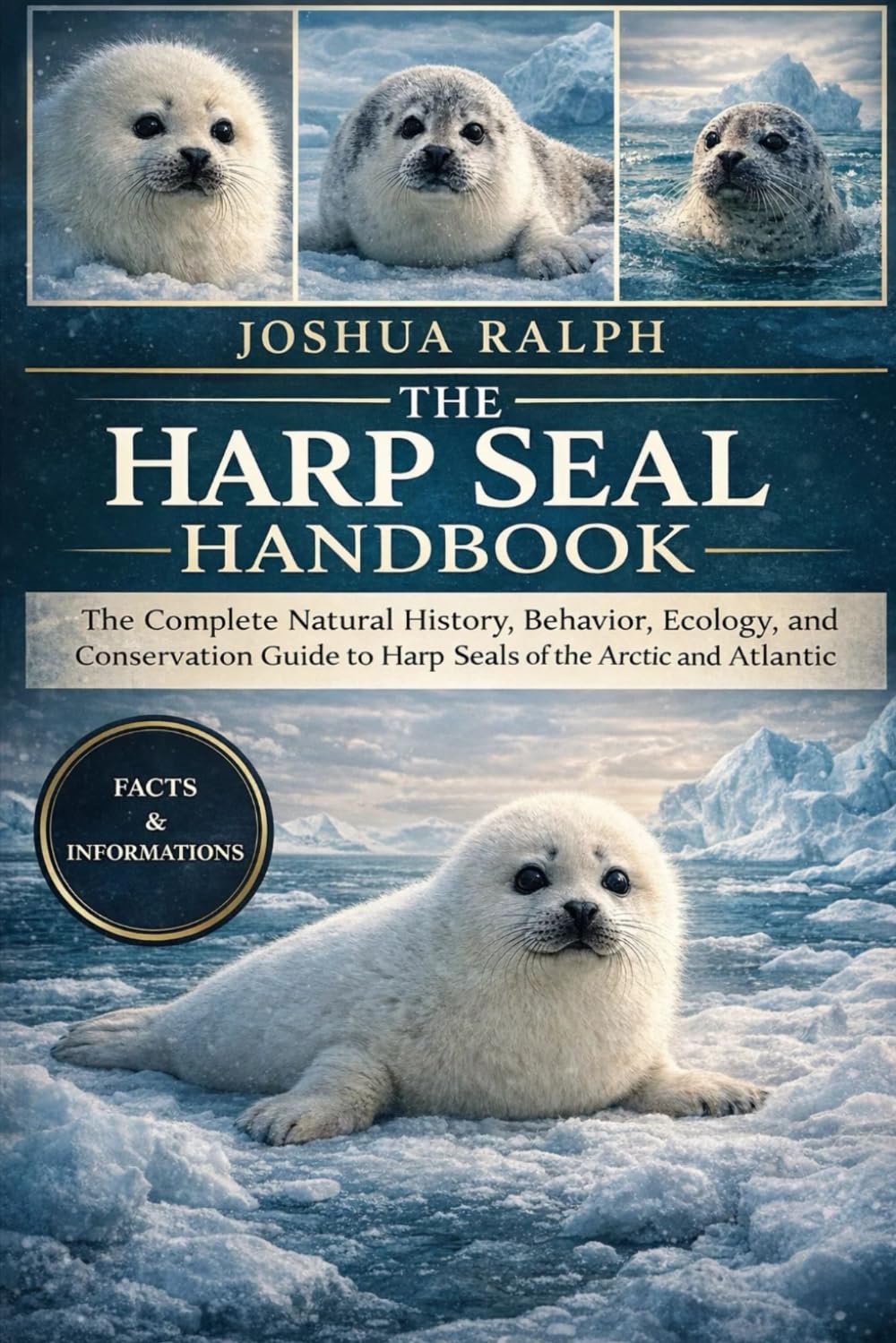
THE HARP SEAL HANDBOOK: The Complete Natural History, Behavior, Ecology, and Conservation Guide to Harp Seals of the Arctic and North Atlantic
$11.60
by JOSHUA RALPH



Discover the extraordinary world of the harp seal, one of the most iconic and ice-dependent marine mammals of the North Atlantic and Arctic. This comprehensive and scientifically grounded guide takes readers deep into the life of a species shaped by frozen seas, seasonal migrations, and one of the most challenging environments on Earth. From the moment white-coated pups are born on drifting pack ice to the powerful underwater journeys of adults hunting in dark, frigid waters, this book explores every stage of the harp seal’s life. You will gain a clear understanding of their anatomy, diving physiology, feeding ecology, social behavior, communication systems, and remarkable reproductive strategies. Detailed chapters explain how harp seals survive extreme cold, navigate vast ocean distances, and depend on sea ice for breeding and molting. Beyond biology, this guide places harp seals within the larger Arctic ecosystem. Learn how they influence fish populations, support apex predators, and contribute to nutrient cycling in polar marine food webs. The book also examines the long history of human interaction with harp seals, including Indigenous traditions, the development of commercial sealing, and the evolution of global public perspectives. Modern conservation challenges are explored in depth, with a strong focus on climate change, shrinking sea ice, shifting prey distributions, pollution, and increasing human activity in northern oceans. Readers will discover how scientists use satellite tracking, aerial surveys, drones, acoustic monitoring, and climate modeling to study harp seals and predict their future in a warming world. Written in a clear, professional, and educational style, this book is ideal for students, wildlife enthusiasts, educators, and anyone interested in marine biology, Arctic ecosystems, or conservation science. Whether you are new to marine mammal studies or seeking an in-depth reference, this guide offers a complete and accessible exploration of harp seals—animals whose future reflects the health of the polar seas themselves.