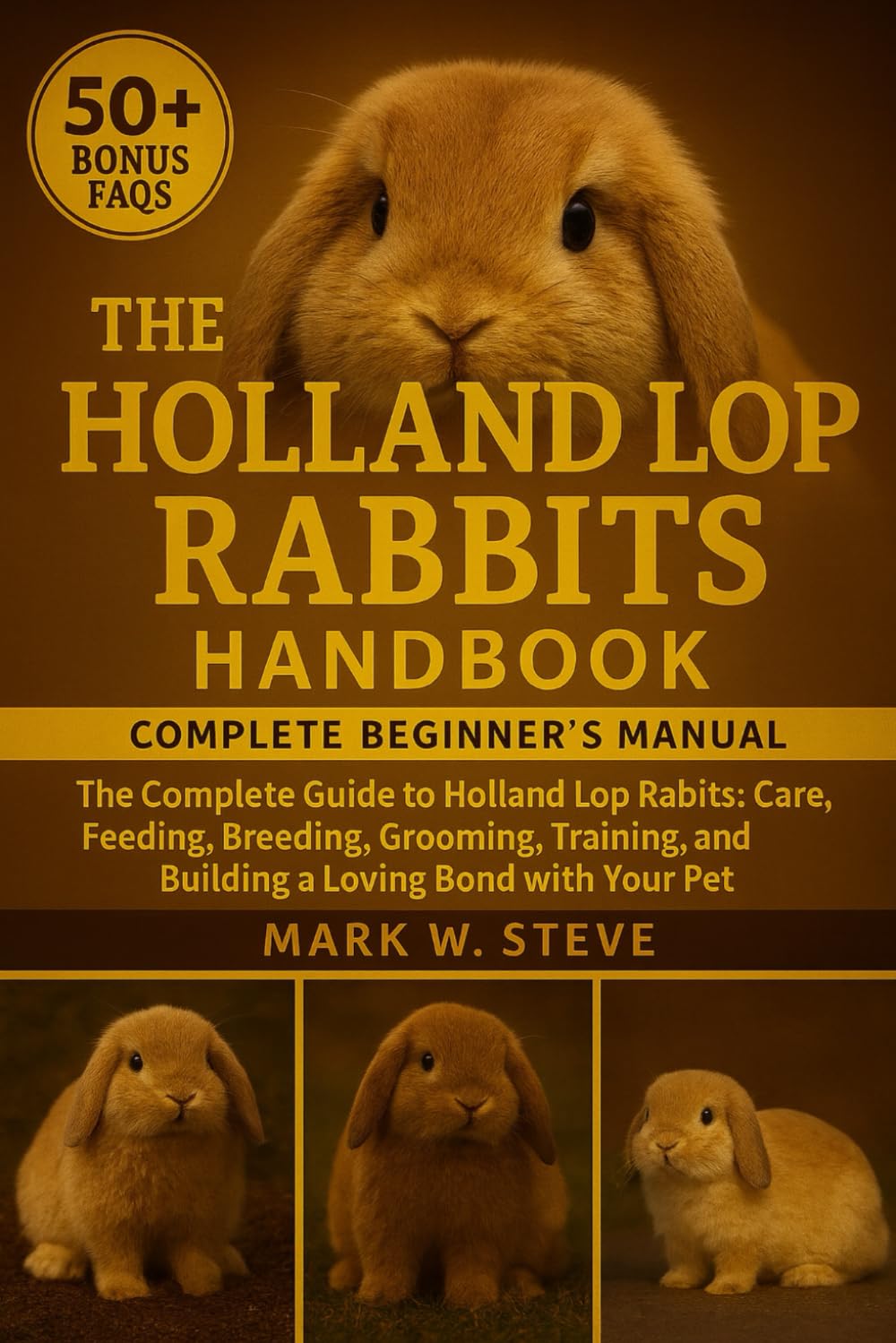
THE HOLLAND LOP RABBITS HANDBOOK: The Complete Guide to Holland Lop Rabbits: Care, Feeding, Breeding, Grooming, Training, and Building a Loving Bond
$14.99
by MARK W STEVE



Introduction to Holland Lop Rabbits Origins and History of the Breed The Holland Lop is one of the smallest and most beloved rabbit breeds in the world, instantly recognizable for its compact body, lopped ears, and charming personality. The story of the Holland Lop begins in the Netherlands during the 1950s, with the efforts of a Dutch breeder named Adriann de Cock. De Cock was fascinated by the French Lop, a large breed known for its massive size and characteristic lopped ears. However, he envisioned a smaller rabbit that retained the endearing features of the lop but was more manageable in size for everyday families. To achieve this, he began crossing French Lops with Netherland Dwarfs, hoping to create a small-bodied rabbit with lop ears. The first generations, however, were not successful—many retained upright ears or produced offspring with structural weaknesses. Determined, de Cock continued refining his breeding program by introducing English Lops, known for their ear carriage, into the mix. After years of persistence and careful selection, he succeeded in creating a rabbit that was not only small and compact but also had the ideal lopped ears, full crown, and sturdy body type. By the mid-1960s, the Holland Lop was officially established as a distinct breed in the Netherlands. It quickly gained popularity across Europe due to its size, appealing appearance, and docile temperament. The breed’s compact weight range of about 2 to 4 pounds made it both adorable and practical for families and hobbyists alike. Recognition by ARBA and Global Clubs After its establishment in the Netherlands, the Holland Lop made its way to the United States in the early 1970s. American breeders recognized its potential not only as a show rabbit but also as a delightful companion animal. Efforts were made to standardize the breed according to ARBA guidelines, focusing on type, crown placement, ear carriage, and overall balance. In 1979, the American Rabbit Breeders Association officially recognized the Holland Lop, cementing its status as a major breed within the rabbit fancy. Once accepted, its popularity skyrocketed in the United States, and it quickly became a regular feature at rabbit shows nationwide. Internationally, organizations such as the British Rabbit Council (BRC) also recognized the breed, albeit with some differences in standards compared to ARBA. Today, Holland Lops are shown and bred worldwide, with dedicated specialty clubs and breed associations ensuring their continued refinement and popularity. The Holland Lop Rabbit Specialty Club (HLRSC) in the United States is one of the largest breed-specific clubs under ARBA, boasting thousands of members committed to preserving and promoting the breed. Global clubs across Europe, Asia, and beyond also celebrate the Holland Lop, adapting standards slightly but maintaining the breed’s characteristic appeal. Why They Became One of the Most Popular Pet Rabbits The Holland Lop’s popularity as a pet can be attributed to a combination of its physical charm, manageable size, and endearing temperament. Weighing only around 2 to 4 pounds, they are one of the smallest lop breeds, making them easy to house and handle compared to larger rabbits. Their compact, muscular bodies and wide crowns give them a “bulldog-like” appearance that many find irresistibly cute. The signature lopped ears, often slightly shorter and thicker than those of larger lops, add to their overall appeal. Beyond looks, their temperament is a defining factor in their success as pets. Holland Lops are known for their playful, affectionate, and curious nature. They often bond closely with their owners, enjoying interaction, grooming, and even learning tricks through positive reinforcement. Their intelligence and sociability make them more engaging than some more aloof breeds, and many exhibit behaviors that remind owners of dogs or cats in their level of interaction.