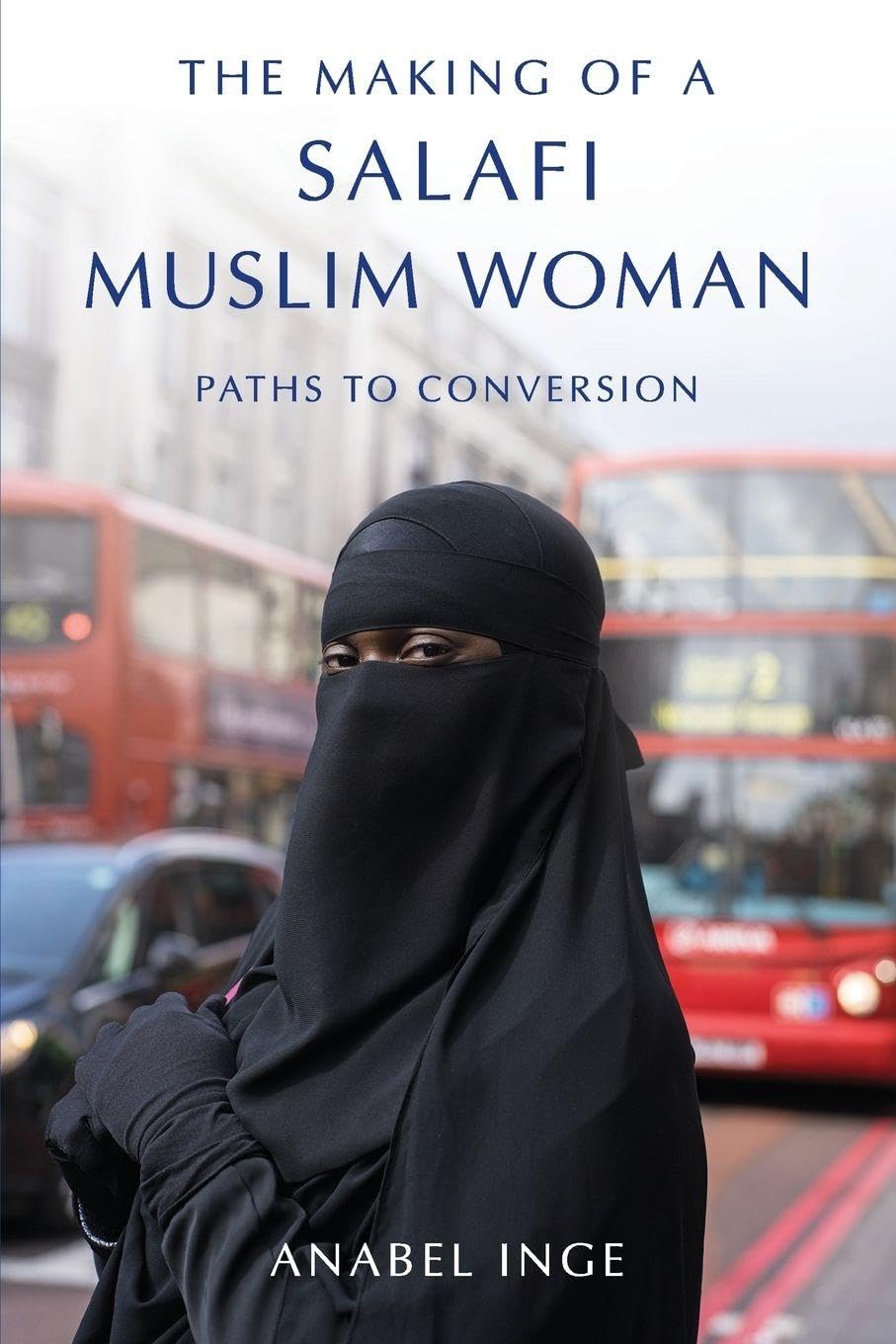



The spread of Salafism--often referred to as "Wahhabism"--in the West has intrigued and alarmed observers since the attacks of 9/11. Many see it as a fundamentalist interpretation of Islam that condones the subjugation of women and fuels Jihadist extremism. This view depicts Salafi women as the hapless victims of a fanatical version of Islam. Yet in Britain, growing numbers of educated women--often converts or from less conservative Muslim backgrounds-are actively choosing to embrace Salafism's literalist beliefs and strict regulations, including heavy veiling, wifely obedience, and seclusion from non-related men. How do these young women reconcile such difficult demands with their desire for university education, fulfilling careers, and suitable husbands? How do their beliefs affect their love lives and other relationships? And why do they become Salafi in the first place? Anabel Inge has gained unprecedented access to Salafi women's groups in the United Kingdom to provide the first in-depth account of their lives. Drawing on more than two years of ethnographic fieldwork in London, she examines why Salafism is attracting so many young Somalis, Afro-Caribbean converts, and others. But she also reveals the personal dilemmas they confront. This ground-breaking, lucid, and richly detailed book will be of vital interest to scholars, policy-makers, journalists, and general readers. "This is an ethnography of the very best kind. Inge is both systematically rigorous and sensitively empathic. We learn to see these women as women, facing the challenges of life in a contemporary western society that is not infrequently hostile-especially to women who are assumed to be either aggressively extremist or browbeaten victims of Islamophobia. These women are neither. Obviously enough, this is a book that should be read by anyone concerned about new religions and/or contemporary Islam. It could also be read with benefit by feminists and by those with an interest in qualitative methodology. But for anyone, it is a damn good read." -- Eileen Barker, Nova Religio "If you want to understand British Islam, you need to read it."--Damian Thompson & Christina Odone, The Spectator "This is an under-researched subject and so any credible information is very welcome."-- Yasmin Alibhai-Brown, the i-newspaper "[A] rich portrait ... Inge found that nearly all of the Salafi women she followed in her research decided to wear the face veil against the wishes - sometimes despite the threats - of family members, who saw it as too extreme, too Arab, too rebellious. Officials often argue that Muslim women are too submissive to challenge extremist views even within their own families. But women who wear a garment that annoys their families, that provokes regular verbal abuse and leads to their being pelted with food in public are something other than submissive." --Azadeh Moaveni, London Review of Books "A uniquely remarkable book nestled in the most cherished humanist tradition of the social sciences. Anabel Inge has written a book that is bound to inform and challenge people's stereotypes about the lives of Salafi women in London. From conversion to religious study circles and match-making, the author navigates a difficult terrain with a penetrating anthropological gaze and careful attention to subtle details. The book is a joy to read."âMadawi Al-Rasheed, author of Muted Modernists: The Struggle over Divine Politics in Saudi Arabia "When is Islamic extremism not extremism? In this wonderfully lucid and scholarly ethnographic study of young Salafi women in London ... Anabel Inge probes what has become a dominant question in British twenty-first-century public policy ... closely observed, nuanced anthropological research over more than two years ... The Making of a Salafi Muslim Woman is in many ways a remarkable, innovative book which deserves a wide readership. It opens up a window on African Muslims, particularly Somalis, who both resemble and differ from the majority of British Muslims." -- Pnina Werbner, Journal of the Royal Anthropological Institute "The first sustained empirical research into this hard-to-reach community. It therefore provides rich everyday granularity rarely seen in this area -- perhaps not since Saba Mahmood's The Politics of Piety in 2014 ... Inge reveals a dynamic and complex picture of Salafism in the UK, which challenges essentialist 'letter-box' views of the community ... [The book] also reads well, making it accessible to experts and novices alike." -- Katherine E. Brown, Irish Theological Quarterly "Dr. Inge's new book is welcome reading ... This is a brave and important study."-- The Catholic Herald " Extremely well-written, thoughtful, well-researched... What this book highlighted, and what I thought was so important about it, is that it focused on the lived experiences of Salafi women... which are very, very different from those of Salafi men. Whether in terms of the culture of the commu