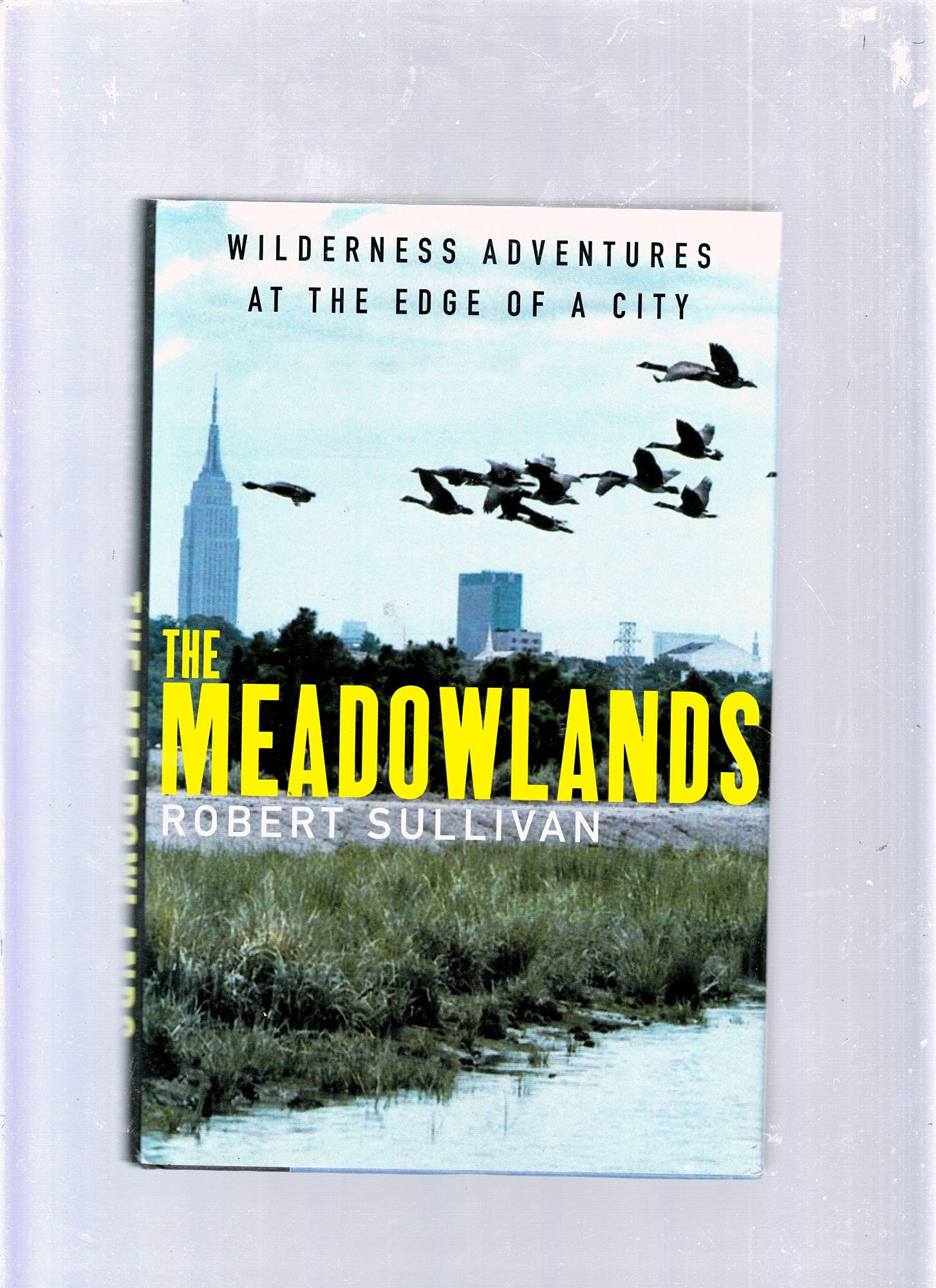



A journey into the swampy area of New Jersey five miles outside of Manhattan--widely considered to among the least attractive locales in the country--describes its memorable characters, corpses, and pollution. 20,000 first printing. "I like to think of the Meadowlands as an undesignated national park," writes Robert Sullivan in his end-of-the-millennium take on Thoreau . In The Meadowlands , Sullivan does his Thoreauvian bean-counting in one of America's most infamous dumping grounds, the huge tract of marshy land just outside New York City that has withstood any and all attempts to subdue it with agriculture, industry, development, and an ever-shifting deluge of flotsam and jetsam. He may just be the first person in a century to willingly explore this fascinating but abused piece of real estate, and his investigation gives new meaning to intrepid reporting. By foot he tramps through the muck, and by canoe he navigates polluted rivers and marshes, noting the variegated species of trash and industrial cast-offs with as much zeal as he observes the surprisingly rich diversity of wildlife. Revealed in these stories is a landscape bursting with nature amid the curious man-made detritus of urban consumption. With only a touch of irony, the author refers to his stomping ground as "Big Sky Country, east," imagining he's "in a National Geographic special and visiting little tribes of people unknown to everyone else." He pursues the history of the Meadowlands with equal enthusiasm. Eccentric characters, tall tales, and scuttlebutt haunt the area, from the rumor that the land serves as the final resting place for Jimmy Hoffa (as well as a number of other Mafia hits) to the pitiable stories of the many dreamers who have sunk a fortune in the squelching mud. And throughout this smart, thoroughly researched adventure, Sullivan maintains a witty and lyrical voice that transforms his trip inside a nationally maligned place into a fun, informative romp. Amazingly, life still survives in the New Jersey Meadowlands, a lowland rendered foul by years of abuse. Almost an antinatural history, Sullivan's book suggests that we can learn to respect nature more by getting closer to some of the places that we have sullied the most. Copyright 1999 Reed Business Information, Inc. The Meadowlands lies within sight of the Manhattan skyline and sound of the New Jersey Turnpike, a vast swamp abhorred by nearly everyone except Sullivan. A man of vivid imagination, Sullivan considers this swath of despised landscape as alluring as any national park, and he has explored it thoroughly on foot, by car, and even by boat to experience all that this notorious dumping ground has to offer, then backed up his fieldwork with fervent research. He now presents the facts about the Meadowlands' long and stinky history, including such tainted claims to fame as its being the site of the first mine in the U.S., the final resting place for an astonishing number of underworld figures, the breeding ground for some of the fiercest mosquitoes known to humankind, and a land so toxic it was once possible to dig a hole in the ground and watch it fill with mercury. Sullivan is irrepressible and irresistible as he captures the Meadowlands' anomalous beauty and revels in its colorful lore. Donna Seaman Outlandish, implausibly captivating explorations of New Jersey's untamed and godawful Meadowlands from freelance journalist Sullivan. If there's an environmental equivalent of the Inferno's sub-basement, it is the Meadowlands, the skanky place with the pretty name. Pestilence, poison, murder, mayhem--the Meadowlands are home to them all, in abundance. Come a free day, Sullivan enjoys nosing about, ``like a bad habit,'' in the toxic farrago of swamp, bog, and saltwater marsh, encountering things you would rather not know about. Bring on the Superfund cleanup sites and state remediation areas; the smoldering hills of garbage, laced with mercury and chromium, leaching their brown juices into the waterways; the obscene swarms of mosquitoes hatching in water the color of antifreeze; serve them forth, Sullivan wants a look-see. But the story isn't all vile, for there is a history here to consider, of real meadows that once supported arum and saxiflage and cedar forests, native populations and European settlers who didn't rape the terrain, and there is the host of characters smitten by the Meadowlands, with strange and curious things to tell. And Sullivan has an appealing taste for the absurd and ridiculous, the kind of material that gives places warp and weft: He floats his canoe over the submerged remains of a radio station ``thought to be the first to ever broadcast the voice of Frank Sinatra,'' finds the world's largest collection of foreign translations of Gone with the Wind at the Kearny Public Library, and casually observes ``the morning that Dave and I set out to dig for Jimmy Hoffa was beautiful and sunny.'' The 20th century has done its worst by the Meadowlands,