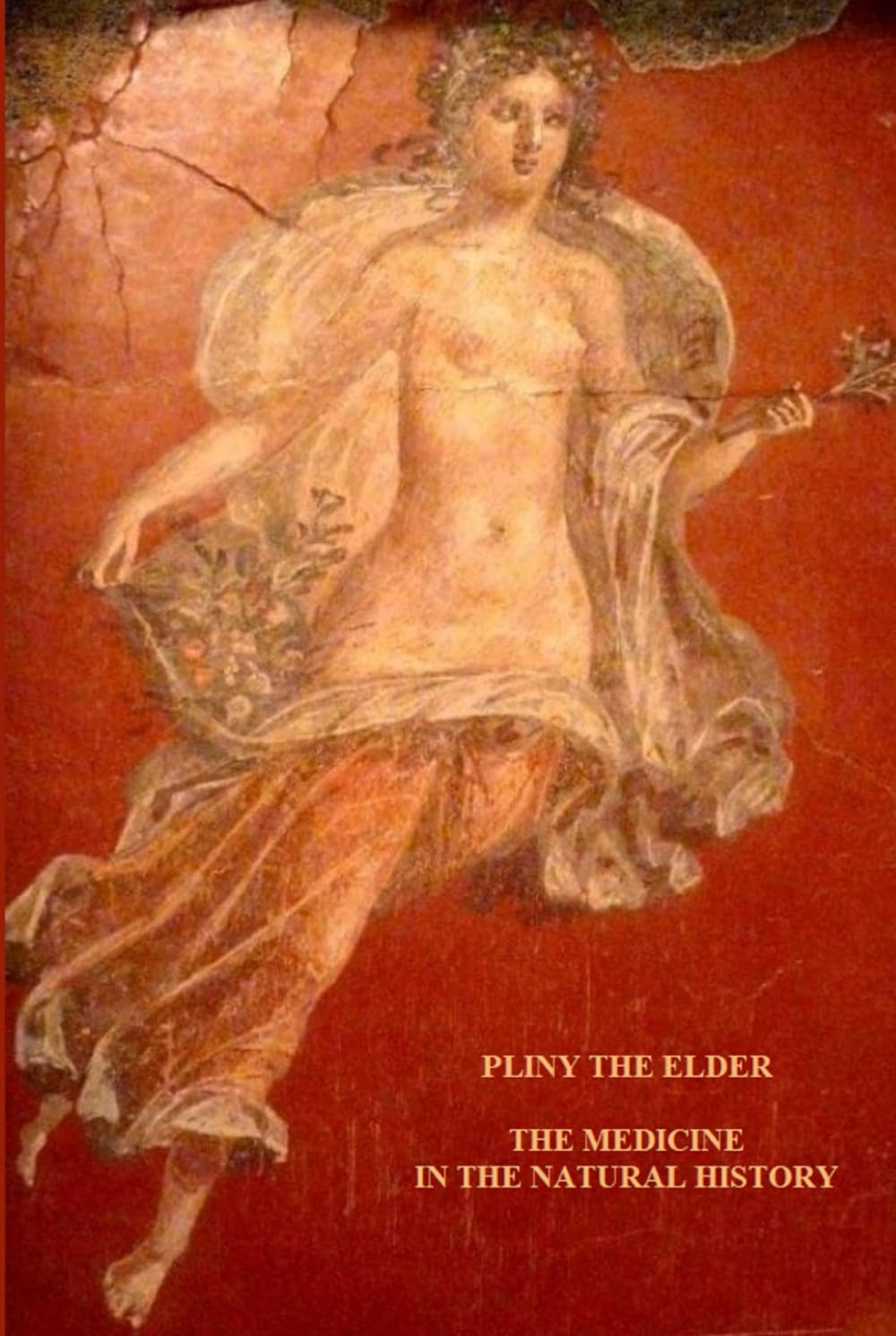



Gaius Pliny Second , known as Pliny the Elder (in Latin Gaius Plinius Secundus, Como, 23 AD – Stabia, 25 August 79), was a Roman writer, naturalist, philosopher, military commander and provincial governor. Characterized by an insatiable curiosity, Pliny wrote many works, including: De iaculatione equestri; De vita Pomponii Secundi , a two-book biography of the tragic poet Publius Pomponius Secundus, of whom he was a devoted friend; the Bellorum Germaniae l ibri XX ; the Scholars books III , manual on orator training; the Dubii sermonis libri VIII, on grammatical questions; and the A fine Aufidii Bassi books XXXI , on the history of the Empire from the period in which the history of Aufidius Bassus ended. All these works are now lost, except for a few fragments. The only work that has survived in its entirety is his masterpiece, the Naturalis historia , a vast encyclopedia, a term coined by Pliny himself, which deals with astronomy, geography, anthropology, zoology, botany, materials, medicine, metallurgy, mineralogy and art. The encyclopedic work is the result of an enormous amount of preparatory work conducted on over 2000 volumes by more than 500 authors. This work, read and studied in the following centuries, especially in the Middle Ages and the Renaissance, today represents a fundamental document of the scientific knowledge of antiquity. Pliny's fame is also linked to his death, which is witnessed by his nephew-adopted son Pliny the Younger. Pliny the Elder was at the head of the Roman fleet stationed at Cape Miseno, when one of the greatest catastrophes in history occurred, the eruption of Vesuvius in 79. Pliny ran to the aid of his friend, Rectina, and the other inhabitants of Stabia; he was no longer able to leave the city's port and died from the fumes of the volcano. The Naturalis historia was published in the year 77; already in the title the work presents itself as research of an encyclopedic nature on natural phenomena. The term historia takes up the Greek ἱστορία ( investigation ), and it should be noted that the formula gave the name to the biological sciences, that is, to natural history in the modern sense of phrase. In this volume, the parts of the Historia naturalis dedicated to medicinal remedies are selected, which Pliny obtained from the consultation of 2000 ancient books. The division into the 37 books created by Pliny brings medicine and pharmacology into expressly dedicated books (from the twentieth to the thirty-second), but further information is scattered throughout the work, as dictated by the topic treated: these indications have been selected and attached to this work. Among the remedies indicated, magical and superstitious elements abound, which Pliny recommends not to accept uncritically, but which he nevertheless reports, from time to time irritated or amused: in this regard, to keep the work light and enjoyable, they have also been the ironic criticisms towards magicians and the moral invectives against the customs and luxury of those that Pliny, admirer of the stoic Cato, lived as new times. It is perhaps worth remembering, regarding the way in which Pliny treats the materia medica, that traditional medicines evaluate the effect of the drug, sought experimentally, often with the system of "similia similibus curantur", (at the basis, in modern times, of homeopathic therapy), leaving the mechanism of action in the background.