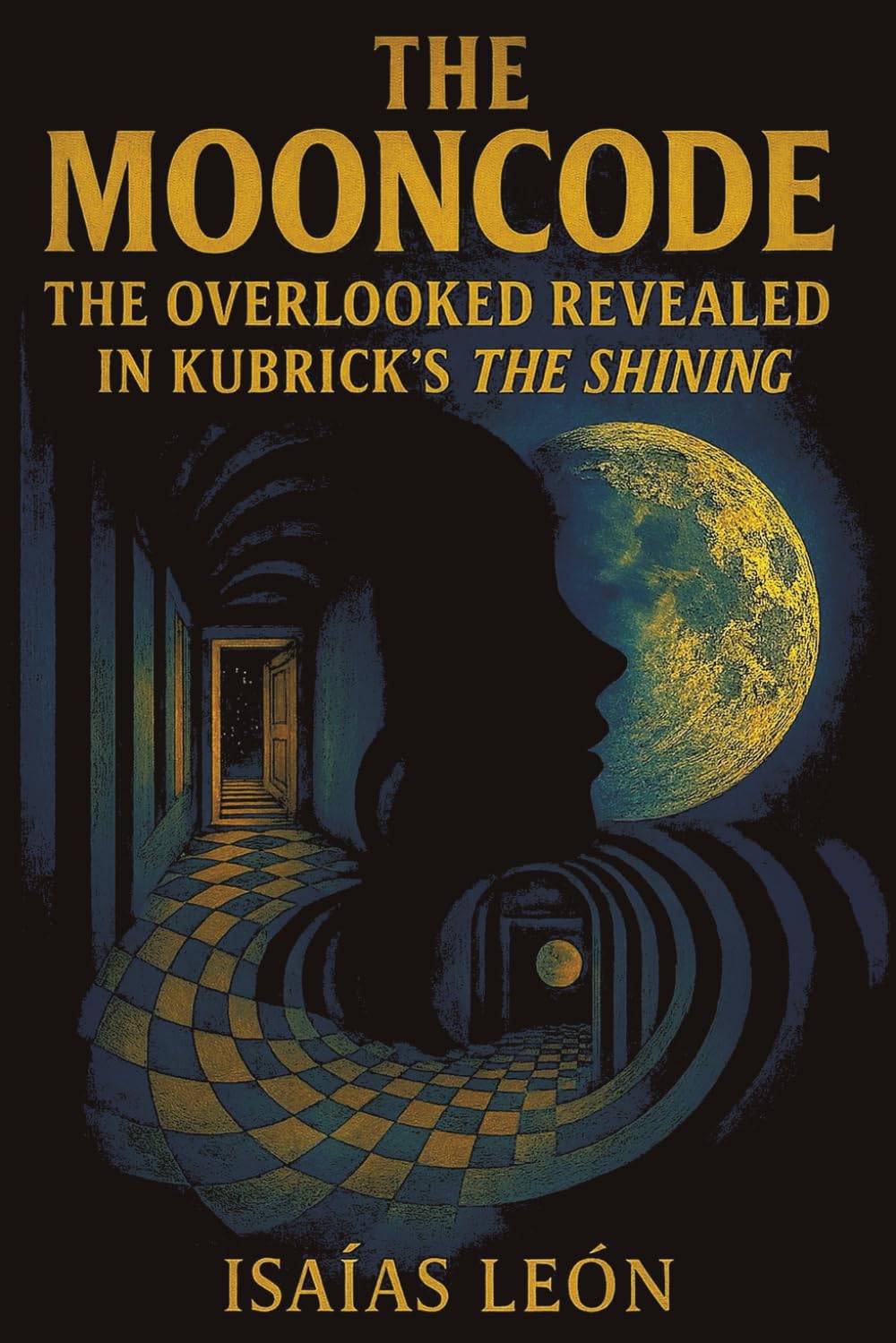



Is Stanley Kubrick’s The Shining more than a horror film? What if it’s a coded meditation on secrecy, power, and the psychological cost of deception? The Mooncode: The Overlooked Revealed in Kubrick’s The Shining uncovers the hidden design of one of cinema’s most mysterious films. Far from a conventional movie guide, this book explores The Shining as a ritualized narrative of complicity, containment, and symbolic guilt—revealing Kubrick’s masterpiece as a cinematic puzzle of architecture, psychology, and myth. Author Isaías León decodes the Overlook Hotel not simply as a haunted setting, but as a deliberately impossible space—an architectural paradox where nothing is stable, everything is symbolic, and each detail hides a deeper layer of meaning. Inside, you’ll discover: • The eerie ritual structure of Jack’s job interview • Danny’s psychic emergence as both witness and firewall • The symbolism of the Calumet cans, typewriter, Gold Room, and hedge maze • The haunting score as subliminal manipulation • The mythic dimension of Grady, Hallorann, and the final photograph At the heart of The Mooncode lies a provocative question: What if Kubrick imagined being approached to fake the moon landing? León suggests that this imagined dilemma became a symbolic burden—encoded into the film’s architecture, sound, and ritual. In this light, The Shining emerges not just as a horror story, but as a labyrinth of guilt, secrecy, and national myth. This is not a conspiracy theory book. It is a work of symbolic interpretation—an imaginative reading of The Shining as a meditation on how power conceals its crimes, how suspicion becomes art, and how a filmmaker transformed private doubt into haunting cinema. What’s inside: • 21 themed chapters on symbolism, sound, architecture, and psychology • Over 100 symbolic and visual references decoded across the film • Glossary of key terms and themes For readers of: • Film theory, cinema symbolism, and visual semiotics • The psychology of media, trauma, and memory • Fans of Kubrick, hidden meanings, and cinematic puzzles • Anyone who’s ever watched The Shining and thought: “There’s something more here.”