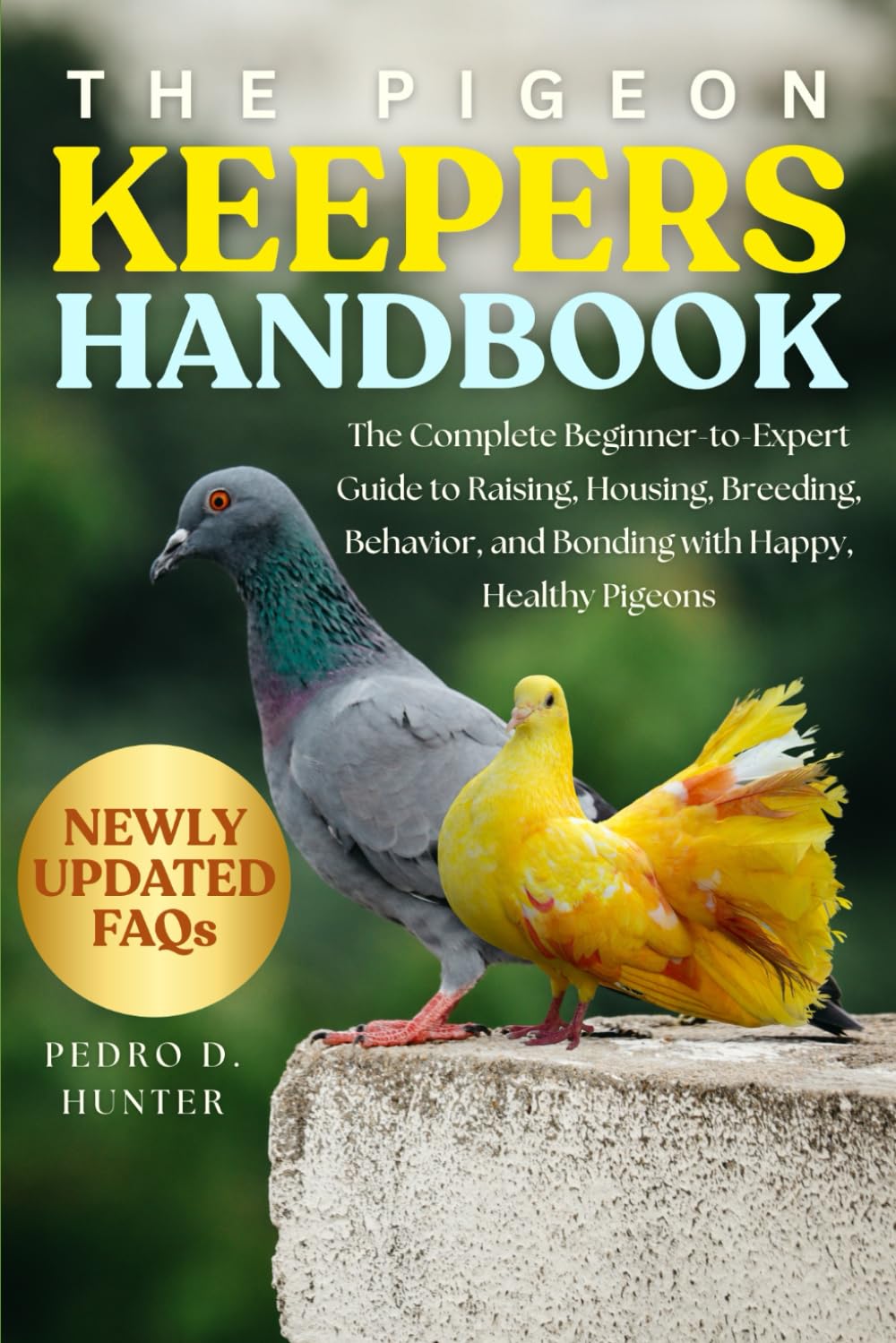
THE PIGEON KEEPERS HANDBOOK: The Complete Beginner-to-Expert Guide to Raising, Housing, Breeding, Behavior, and Bonding with Happy, Healthy Pigeons
$14.98
by PEDRO D HUNTER



Understanding the Appeal, History, and Emotional Rewards of Owning Pigeons Pigeon keeping is more than a hobby—it is a time-honored tradition that connects humans with one of the most intelligent, affectionate, and fascinating birds on earth. For centuries, pigeons have lived alongside us, serving roles as messengers, companions, and living symbols of peace and devotion. In this chapter, we explore what makes pigeons so special, why they have been cherished throughout history, and how they continue to offer joy and emotional connection to those who care for them. The Historic Bond Between Humans and Pigeons The domestication of pigeons dates back over 5,000 years to ancient civilizations such as Mesopotamia, Egypt, and the Indus Valley. Revered for their homing instincts and symbolic value, pigeons were used in religious ceremonies, depicted in art, and even relied upon for essential communication. During major wars, pigeons carried vital messages across battlefields, often saving lives. One pigeon, named Cher Ami, was awarded the French Croix de Guerre for heroic service in World War I. This historic connection has helped shape the image of pigeons as loyal, intelligent, and dependable animals. Unlike many birds, pigeons return to the same place every day. Their homing ability is unmatched in the avian world, and their devotion to mates and caregivers is striking. Why People Choose Pigeon Keeping Today Modern pigeon keepers are drawn to these birds for a variety of reasons. Some are fascinated by their beauty and variety—there are hundreds of pigeon breeds, each with unique colors, feather patterns, and characteristics. Others are inspired by their historical significance or enjoy the peace and routine of caring for animals. Pigeons can be raised for sport, such as homing competitions and races, or simply kept for companionship. Their intelligence allows them to recognize their owners, respond to voices, and even learn simple tricks. With time and patience, pigeons become trusting companions that thrive on consistent interaction and care. Emotional and Mental Benefits There is a calming, almost meditative quality to pigeon keeping. Watching them fly, preen, or feed can be incredibly soothing. Many people find that tending to pigeons offers structure, purpose, and emotional relief from the pressures of daily life. Pigeons can bond deeply with their caretakers, often following them around, cooing softly, or even perching on their shoulder. These interactions can create a strong sense of companionship, particularly for those who may be dealing with loneliness, anxiety, or the need for a peaceful daily routine. The cooing sounds of pigeons are gentle and relaxing, contributing to a calm home or loft environment. A Multigenerational Hobby Pigeon keeping is an inclusive activity enjoyed by people of all ages and backgrounds. Children, adults, and retirees alike find meaning in raising pigeons—learning responsibility, compassion, and the cycles of life through their care. In many families, the love of pigeons is passed down from one generation to the next, creating a shared tradition that strengthens family bonds and community ties. A Gateway to Nature and Mindfulness Keeping pigeons brings people closer to nature in a very personal way. It invites observation, patience, and quiet reflection. Whether in a bustling city or a quiet rural area, caring for pigeons introduces a slice of the natural world into everyday life. The gentle rhythms of feeding, cleaning, and watching over the birds encourage mindfulness and a break from fast-paced modern life.