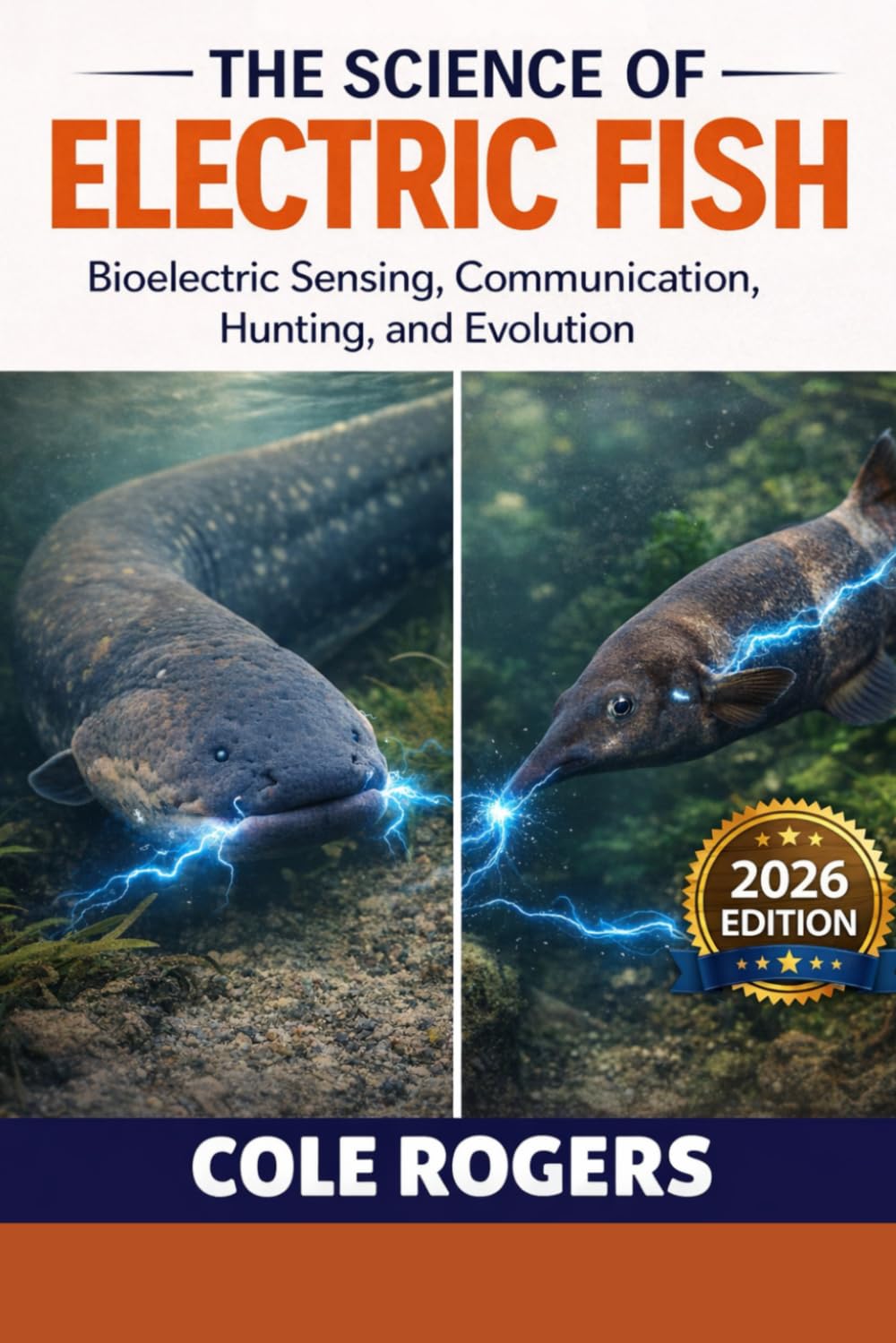
THE SCIENCE OF ELECTRIC FISH: Bioelectric Sensing, Communication, Hunting, and Evolution
$19.00
by COLE ROGERS



Electric fish don’t just live in water—they live in a world made of invisible signals. In rivers, swamps, and murky habitats where sight is limited, electric fish create electric fields and read the tiniest distortions like a map. It’s biology at its most surprising: electricity as a sense, a language, and sometimes raw power. The Science of Electric Fish: Bioelectric Sensing, Communication, Hunting, and Evolution is a clear, story-driven guide to how electric fish work and why they matter. You’ll learn the difference between weakly electric fish that use electricity mainly for navigation and communication, and strongly electric fish that can deliver high-voltage bursts for hunting or defense. Inside, you’ll explore: - How electric fish generate electric fields and “read” their environment in low visibility - Electric organs explained—how living tissue produces usable electrical output - Electric fish communication: pulses, patterns, and what signals can mean - The electric brain: turning field changes into behavior and decision-making - Hunting and defense strategies in strongly electric fish - Why electric fish evolved—tradeoffs, adaptations, and repeated evolutionary solutions - How scientists study electric fish, and what bioelectric systems can realistically inspire - Ethics and responsibility in research and handling If you’ve ever wondered how an animal can “see” with electricity and communicate without sound, this book brings you into the electric fish world—clearly, honestly, and with real scientific wonder.