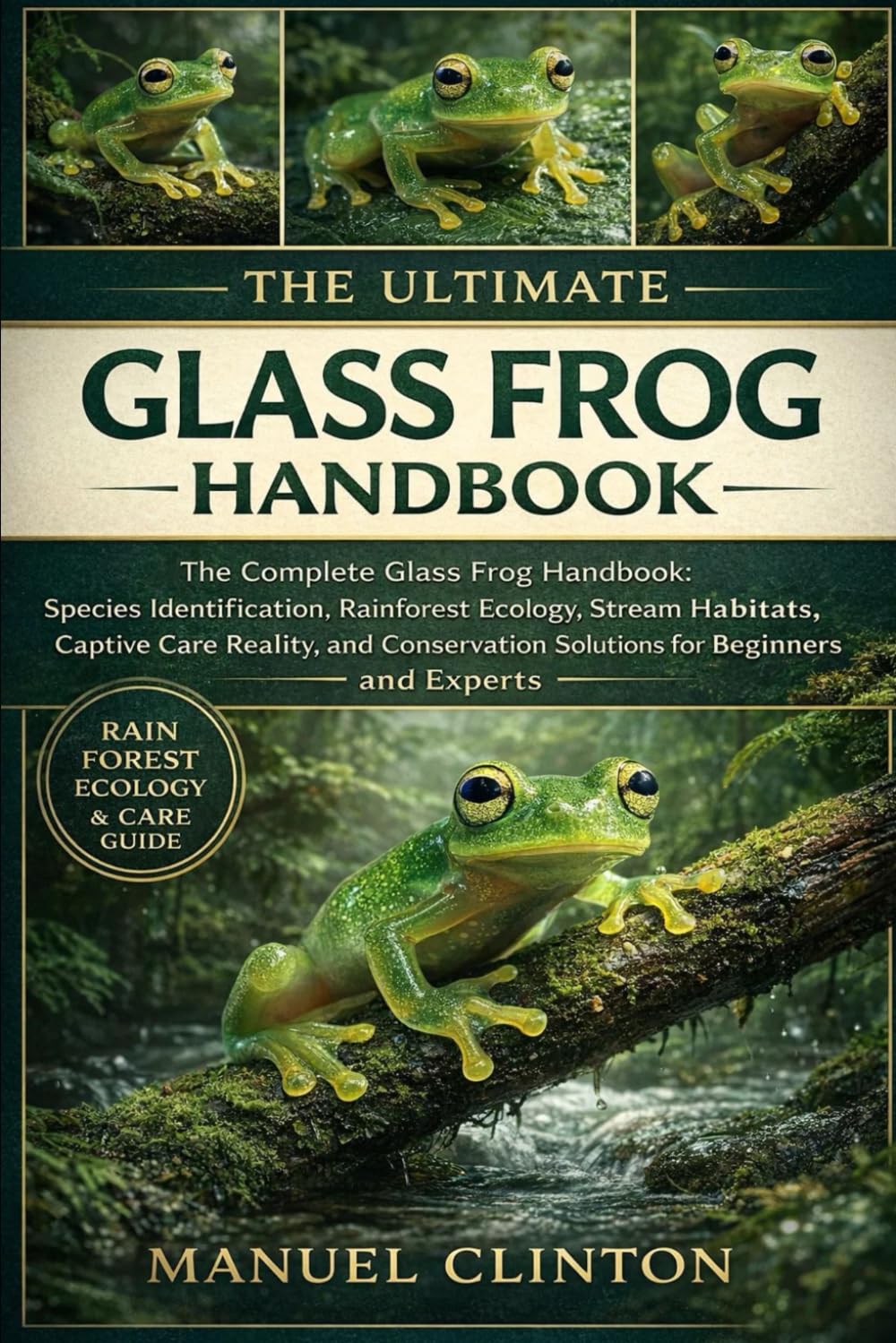
THE ULTIMATE GLASS FROG HANDBOOK: The Complete Glass Frog Handbook: Species Identification, Rainforest Ecology, Stream Habitats, Captive Care Reality,
$12.99
by MANUEL CLIN



Glass frogs are among the most extraordinary amphibians on Earth—small, emerald-green rainforest frogs with translucent bodies that reveal the beating heart and internal organs beneath their skin. Found across the streamside forests of Central and South America, these elusive nocturnal species are not only biological marvels, but also vital indicators of rainforest and freshwater ecosystem health. Glass Frog Handbook is a professional, science-based, and highly practical guide designed for wildlife enthusiasts, students, researchers, and responsible amphibian keepers who want a deeper, accurate understanding of these transparent wonders. Blending modern herpetology with conservation-driven education, this handbook explains what makes glass frogs unique, how they survive in demanding rainforest habitats, and why their future depends on protecting clean streams, intact forest cover, and stable tropical microclimates. Inside this comprehensive guide, you will discover: The scientific classification of glass frogs (family Centrolenidae), including major genera and how taxonomy changes over time - The natural geographic range of glass frogs, from lowland rainforests to high-altitude cloud forests - The anatomy of transparency, including skin structure, visible organs, camouflage advantages, and survival adaptations - Nocturnal behavior, predator avoidance strategies, territorial calling, and how glass frogs interact with their environment - Feeding ecology in the wild, seasonal prey availability, and the ecological role glass frogs play as insect controllers - Courtship, mating calls, vocal sac biology, and streamside reproduction cycles triggered by rainfall and humidity - Egg-laying on leaves, male guarding behavior, embryonic development, tadpole drop into streams, and metamorphosis stages - Predator-prey dynamics, parasite pressure, fungal disease risk, and how amphibians serve as bioindicators - Conservation status, IUCN categories, habitat protection programs, reforestation strategies, stream conservation, and wildlife laws - The true reality of captive care—why most glass frogs are not suitable pets, and what ethical keeping requires - Vivarium design standards, humidity and ventilation control, bioactive planting systems, lighting plans, water safety, and environmental stability - Captive feeding strategies, live insect selection, gut-loading systems, supplementation balance, hydration planning, and common mistakes - Veterinary-level health care guidance, including quarantine procedures, sanitation protocols, parasite control, chytrid fungus prevention, and emergency response steps - Action-based conservation solutions, citizen science participation, eco-tourism ethics, education strategies, and real ways to help protect wild populations Whether you are looking to expand your wildlife knowledge, explore advanced rainforest ecology, or learn the truth about responsible amphibian husbandry, Glass Frog Handbook delivers a complete, research-informed roadmap. It is written to help readers understand glass frogs with scientific accuracy, respect them with ethical responsibility, and protect them through meaningful conservation action. If you want to fully understand glass frogs—how they live, how they reproduce, why they are disappearing, and how humans can help—this handbook is your definitive guide.