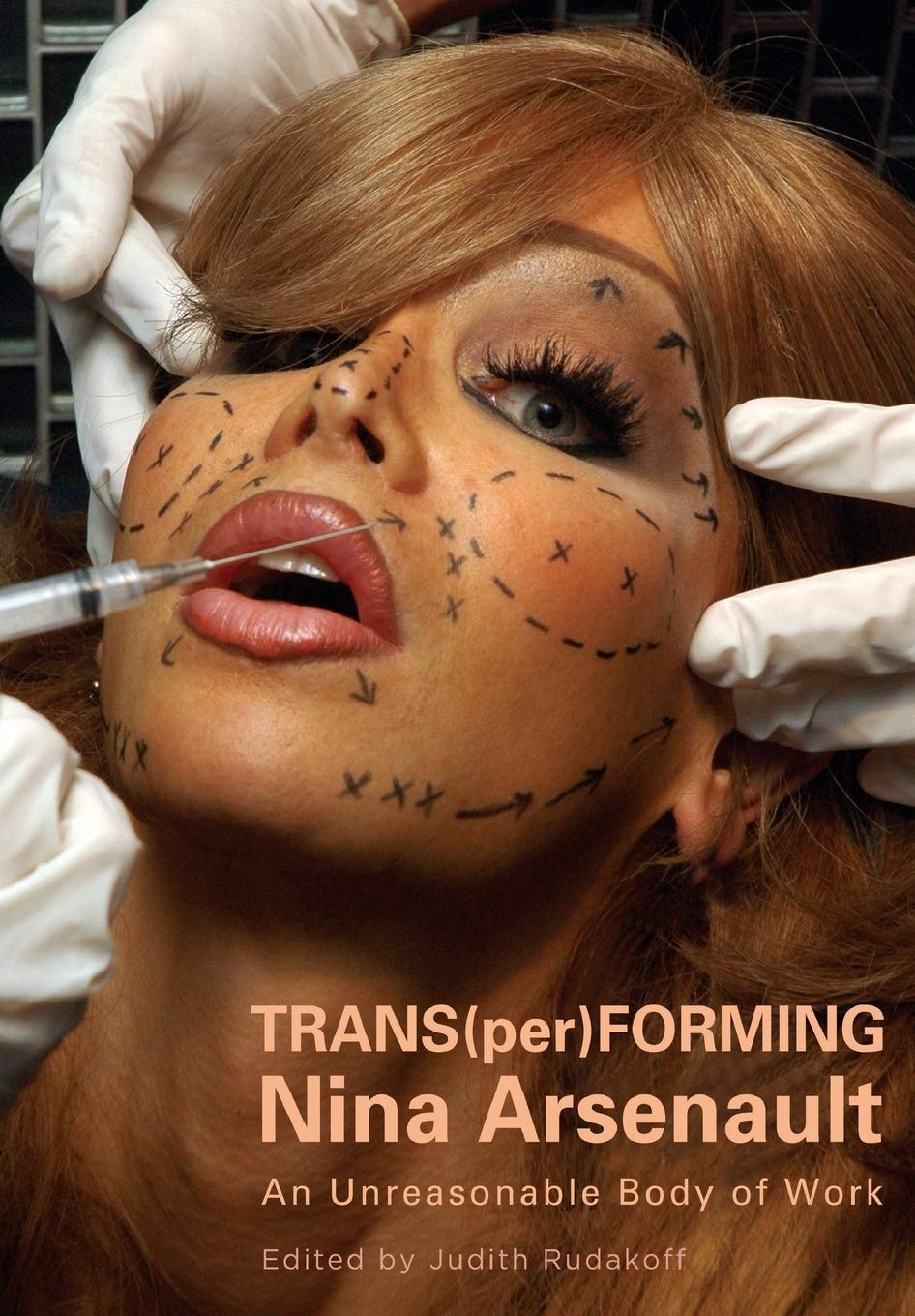



Transgendered playwright, performer, columnist, and sex worker Nina Arsenault has undergone more than sixty plastic surgeries in pursuit of a feminine beauty ideal. In TRANS(per)FORMING Nina Arsenault , Judith Rudakoff brings together a diverse group of contributors, including artists, scholars, and Arsenault herself to offer an exploration of beauty, image, and the notion of queerness through the lens of Arsenault’s highly personal brand of performance art. Illustrated throughout with photographs of the artist’s transformation over the years and demonstrating her diversity of personae, this volume contributes to a deepening of our understanding of what it means to be a woman and what it means to be beautiful. Also included in this volume is the full script of Arsenault’s critically acclaimed stage play, The Silicone Diaries. Judith Rudakoff is professor of theatre at York University in Toronto, Ontario. She is an award-winning dramaturge and coauthor of Between the Lines: The Process of Dramaturgy. TRANS(per)Forming Nina Arsenault: An Unreasonable Body of Work By Judith Rudakoff Intellect Ltd Copyright © 2012 Intellect Ltd All rights reserved. ISBN: 978-1-84150-571-8 Contents Acknowledgements, Introduction Judith Rudakoff, Part I: The Texts, Chapter 1: Affirming Identity with Your Friendly Neighbourhood Cyborg Sky Gilbert, Chapter 2: Unreal Beauty: Identification and Embodiment in Nina Arsenault's "Self-Portraits" J. Paul Halferty, Chapter 3: Daughter of the Air: Three Acting Sessions and Nina Arsenault's Imaginary Body Cynthia Ashperger, Chapter 4: Nina, Amber and the Evolution of a Commodified Sexual Being Todd Klinck, Chapter 5: Sexed Life is a Cabaret: The Body Politics of Nina Arsenault's The Silicone Diaries Frances J. Latchford, Chapter 6: Chopping at the Sexy Bits: [Trans]cending the Body with Surgical Conundrums J Mase III, Chapter 7: Nina Arsenault: Fast Feminist Objet a Shannon Bell, Chapter 8: The Artist as Complication: Nina Arsenault and the Morality of Beauty Alistair Newton, Chapter 9: Landscape with Yukon and Unnatural Beauty Nina Arsenault, Chapter 10: Performing the Prosthetics of Femininity: Nina Arsenault's Transsexual Body as a Living Art Object Benjamin Gillespie, Chapter 11: Compelling Honesty: Searching for Authenticity in the Voice of Nina Arsenault Eric Armstrong, Chapter 12: Live in Your Blood: A Fragmentary Response to Nina Arsenault's Holy Theatre and Spiritual Gift Shimon Levy, Chapter 13: St. Nina and the Abstract Machine: Aesthetics, Ontology, Immanence David Fancy, Part II: THE SILICONE DIARIES, Director's Note Brendan Healy, The Silicone Diaries Nina Arsenault, Part III: The Photographs, Image Credits, CHAPTER 1 Affirming Identity with Your Friendly Neighbourhood Cyborg Sky Gilbert It's over. The heady days of gay liberation that so intoxicated queer people in the late 1960s and early 1970s are gone. And the seeds of destruction were sown by queer academics themselves. In The History of Sexuality, Michel Foucault championed the notion that the homosexual identity was more constructed than real. And (soon after) Judith Butler expressed her ambivalent feelings about identity politics: "I'm permanently troubled by identity categories, consider them to be invariable stumbling-blocks, and understand them, even promote them as sites of necessary trouble." As the early queer theorists prepared us for a challenge to identity politics, AIDS was devastating the gay community and causing a tidal shift in gay sensibilities. The battles we had waged in the name of our identities, to allow bathhouses to remain open or to "keep the laws off our bodies," seemed selfish and indulgent in the shadow of AIDS. Conservative queers began coupling and moving to the suburbs. A plethora of gay pundits stepped forward to celebrate the decline of gay: Andrew Sullivan proudly proclaimed the queer potential to be just like everyone else, Michaelangelo Signorile collected an entire book of interviews that confirmed the deurbanization of gay men, and Bert Archer trumpeted "The End of Gay" in his book of the same title. Queer academia provided a theoretical rejection of identity politics in the mid-1990s led by David Tuller, who claimed in PoMoSexuals, "sexuality is far more subtle than the rigid categories, the concrete bunkers that we create to describe it." By the year 2000, the discussion of gay and lesbian identity was replaced by an exploration of the wider application of values inspired by same-sex attraction. The editors of Queer Ecologies: Sex, Nature, Politics, Desire say in their introduction: The essays included in this collection ... share this fundamental supposition: scrutinizing and politicizing the intersections between sex and nature not only opens environmentalism to a wider understanding of justice, but also deploys the anti-heteronormative insistences of queer politics to potentially more biophilic ends than has be