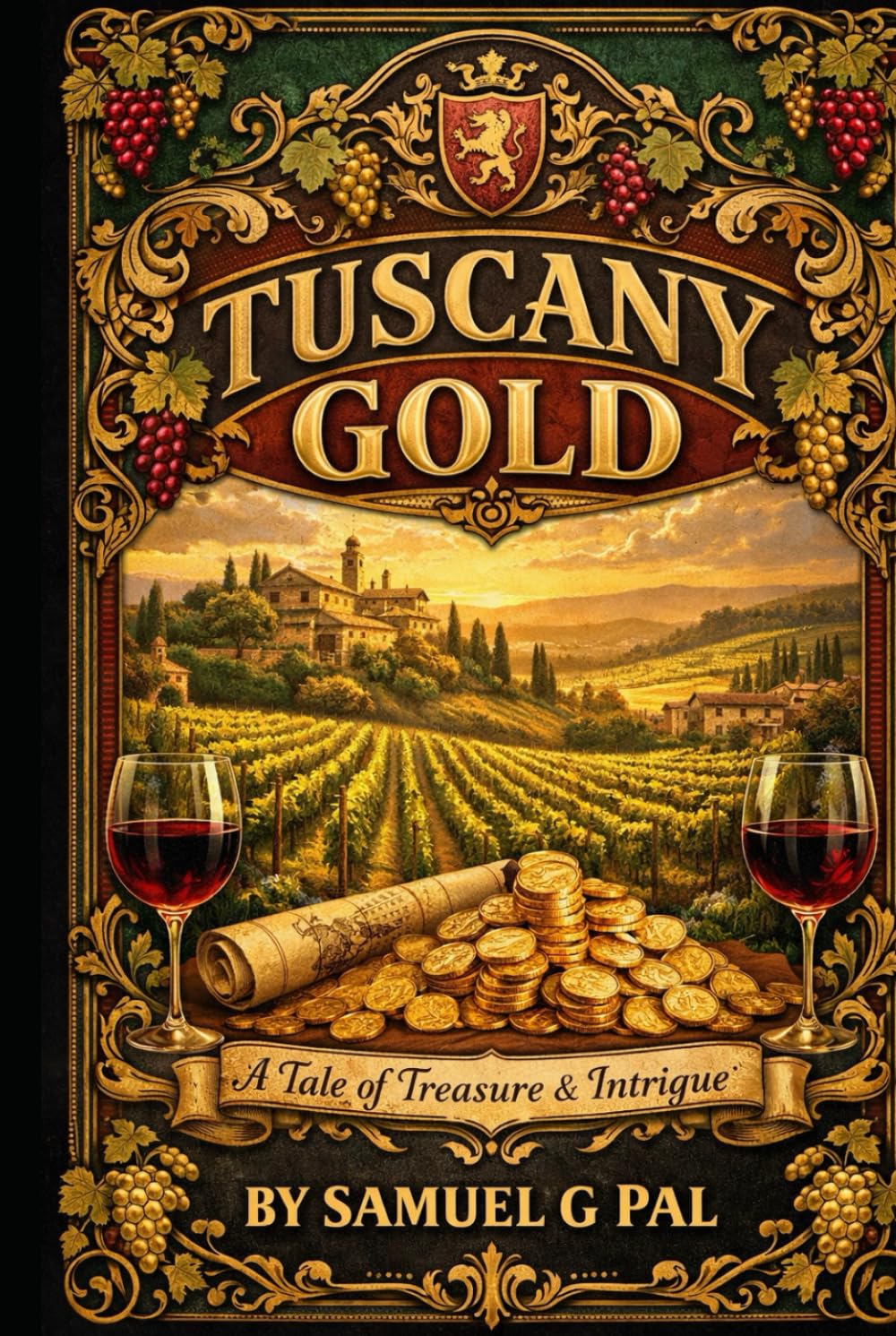



TUSCANY GOLD He had measured risk for thirty-two years. He had never once measured this . Simon Pasquale can price uncertainty to the fourth decimal. In thirty-two years at Meridian Risk Associates, he has learned to read the arithmetic of what people will lose and what they will not, and he has built a life of considered precision in a Manhattan apartment with a wife he still reaches for and a career he no longer believes in. In October 2001, three weeks after the city cracked open, he made a decision that had been waiting for him since 1971. He buys a crumbling estate in the Sienese hills. The Podere Alba Scura does not offer ease. It offers stone walls that will not bear their load, a vineyard that has forgotten what it is, a painted ceiling in an upper room whose origins no one can explain, and a cellar beneath the ground that holds something no one has opened in forty years. What it offers, in time, is something Simon has no professional category for: the education of a man who must learn to listen before he acts, to observe before he decides, and to let the land teach him the only thing it knows how to teach: that full attention, paid without condition, is the only thing that makes anything last. His wife, Julia, brings her own version of the same reckoning. The painted ceiling is hers to restore. The vines are his. What they built between them, across eight years of winters and harvests and the slow, irreversible accumulation of a life inside a place, is something that neither of them could have named when they stood at the kitchen table in the pewter light and decided to begin. Tuscan Gold is a novel about what it costs to pay full attention and what, slowly, quietly, and without ceremony, that attention makes.