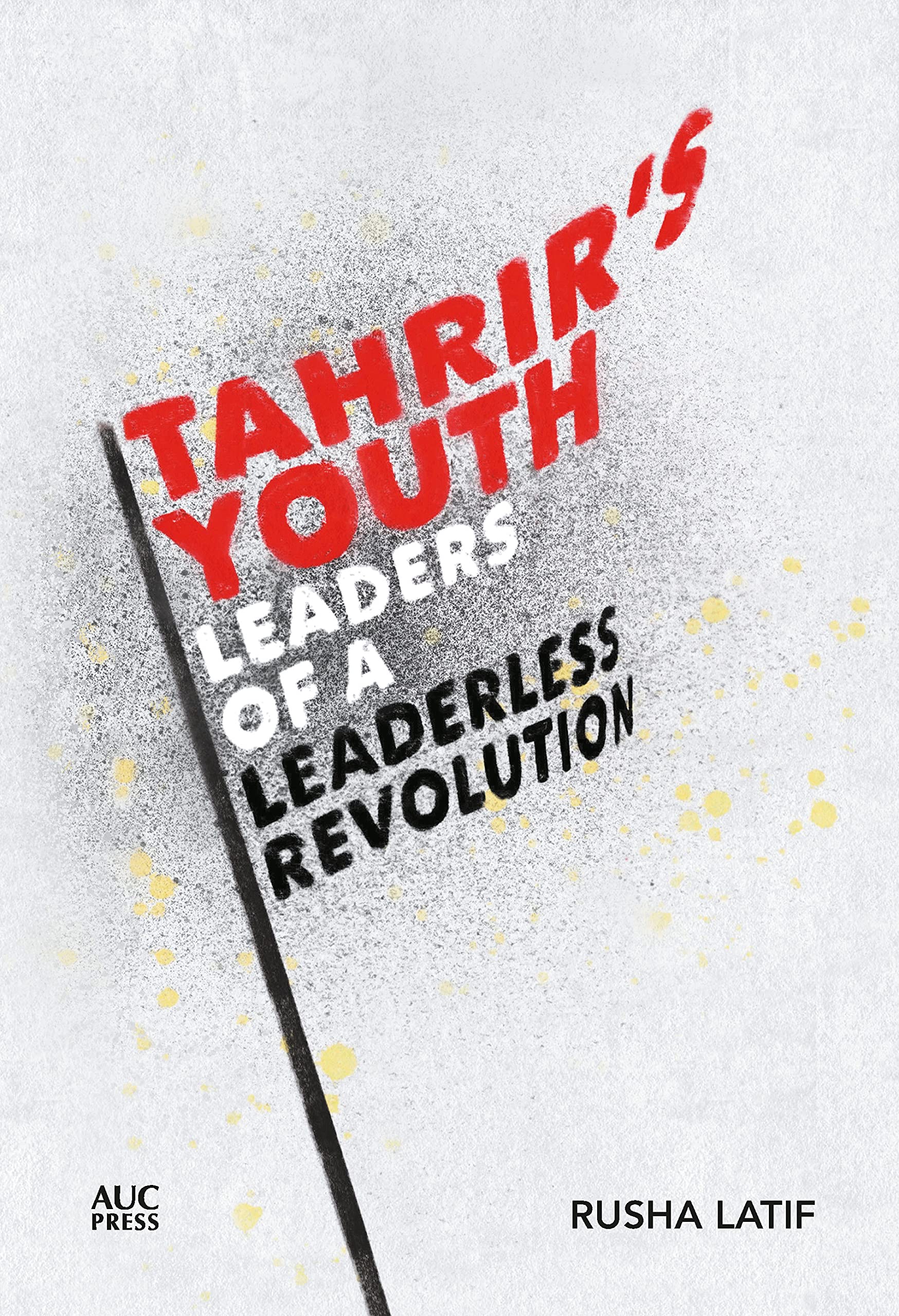



A gripping, in-depth account of the 2011 Egyptian revolution, through the eyes of its youthful vanguard January 25, 2011, was a watershed moment for Egypt and a transformative experience for the young men and women who changed the course of their nation’s history. Tahrir’s Youth tells the story of the organized youth behind the mass uprising that brought about the spectacular collapse of the Mubarak regime. Who were these activists? What did they want? How did the movement they unleashed shape them as it unfolded, and why did it ultimately fall short of its goals? Rusha Latif follows the trajectory of the movement from the perspective of the Revolutionary Youth Coalition (RYC), a key front forged in Tahrir Square during the early days of the revolt. Drawing on firsthand testimonies and her own direct experience, she offers insight into the motives, hopes, strategies, successes, failures, and disillusionments of the movement’s leaders. Her account details the challenges these activists faced as they attempted to steer the movement they had set in motion and highlights the factors leading to their struggle’s defeat, despite its initial promise. Tahrir’s Youth questions the belief that Egypt’s revolution was spontaneous and leaderless. Timely and necessary, this study not only illuminates the uprising’s leadership dynamics but also demonstrates the need for imagining new modes of revolutionary organizing for the twenty-first century. "The Egyptian Revolution that began in 2011 lives on, like all revolutions, in the thoughts and works of an entire generation of young observers whose imagination and intellect it had captivated. Many of those observers are now turning their insights into solid ethnographies and systematic contribution to the theory and practice of revolution and social movements in general. It is in this already rich context that Rusha Latif's study stands out. . . . Students and scholars of revolutions and social movements will find much analytical and empirical wealth in this book, thematically, but also methodologically. . . . a fine achievement.” —Mohammed Bamyeh, Critical Sociology “ Tahrir’s Youth contributes to a broader and more organized examination of the impact that young activists and popular movements can have on social change and how such movements can lead the way.” —Volken Yucel, Contemporary Sociology “The focus on the micro, as a lens into the macro, is both analytically sharp and pleasing to read. The protagonists come to life on the pages. . . . Latif’s work is a compelling study of what leadership looks like—what forms it takes, what its strengths and limits are—in the networked and nonviolent revolutions that have dominated the twenty-first century.” — Killian Clarke, Mobilization “The most salient contribution the book makes is in challenging many of the received truths about the revolution. . . . Latif’s work offers a better introduction to the Egyptian revolution than most because of the way it moves between the first-person perspective and bridges personal, organizational, and societal scales at which the revolution was experienced.” — Ramy Aly, Journal of the Royal Anthropological Institute “For those of us who experienced the Revolution, and continue to live under its consequences, the book provides profiles of people we know and events we witnessed, and as such offers a documentation of our own history and experience. . . . [It] provides another solid addition to the scholarship on the 2011 Egyptian Revolution, as well as Social Movements theory and praxis.” —Hala Kamal, Feminist Africa “The outbreak of the 2011 uprising has raised several questions concerning spontaneity, ‘horizontal structures,’ and ‘leaderless’ movements. Was the revolution planned or purely spontaneous? Here, Latif’s book constitutes a compelling intervention. The author argues that the revolution was both planned and spontaneous.” —Hossam El-Hamalawy, International Journal of Middle East Studies "Rusha Latif . . . embedded herself with young activists and writes about what the world can learn from a defeated revolt."― Leila Fadel, NPR "Deeply personal and highly readable. . . . Tahrir's Youth provides a compelling case study of what author Rusha Latif refers to as 'task-oriented leaders' at the individual level and how they shaped the course of the 18 days in Tahrir Square. The book is a concise overview for those seeking to understand the 2011 Egyptian revolution and where it came from."― Sarah Anne Rennick, Middle East Journal "In seven beautifully written chapters, the book offers fascinating reading into the career of youth leaders of the Egyptian popular uprisings."― Emad El-Din Shahin, Political Science Quarterly “Latif’s alternative account of the events that occurred in Egypt is welcomed and will inform our understanding of not only the 2011 revolution in Egypt but also subsequent political events that take place in the Internet era."— Pengfei Zhao