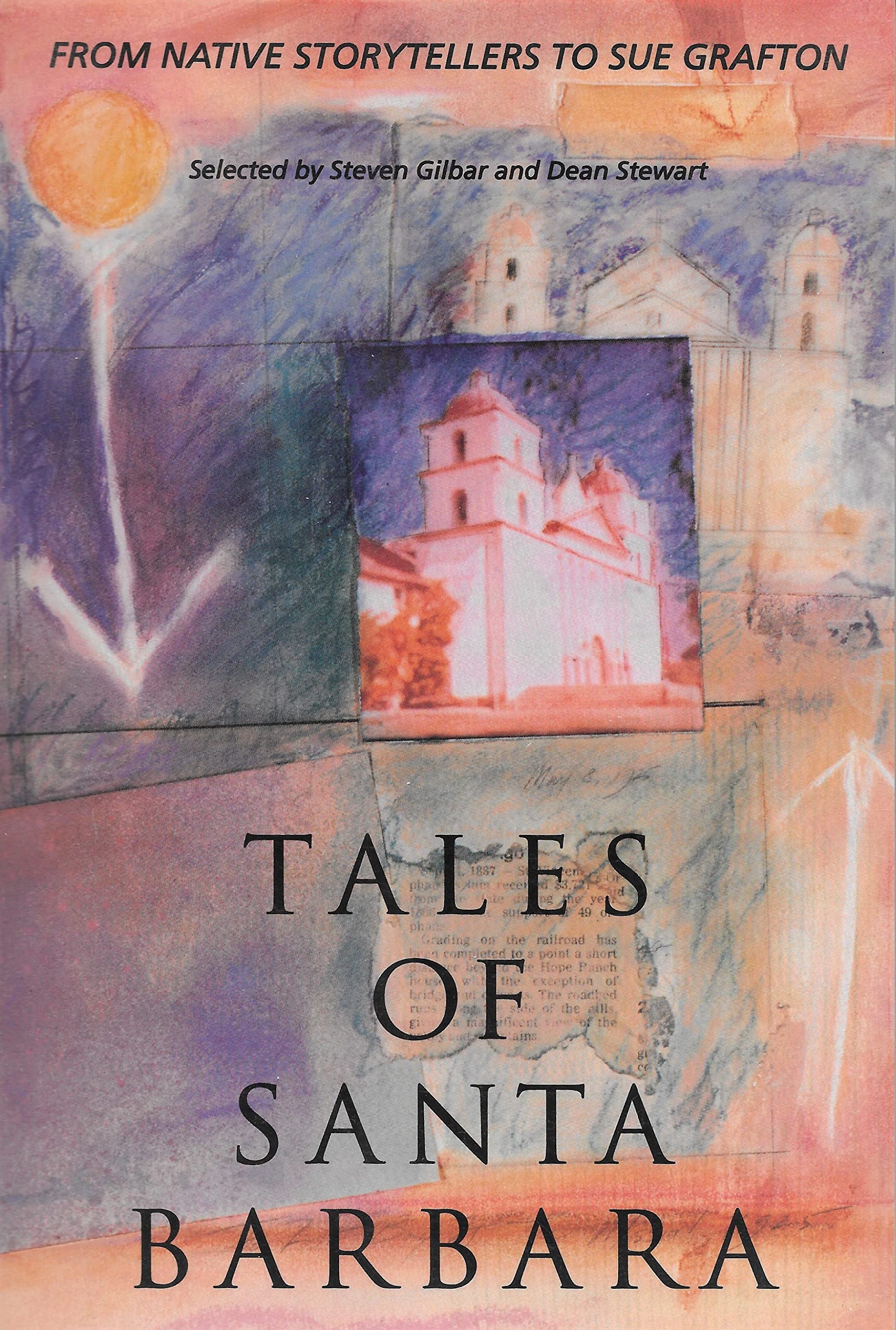



Richard Henry Dana, Stewart Edward White, Ross Macdonald, Margaret Miller, Michael Collins Richard Jarrell, Gertrude Atherton, Pico Iyer, Sara Teasdale, Robert Easton. Claire Rabe, Christopher Buckley, and others.... Famous for its beauty and climate, Santa Barbara has long been an inspiration - and a productive environment - for writers. This collection of stories, essays, and poems celebrate the astonishing richness and diversity of Santa Barbara's people, landscape, and history, from its Native American beginnings, through the Spanish colonial period, to the present. A medley of poetry, fiction, and nonfiction make up this collection focused on Santa Barbara, California. An area rich in history, Santa Barbara is the home of many writers and frequently appears, sometimes thinly disguised, in their work. Two notable authors of detective novels, Ross MacDonald and Sue Grafton, lived in and wrote about Santa Barbara. Tantalizing chapters from their fiction are featured here. This West Coast village inspired stories from the earliest settlers, as well, including the Chumash, whose tribal lore starts off this collection. Gilbar and Stewart have created an interesting mix here, with tales of Native Americans, fire fighting, carnivals, and murder. Denise Perry Donavin THE RICH DIVERSITY OF A LITERARY TOWN Santa Barbara, the elegant, historic seaside resort of Southern California, is known to many as the home of celebrities, the scenery of a soap opera, the backdrop for beach parties and Spanish-style fiestas. Tourists come here from all over the globe, and they take home with them photographs, guidebooks, and postcard souvenirs. But Santa Barbara is more than a picturesque resort, as those who live there know. As Dean Stewart points out in his foreword to Tales of Santa Barbara, it is both a "universal and particular place. An American small town of class and race and neighborhood divisionsa Chinese box full of hidden parts, little compartments and surprises." The way to know Santa Barbara is to spend time there, to experience all the different ways the city can be. And for those far afield or just passing through, the way to learn more about Santa Barbara than the tourist literature will ever show is to read what real Santa Barbarans have written. This is--and always has been--a town of writers. The perceptions of its resident writers are a lively record of what has made Santa Barbara different from all other places. And each writer has a different idea about what that difference is. Tales of Santa Barbara, edited by Steven Gilbar and Dean Stewart, was literally hundreds of years in the writing. It is also a gathering of some of the best travel-writing in the business, because Santa Barbara attracts good writers and gives them a feast to write about. In this cornucopia we read how the native Chumash, who lived on this coast for centuries before they greeted the first European visitors, defined creation, life, death, and reincarnation in terms of the geography we can still see around us in Santa Barbara. We read the accounts of Richard Henry Dana's and Alfred Robinson's nineteenth-century visits to what was then a Spanish-speaking port, and we ride with Edwin Bryant as he crossed San Marcos Pass in 1846 as a member of John C. Fremont's battalion. Here is an account of popular novelist Gertrude Atherton's visit to Santa Barbara to meet the De la Guerra family as part of research for a novel-in-progress. Edward Seldon Spaulding describes ranch life at the turn of the century, and Marshall Bond, Jr. tells of boyhood on the Upper East Side. Here are the mountain trails described by Stewart Edward White, perhaps Santa Barbara's first celebrity. Robert Hyde describes the bohemian subculture of Mountain Drive. The book contains important moments in the city's history. The famous Coyote Fire of 1964 is described by mystery writers Ross Macdonald and Margaret Millar, and the oil spill of 1969 is described by Robert Easton. The wide variety of social life is here too: Michael Collins gives us a look at class structure and struggle among the modern captains of agriculture, while Christopher Buckley describes a moment of truth on a Santa Barbara tennis court. There's even a sample here of Sue Grafton's vision of Santa Barbara, which she calls Santa Teresa in her Kinsey Milhone mystery novels. Throw in poems and impressions by many more: Claire Rabe, Pico Iyer, Sara Teasdale, Randall Jarrell, Edgar Bowers--and many more--each a different, unique vision of a unique city. Tales of Santa Barbara is a comprehensive collection of many Santa Barbarans. Anyone who has lived here will recognize some of these views. Anyone who wants to know what Santa Barbara is really like should read this book. Finally, anyone who reads this book will have a rewarding read, because this book is, first and foremost, a collection of good writing by good writers. About the Editors. Steven Gilbar is a well-known lawyer in Santa Barbara, but