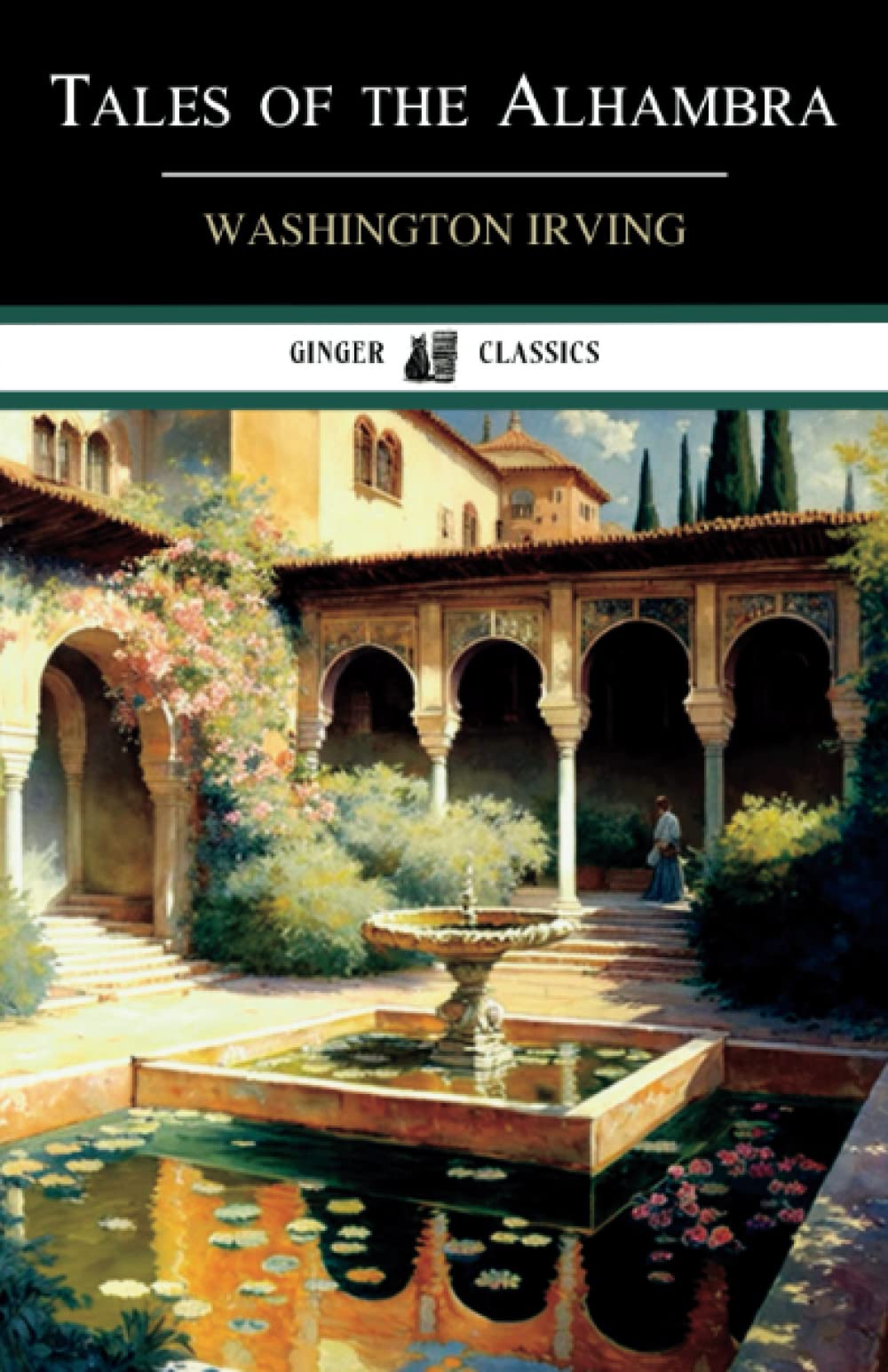



Unique Elements Detailed 19th Century Historical Map A Timeless Classic! Synopsis: Tales of the Alhambra by American author Washington Irving is a collection of essays and stories about the famous palace and fortress, first published in 1851. In 1828, shortly after finishing a history of Christopher Columbus, Washington Irving left Madrid, where he had been visiting, and made his way to Granada, Spain. Upon arrival, he described it as "a most picturesque and beautiful city, situated in one of the loveliest landscapes that I have ever seen." Excerpt: ‘In the time of the Moors the fortress was capable of containing within its outward precincts an army of forty thousand men, and served occasionally as a stronghold of the sovereigns against their rebellious subjects. After the kingdom had passed into the hands of the Christians, the Alhambra continued to be a royal demesne, and was occasionally inhabited by the Castilian monarchs. The emperor Charles V. commenced a sumptuous palace within its walls, but was deterred from completing it by repeated shocks of earthquakes. The last royal residents were Philip V. and his beautiful queen, Elizabetta of Parma, early in the eighteenth century. Great preparations were made for their reception. The palace and gardens were placed in a state of repair, and a new suite of apartments erected, and decorated by artists brought from Italy. The sojourn of the sovereigns was transient, and after their departure the palace once more became desolate. Still the place was maintained with some military state. The governor held it immediately from the crown, its jurisdiction extended down into the suburbs of the city, and was independent of the captain-general of Granada. A considerable garrison was kept up; the governor had his apartments in the front of the old Moorish palace, and never descended into Granada without some military parade. The fortress, in fact, was a little town of itself, having several streets of houses within its walls, together with a Franciscan convent and a parochial church.’