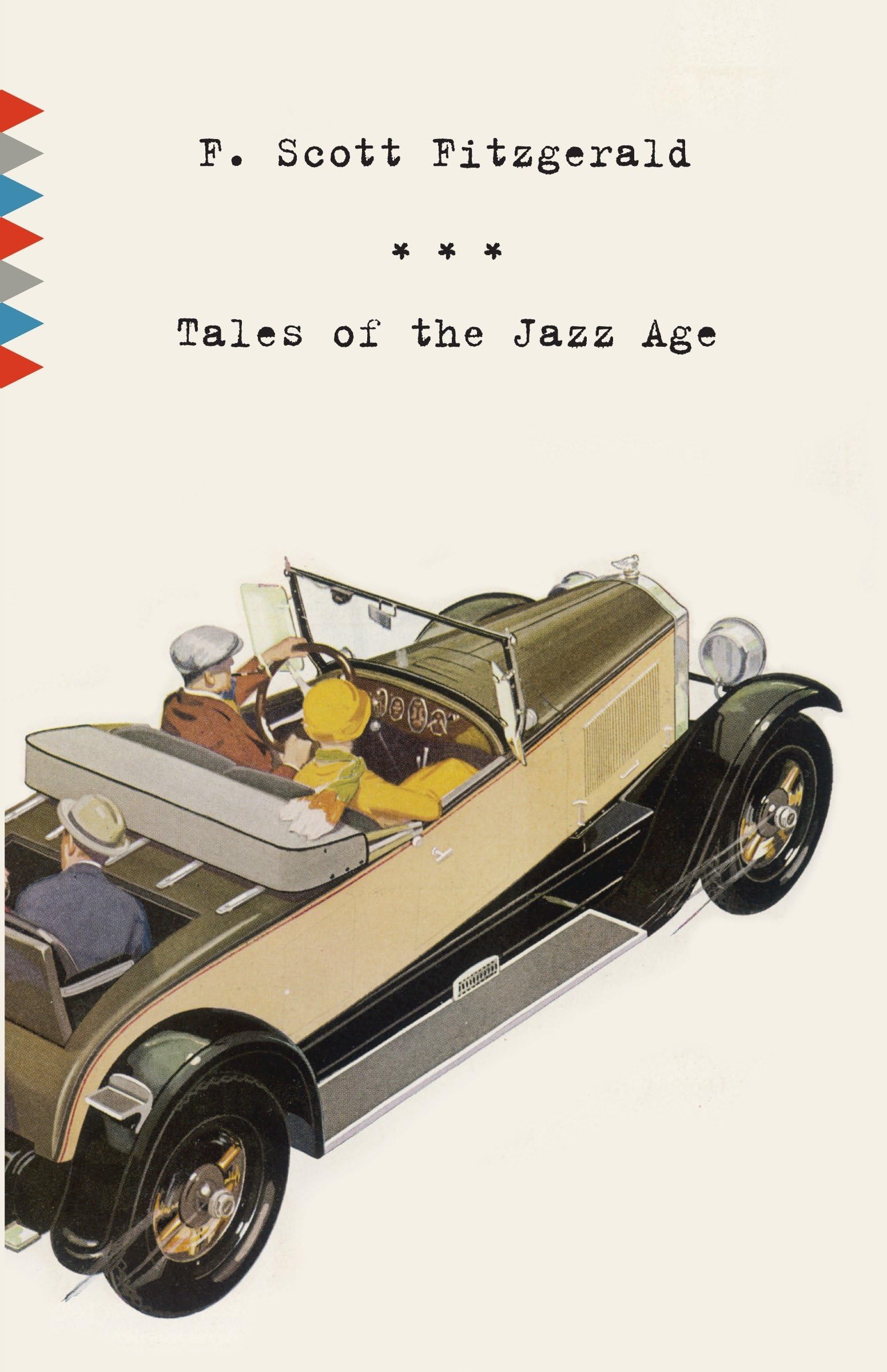



Evoking the Jazz-Age world that would later appear in his masterpiece, The Great Gatsby , this essential Fitzgerald collection contains some of the writer’s most famous and celebrated stories. In “The Curious Case of Benjamin Button,” an extraordinary child is born an old man, growing younger as the world ages around him. “The Diamond as Big as the Ritz,” a fable of excess and greed, shows two boarding school classmates mired in deception as they make their fortune in gemstones. And in the classic novella “May Day,” debutantes dance the night away as war veterans and socialists clash in the streets of New York. Opening the book is a playful and irreverent set of notes from the author, documenting the real-life pressures and experiences that shaped these stories, from his years at Princeton to his cravings for luxury to the May Day Riots of 1919. Taken as a whole, this collection brings to vivid life the dazzling excesses, stunning contrasts, and simmering unrest of a glittering era. Its 1922 publication furthered Fitzgerald's reputation as a master storyteller, and its legacy staked his place as the spokesman of an age. Francis Scott Key Fitzgerald was born in 1896 in St. Paul, Minnesota. He attended Princeton University, where he began writing what would become his first novel, This Side of Paradise. He left Princeton to join the army during World War I, though the war ended shortly after his enlistment. This Side of Paradise, published in 1920, was a critical and financial success and was followed the same year by his first story collection, Flappers and Philosophers, followed by Tales of the Jazz Age in 1922 . Fitzgerald went on to publish three more novels— The Beautiful and Damned, The Great Gatsby, and Tender Is the Night— and many more stories. He died in 1940, leaving his last novel, The Love of the Last Tycoon, unfinished. THE JELLY-BEAN Jim Powell was a Jelly-bean. Much as I desire to make him an appealing character, I feel that it would be unscrupulous to deceive you on that point. He was a bred-in-the-bone, dyed-in-the-wool, ninety-nine three-quarters per cent Jelly-bean and he grew lazily all during Jelly-bean season, which is every season, down in the land of the Jelly-beans well below the Mason-Dixon line. Now if you call a Memphis man a Jelly-bean he will quite possibly pull a long sinewy rope from his hip pocket and hang you to a convenient telegraph-pole. If you call a New Orleans man a Jelly-bean he will probably grin and ask you who is taking your girl to the Mardi Gras ball. The particular Jelly-bean patch which produced the protagonist of this history lies somewhere between the two--a little city of forty thousand that has dozed sleepily for forty thousand years in southern Georgia, occasionally stirring in its slumbers and muttering something about a war that took place sometime, somewhere, and that everyone else has forgotten long ago. Jim was a Jelly-bean. I write that again because it has such a pleasant sound--rather like the beginning of a fairy story--as if Jim were nice. It somehow gives me a picture of him with a round, appetizing face and all sorts of leaves and vegetables growing out of his cap. But Jim was long and thin and bent at the waist from stooping over pool-tables, and he was what might have been known in the indiscriminating North as a corner loafer. "Jelly-bean" is the name throughout the un-dissolved Confederacy for one who spends his life conjugating the verb to idle in the first person singular--I am idling, I have idled, I will idle. Jim was born in a white house on a green corner. It had four weather-beaten pillars in front and a great amount of lattice-work in the rear that made a cheerful criss-cross background for a flowery sun-drenched lawn. Originally the dwellers in the white house had owned the ground next door and next door to that and next door to that, but this had been so long ago that even Jim's father scarcely remembered it. He had, in fact, thought it a matter of so little moment that when he was dying from a pistol wound got in a brawl he neglected even to tell little Jim, who was five years old and miserably frightened. The white house became a boarding-house run by a tight-lipped lady from Macon, whom Jim called Aunt Mamie and detested with all his soul. He became fifteen, went to high school, wore his hair in black snarls, and was afraid of girls. He hated his home where four women and one old man prolonged an interminable chatter from summer to summer about what lots the Powell place had originally included and what sort of flowers would be out next. Sometimes the parents of little girls in town, remembering Jim's mother and fancying a resemblance in the dark eyes and hair, invited him to parties, but parties made him shy and he much preferred sitting on a disconnected axle in Tilly's Garage, rolling the bones or exploring his mouth endlessly with a long straw. For pocket money, he picked up odd jobs, and it was due to