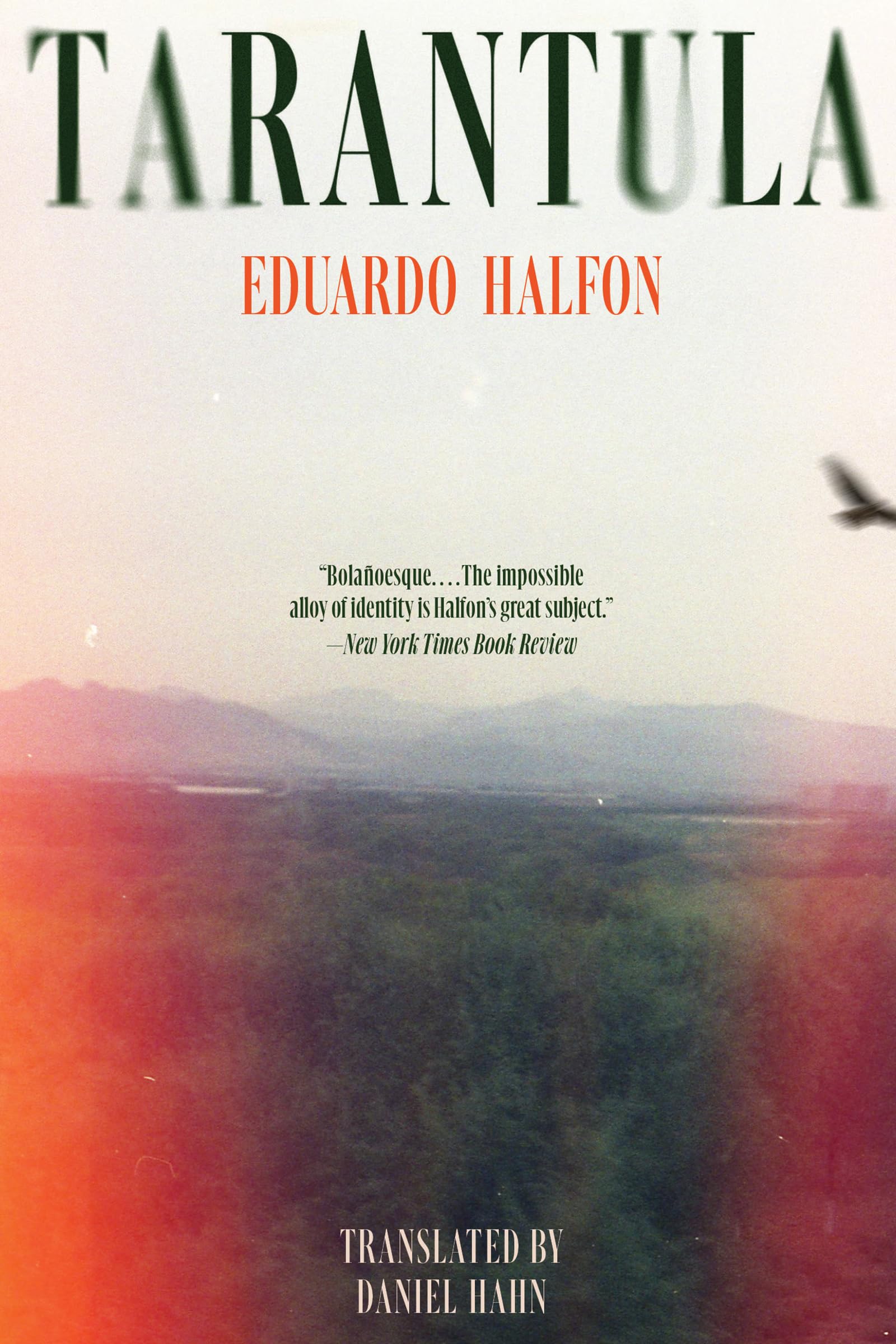



Dark lessons from a childhood sleepaway camp reverberate in the present In 1984, Eduardo and his younger brother, living in exile for several years in the United States, travel back to their native Guatemala to participate in a Jewish children’s camp in a remote forest of the highland mountains. They no longer know their homeland. They barely speak the language. Their parents had insisted that they spend a few days at the camp to learn not only ways of survival in the wild, but also ways of survival in the wild for Jewish children. It’s not the same, they had been told. Upon their arrival, they are met with the promise of adventure. But early one morning, they are roused from bed and forced to play a sinister game they can’t afford to lose. Many years later, Eduardo, now a father himself and living in Berlin, happens upon a former campmate in Paris who connects him to Samuel Blum—the counselor who kept a snake in his pocket, had what a young Eduardo took for a tarantula crawling down his arm, and offers no apologies for the camp’s disturbing methods. Praise for Tarantula Dua Lipa’s Service95 “Must-Read Books” selection Jewish Book Council “Recommended Reading” selection Observer “Paperback of the Week” selection “Challenging and provocative.” — Damon Galgut, Times Literary Supplement “A novel that tickles the brain and chills the heart at the same time.” — Times “Audacious. . . . A short, dense puzzle of a book . . . brilliantly translated by Daniel Hahn.” — Observer “An unsettling story, without specific or easy answers. . . . Powerful, well-conceived.” — Complete Review “Resonant. . . . Reflects on the effects of inherited trauma and victimhood. It’s a breath of fresh air.” — Publishers Weekly “Powerful. . . . A darkly unsettling but highly readable novel by a leading voice in Latin American fiction.” — Kirkus Reviews (starred review) “Halfon attempts to understand why his summer camp morphed into a concentration camp, complete with string quartet. He also probes the integral role that Judaism and his Guatemalan roots play in his writing.” — Library Journal (starred review) “This novel about a violent and traumatic childhood episode is eerily current—the questions it raises about identity, resistance, and history are both deeply personal and universal.” — Mariana Enríquez , author of Our Share of Night and Somebody Is Walking on Your Grave “An extraordinary book. What begins as a shocking story reveals itself as a sidelong, mysterious meditation on trauma, vengeance, and the terrible capacity of the past to shape the present.” — Olivia Laing , author of Crudo and The Silver Book “Chilling. A story set in the Guatemalan jungle that resonates in Gaza, in Donbas, anywhere victims end up resembling their own executioners.” — Santiago Roncagliolo , author of Red April More Praise for Eduardo Halfon “One of the most talented and exciting writers of our time.” — Christopher Merrill , director of the International Writing Program at the University of Iowa “Halfon is a brilliant storyteller.” — Daniel Alarcón “Halfon’s prose is as delicate, precise, and ineffable as precocious art, a lighthouse that illuminates everything.” — Francisco Goldman “It is not often that one encounters such a mix of personal engagement and literary passion, or pain and tenderness.” — Andrés Neuman “Elegant.” — Marie Claire “Engrossing.” — NBC Latino “Fantastic.” — NPR Alt.Latino “Revelatory.” — New York Times Book Review “Deeply accessible, deeply moving.” — Los Angeles Times “Offer[s] surprise and revelation at every turn.” — Reader’s Digest “One senses Kafka’s ghost, along with Bolaño’s, lingering in the shadows. . . . [Halfon’s] books, which take on such dark subjects, are so enjoyable to read.” — New York Review of Books Eduardo Halfon is the author of The Polish Boxer , Monastery , Mourning , Canción , and Tarantula . He is the recipient of the Guatemalan National Prize in Literature, International Latino Book Award, Edward Lewis Wallant Award, and Berman Literature Prize, among many other honors. A citizen of Guatemala and Spain, Halfon was born in Guatemala City, attended school in Florida and North Carolina, and has lived in Nebraska, Spain, Paris, and Berlin.