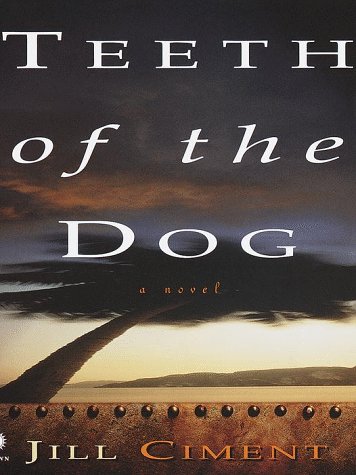



The author of the critically hailed Half a Life steps boldly into world-class literary territory with this tightly structured yet richly expansive literary thriller that will call to mind the work of Graham Greene and Paul Bowles's The Sheltering Sky. Thomas, a renowned American anthropologist, his much younger wife Helene, and Finster, a young, culturally shipwrecked AMR (American mercantile riffraff), as he's known locally, enact a tense personal drama of love and tragedy against the much larger historical drama of the Melanesian island of Vanduu, a steaming crucible where East and West, fundamentalist piety and free market fire, decay and sterility augur the future of the world. Helene has lured Thomas to Vanduu in the desperate hope that its tropical splendor can miraculously heal the fracture that has cleaved their lives: Thomas's health is failing, and Helene simply can't accept that she might lose him. Unable to cope with the gulf of loneliness that his illness has opened between them, Helene finds herself growing more and more desperate as they tour this lush, clamorous paradise that turns out to be no paradise at all. And then Finster appears--young, louche, popping up everywhere Thomas and Helene happen to be, dogging Helene like a lovesick puppy. When a tragic mishap caused by their dance of three accidentally takes the life of a Vanduuan child, Helene, separated from both men, becomes a fugitive left to fend for herself on this troubled, surreal, inexplicably foreign speck of land in the middle of the Pacific Ocean. With a distilled emotional power and prose so tactile you can feel the eroticism and heat on every page, this riveting tale enacts large themes--the inevitable consequences of the hegemony of the American dream, the inexorable loss of a deep, adult love compared to the hopped-up sex-for-sale enticements Finster offers in its place, and a glimpse into what progress, with its spiraling allurements, has truly forfeited. The mythical Melanesian island on which Teeth of the Dog is set is nothing if not lively. A Third World hash of shantytowns, strip clubs, bored hustlers, and uncertain electricity, Vanduu is abuzz not only with native lore and jarringly inescapable disco music but also with the unsettling palpitations of intrigue. In her fourth novel, Jill Ciment deftly weaves a tale of love and suspense into her colorful rendering of Vanduuan life, creating a story as tense as it is atmospheric. American vacationers Thomas and Helene Strauss, finding themselves underwhelmed by island amenities, spend much of the novel's first half glumly acknowledging the faltering trajectory of their marriage. Helene, years younger than her once-eminent anthropologist husband, has dragged him to this tourist-unfriendly backwater to--metaphorically and literally--get a rise out of him, prostate cancer having left him both world-weary and impotent. When Thomas suffers tragedy, and a dissolute American named Adam Finster preys on Helene's discontents, she's pitched into the sprawling and chaotic world of Vanduu with only her wits and Finster's help--perhaps--to save her. "New world devours old," Finster recalls from Vanduuan lore. "The foam is the mark of its voracious appetite. Teeth of the dog, the natives call it." Moments like these, when Ciment depicts the jostling of cultures, are nearly as much fun as watching Helene try to transmute desperation, deciphering a world she'd rather not have visited. Brisk, lush, and mildly suspenseful, Teeth of the Dog , while something short of a thriller, nonetheless reveals a fascinating world as rich in danger as it is in uncertainty. --Ben Guterson Thomas, an anthropologist in failing health, and his much younger wife, Helene, arrive on the imaginary Melanesian island of Vanduu in search of a vacation. They meet up with Adam Finster, known locally as an AMR (American Mercantile Riffraff), who spends his days smoking dope and selling aphrodisiacs to the native population. When Thomas's car hits and kills a Muslim girl, Helene is forced to run from officials of both the Vanduu and American governments, both of whom are eager to question her about the accident. Helene first turns to lovestruck Finster for help, but he is determined to persuade her to stay on Vanduu with him. Ciment (The Law of Falling Bodies, LJ 2/15/93) is good on the relationship between Thomas and Helene, but Finster is unconvincing and ultimately tangential to the plot. The publisher is comparing this novel to the works of Graham Greene and Paul Bowles, but it lacks the intensity of the former and the well-evoked settings of the latter. For large fiction collections.?Nancy Pearl, Washington Ctr. for the Book, Seattle Copyright 1998 Reed Business Information, Inc. There will always be innocents wandering about in the worst places abroad, and most of them will always be Americans, like the two described here by Ciment (The Law of Falling Bodies, 1993). The Melanesian is