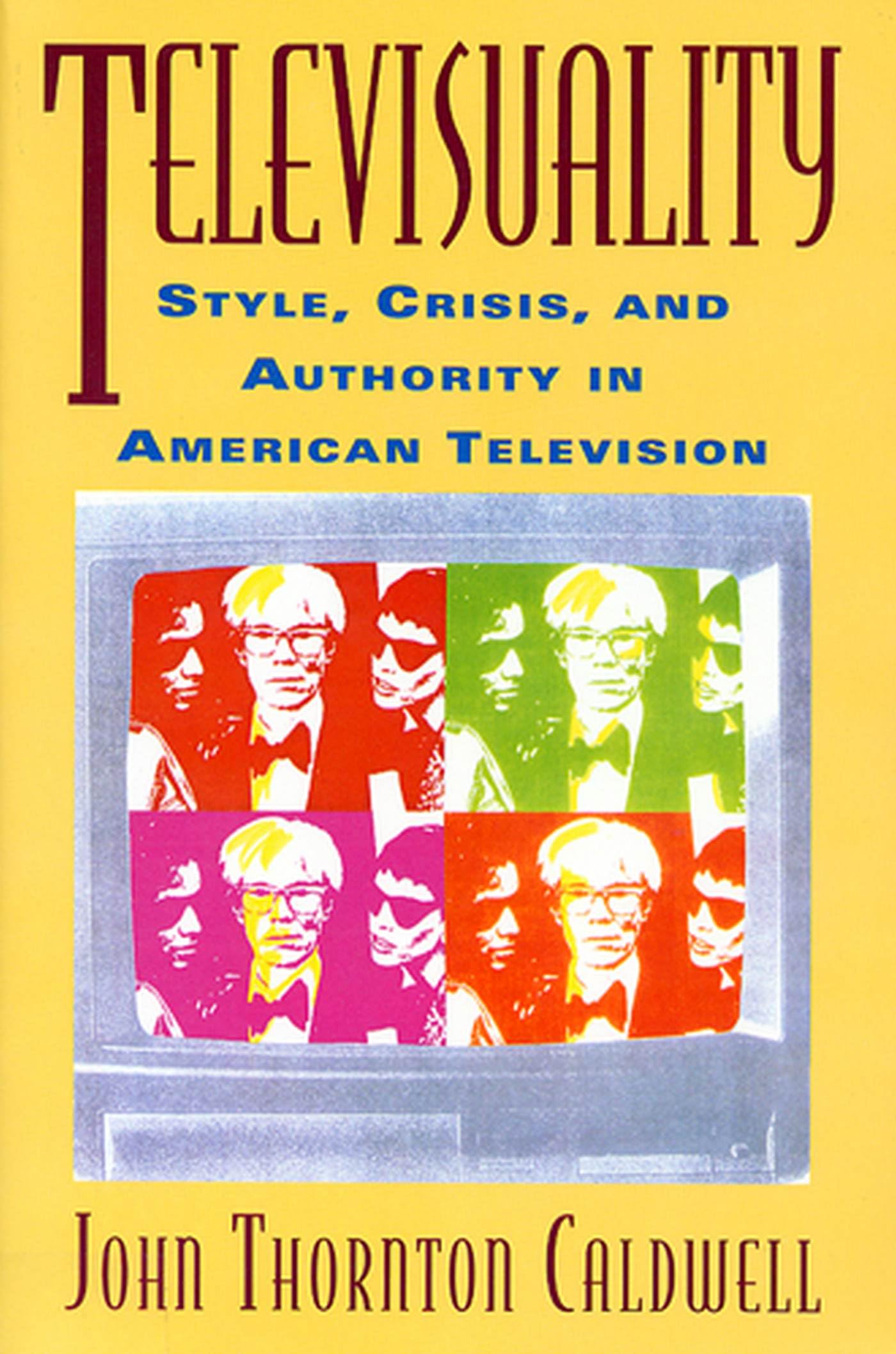



“Holling is tormented by Koyaanisqatsi dreams until he goes out and does the wild thing with a young stag . . . . ”––Synopsis from production company “Bible,” Northern Exposure, March 30, 1992 The collision of auteurism and rap––couched by primetime producers in the Northern Exposure script––was actually rather commonplace by the early 1990s. Series, and even news broadcasts, regularly engineered their narratives around highly coded aesthetic and cultural fragments, with a kind of ensemble iconography. Televisuality interrogates the nature of such performances as an historical phenomenon, an aesthetic and industrial practice, and as a socially symbolic act. This book suggests that postmodernism does not fully explain television's stylistic exhibitionism and that a reexamination of “high theory” is in order. Caldwell’s unique approach successfully integrates production practice with theory in a way that will enlighten both critical theory and cultural studies. "Tables and stills enhance the argument in this dense, insightful, and allusive text that leaves virtually no familiar generalization unchallenged. Upper-division undergraduate and up." -- M. Yacowar - Choice Although the "decline" of network television since 1980 in the face of competition from cable has been often noted, John Caldwell finds hat this institutional crises spawned a flurry of new production, programming, and representational initiatives in order to reassert network authority. Reminiscent of Hollywood's counterattack against network inroads in the 1950s, television in the 1980s hyped an extensive array of exhibitionist practices to raise the prime-time marquee above the multi-channel flow: excessive production, epic narrative, generic masquerade, video-graphic embellishment, and signature individualism. Far from an exercise in formalism, Televisuality demonstrates the cultural logic of stylistic exhibitionism in everything from prestige 'boutique' series(Northern Exposure, thirtysomething) and 'loss-leader' event-status programming (War and Remembrance) to Rollergames, and reality series). Caldwell shows how 'import auteurs' like Oliver Stone, David Lynch, and Barry Levinson were stylized for prime time even as video-graphics packaged an tamed crisis news coverage of the Panama invasion and the class-race onslaught of the L.A. Rebellion. By drawing on production experience and critical and cultural analysis, and by showing how technologies are tied to aesthetics and idealogy, Caldwell calls for a 'desegregation' of theory and practice in media scholarship and for an end to the willful blindness of 'high theory.' Used Book in Good Condition