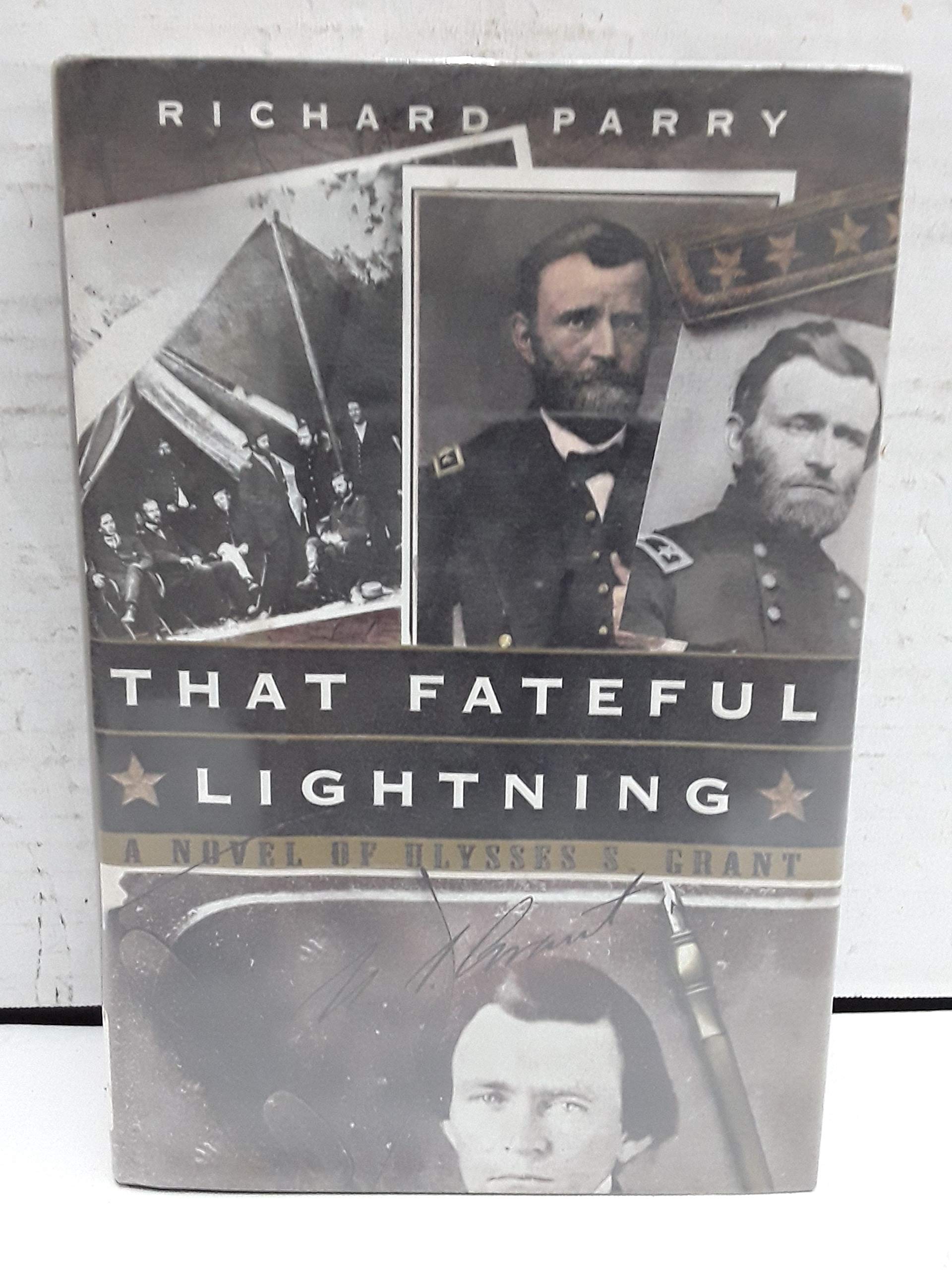



In a village outside Saratoga Springs, New York, a weakened man sits with pen in hand, looking back at a life dominated by failure: as a farmer, a businessman, a politician--everything but as a soldier. Racked by cancer, Ulysses S. Grant is entering his final months, facing the prospect of leaving his beloved wife penniless. Now he begins one last campaign--to bring to life the only thing of value he still commands: his memoirs. In the weeks and days that follow, Grant tells a story of war and peace, of friends and enemies, and of a man born for one singular purpose--to lead an army into battle, and to lead it to victory. In this extraordinary novel, Richard Parry takes us on a powerful journey through the Civil War as seen through the shrewd, unwavering eyes of its most enigmatic and least understood protagonist. For as Grant wages a duel against death itself, and his friends and family gather around him, he reveals with stunning clarity his vision of the war: at once a tragedy and a challenge, a nightmare and a puzzle, an epic of carefully laid strategies and counter-strategies as well as a strokes of inexplicable, decisive chance. Within these pages we meet such powerful historical figures as Mark Twain, the book publisher trying desperately to rescue Grant from poverty in the last year of his life; William Tecumseh Sherman, brilliant and dynamic, but also unsure and sorely in need of Grant's nurturing in war and life; and General Robert E. Lee, whose differences from Grant vividly illustrate the cultural and social divide at the core of the Civil War. A rich, vivid, and action-packed addition to our nation's literature of the Civil War, That Fateful Lightning is a powerful portrait of a uniquely American hero, a simple but misunderstood man who felt truly at peace only amid the horror and chaos of war. From a wealthy friend's front porch near Saratoga Springs, NY, a dying U.S. Grant looks back on a life of failure as a farmer, businessman, and politician: only in war did he succeed. Parry (The Wolf's Pack) depicts his subject's inspiring race to complete his memoirs and thereby save his family from financial ruin. As Grant writes, his mind flashes back to his service during the Mexican War; his forced resignation from the army (for drinking); his lean years (1857-58) as a woodcutter in Galena; his rise to the command of the Army of the Tennessee following Fort Sumter; his tactical brilliance at Shiloh and Vicksburg; and, finally, his triumph at Appomattox Court House. Parry skims over his subject's two controversial presidential terms. Interspersed throughout the narrative are truly evocative scenes, including editor Mark Twain's incredible offer of 70 percent royalties to Grant for his memoirs and Col. John Rawlin's monumental struggle to keep Grant sober on the battlefield. Parry somewhat overstates Grant's sense of divine mission while understating his alarming tendency to battlefield overconfidence. His narrative occasionally surrenders to saccharine melodrama, especially in Grant's deathbed scene, where Lee emerges from a blinding light. Still, Parry's novel successfully captures the essence of a dying hero's struggle with the grim realities of life. Recommended for academic and larger public libraries. -John Edwards, Univ. of Georgia Libs., Athens Copyright 2000 Reed Business Information, Inc. Sentimental but stirring salute to Ulysses S. Grant that visits the former Civil War general and American president near the end of his life, as he suffers stoically with poverty and throat cancer while struggling to complete his memoirs.Previously dismissed as a cigar-chewing drunk who ruthlessly wasted troops in battle, presided over a corrupt administration as a two-term president, and blithely permitted Sherman to carry out his brutal slaughter of Native Americans, Grant is becoming the darling of revisionist Civil War historians. For them, the Ohio-born warrior is an American icon whose triumph over alcoholism, depression, and business failure taught him that war was not a God-given opportunity to fight romantically for a worthy cause but, rather, a horrific contest in which survival was more important than winning. Parry ( The Wolf's Pack , 1998, etc.) opens his story at Appomattox, with a mud-spattered, unusually perceptive Grant quietly enduring Lee's aristocratic bombast out of pity for his beaten rival. The narrative then leaps ahead to a New York surgery where a team of physicians can't bear to tell the former president, recently impoverished by a corrupt business partner, that he has less than a year to live. After refusing offers of public and private charity, Grant agrees to write his memoirs for Mark Twain's nascent publishing company, hoping to earn enough to provide for his wife and children. From here on, a series of battlefield flashbacks fill in some of the more speculative blanks in the memoir, where Grant learns from his awful misjudgments and draws strength from so much wartime m