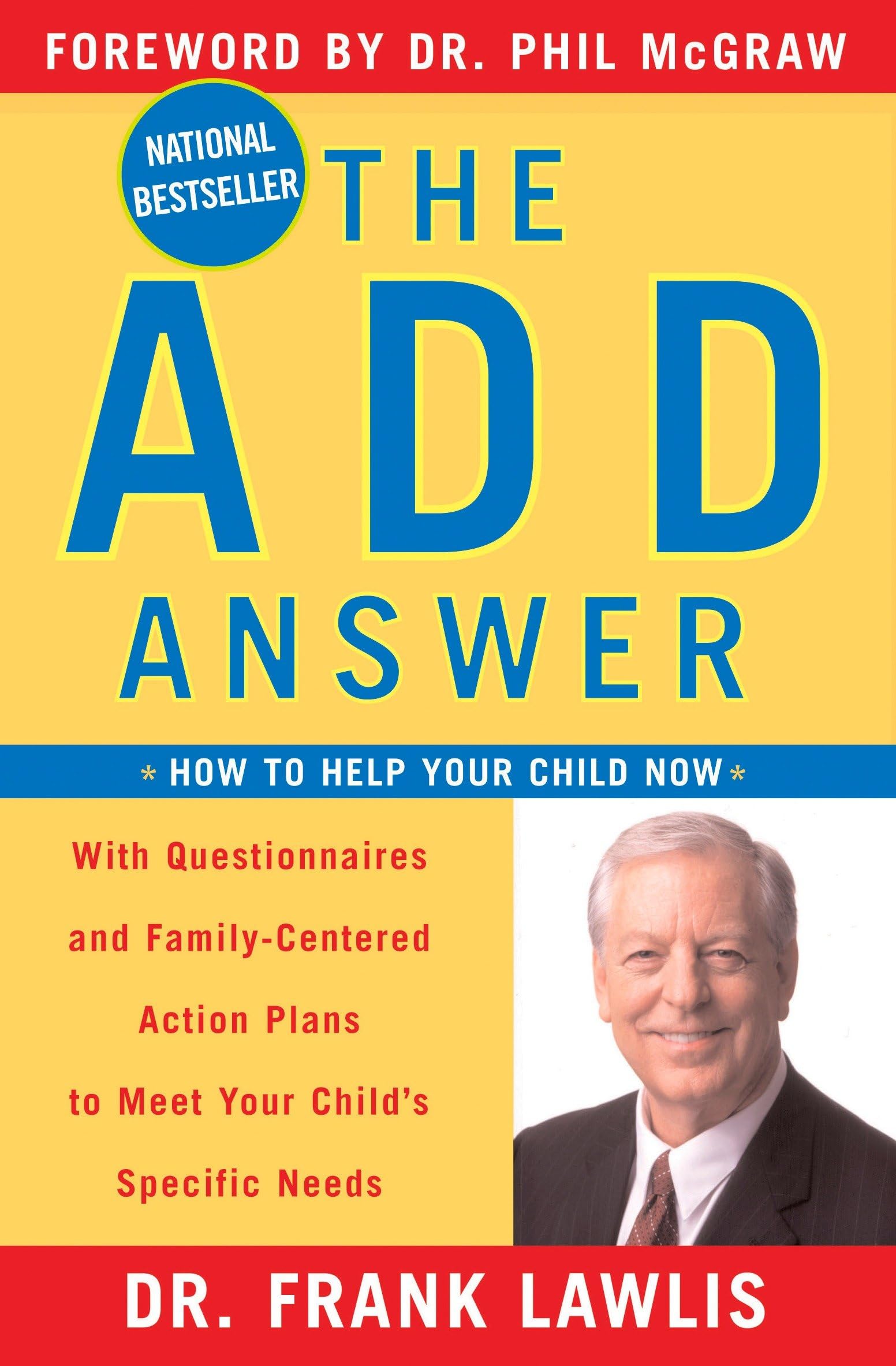



Every year, 17 million new cases of attention deficit disorder, or ADD, are diagnosed in children. But medications designed to treat the disorder don’t work for many children and often leave families frustrated and searching for more options. In The ADD Answer , Dr. Frank Lawlis draws upon his thirty-five years of experience as a clinical and research psychologist to show parents how they can reclaim their central role in healing their children with comprehensive step-by-step advice on dealing with the problems of ADD. His approach blends the latest medical, nutritional, and psychological treatments that can increase brain function with expert insight into the emotional—and spiritual—support kids need. Including assessment tests geared to help parents understand their child’s particular needs and practical information on proven treatment options, The ADD Answer explores: • The role of nutrition in treating the disorder • The positive effects of counseling and goal setting • Advances in the field of biofeedback • The importance of sleep, and much more An inspiring and essential guide, The ADD Answer will help every family facing the challenges of ADD create a more loving, healthy environment necessary for their child to thrive. Dr. Frank Lawlis is a renowned psychologist, researcher, and counselor with more than thirty-five years’ experience working with families. He is the cofounder of the Lawlis and Peavey Centers for Psychoneurological Change and was named a fellow by the American Psychological Association. Dr. Lawlis is also the chief content adviser for the Dr. Phil Show. Foreword by Dr. Phil McGraw Attention deficit disorder (ADD) is a major challenge for many families in this century. The needs and unresolved challenges of children with ADD are affecting virtually every school in this nation, and a high number of adult issues in the workplace have been linked to adult ADD. Children are our most valuable asset, yet many of our children with the greatest potential are being left on the sidelines. There is good reason to believe that there are multiple reasons for the upsurge of ADD. The growing toxicity of our nation, the breakdown of family stability, the increasing distractions of technology and video games, and the possible role of various viruses are all areas of concern. However, regardless of the cause, I have seen few solutions or approaches that hold out much promise or hope to the families who are overwhelmed by the diagnosis. I hear the despair and frustration expressed by parents as they go from one source to another with the same result? failure. Too often the label of ADD becomes a stigma of long-term problems that will never go away. We are not doing enough as a nation to help children and families overcome the challenges of ADD. The majority of our convicts in prisons can be diagnosed with ADD, yet we have no programs for children to avert this outcome or to offer adequate treatment. Most teachers and parents do not know what to do for children with ADD, although they are bright and eager to learn. Some parents are so frustrated in their dealings with the educational system that they have decided to homeschool their children. Most people know me by some of my pet phrases, and one is very appropriate to the current ADD situation: Is this working for you? The fact is that no one fully understands the problem of ADD, only the symptoms. I feel that as a psychologist with a specialization in behavioral medicine, I should be able to read the literature and determine whether someone has nailed down a cause-and- effect. But what I have discovered is that there are a lot of people trying to stick their finger in the dike, hoping the flood of questions will go away. What Dr. Lawlis is trying to do in this book is to help families understand their own child and what ADD means to them. He has recognized that this condition can mean many things and have many causes. Parents do not need academic explanations. They do not need prescriptions for a medication that may not work. And they certainly don?t need prescriptions for a medication that can have tragic side effects. Parents need an understanding of what their child is experiencing personally and a plan for the whole family to implement. Dr. Lawlis offers a step-by-step approach focused on accurate assessment and individualized solutions. In this way, progress can be measured and reinforced. He offers ways and methods to meet the educational and practical needs of children who suffer the academic and social stigma of ADD whatever their strengths or deficits. He supplies the biological and psychological basis for each approach, and he has also applied them in his own practice to be sure they are safe and effective. But more than a gentle plan and personal assessments, this book offers the most advanced approaches available for the treatment of ADD. Perhaps it takes someone with a research background and clinical passion to be able to addr