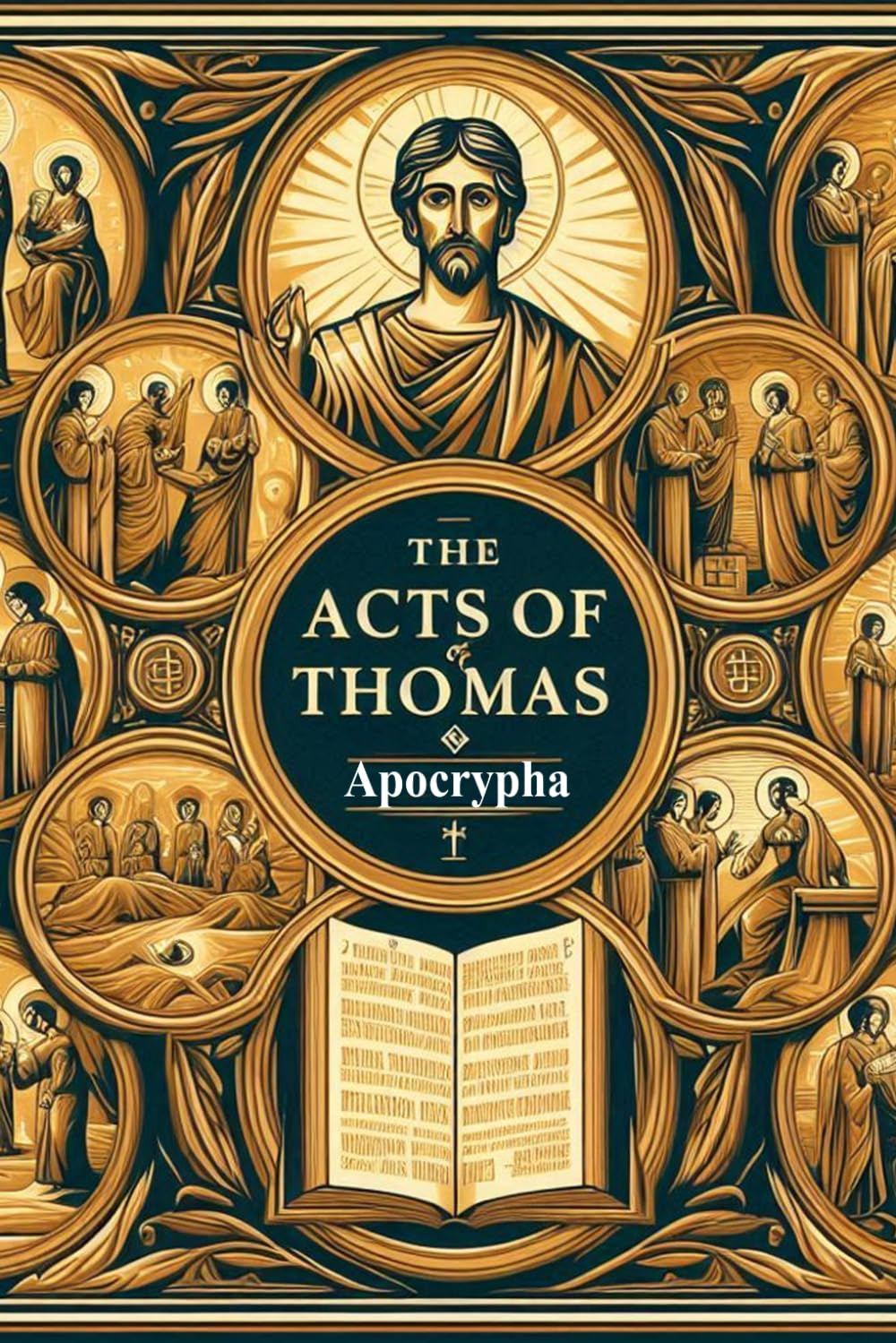
The Acts of Thomas: Acts of the Holy Apostle in India - Apocryphal Text of the Nag Hamadi Library
$12.90
by Nag Hamadi



The Acts of Thomas and the Hidden Depths of Early Christianity The Acts of the Holy Apostle Thomas is a text that invites us to explore the margins of early Christian history, where the boundaries between fact and legend blur, and where the voices of those excluded from the canonical narratives find expression. Unlike the Gospels and Acts of the Apostles found in the New Testament, the Acts of Thomas offers a unique perspective on the spread of Christianity, one that is deeply intertwined with the cultures, philosophies, and spiritual struggles of the ancient world. This text, often relegated to the category of "apocrypha," is far from being a mere curiosity or a footnote in Christian history. It is a rich tapestry of theological insight, cultural exchange, and spiritual adventure. Through its vivid narratives, we encounter a Thomas who is not merely the "doubting" disciple of the canonical Gospels but a dynamic and courageous apostle who carried the message of Christ to the distant lands of India. His story challenges us to reconsider what we think we know about early Christianity and to explore the diverse and often contradictory ways in which the faith was understood and lived out in its formative centuries. Shedding Light on the Canonical Silence One of the most striking features of the Acts of Thomas is the way it fills in gaps left by the canonical texts. For example: The Mission to India: While the New Testament mentions the spread of Christianity to regions such as Asia Minor, Greece, and Rome, it says nothing about missions to India. The Acts of Thomas provides a detailed account of Thomas’s journey to India, his interactions with local rulers, and the establishment of Christian communities there. This narrative is supported by the living traditions of the St. Thomas Christians in Kerala, who trace their origins to the apostle’s mission. - The Role of Women: The Acts of Thomas highlights the active role of women in the early Christian movement, particularly in the context of conversion and discipleship. Characters such as Mygdonia, a noblewoman who defies her husband to follow Thomas’s teachings, challenge the patriarchal norms of their time and reflect the radical inclusivity of the early Christian message. - Mysticism and Asceticism: The text is deeply imbued with themes of mysticism and asceticism, particularly in the famous Hymn of the Pearl . This hymn, which tells the story of a prince sent on a divine mission to retrieve a pearl from a serpent, is a profound allegory of the soul’s journey from ignorance to enlightenment. Such themes are largely absent from the canonical texts but were central to the spirituality of many early Christians. - Interfaith Dialogue: The Acts of Thomas reflects the complex interplay between Christianity and other religious traditions, particularly Zoroastrianism and Indian spirituality. Thomas’s debates with local priests and philosophers reveal the early Church’s engagement with the broader religious and intellectual currents of its time. Theological and Spiritual Insights Dead Sea Scrolls & Apocalyptic Visions Decode the secrets of the Essenes and ancient Jewish mysticism through the War Scroll , Community Rule , and Isaiah Scrolls . Delve into prophecies of end times, angelic hierarchies, and rituals from the Qumran community. - Apocrypha & Forbidden Scriptures Uncover texts excluded from the biblical canon, such as the Book of Enoch , Gospel of Judas , and Acts of Paul and Thecla . These works challenge orthodox narratives with tales of fallen angels, rogue apostles, and suppressed voices of women.