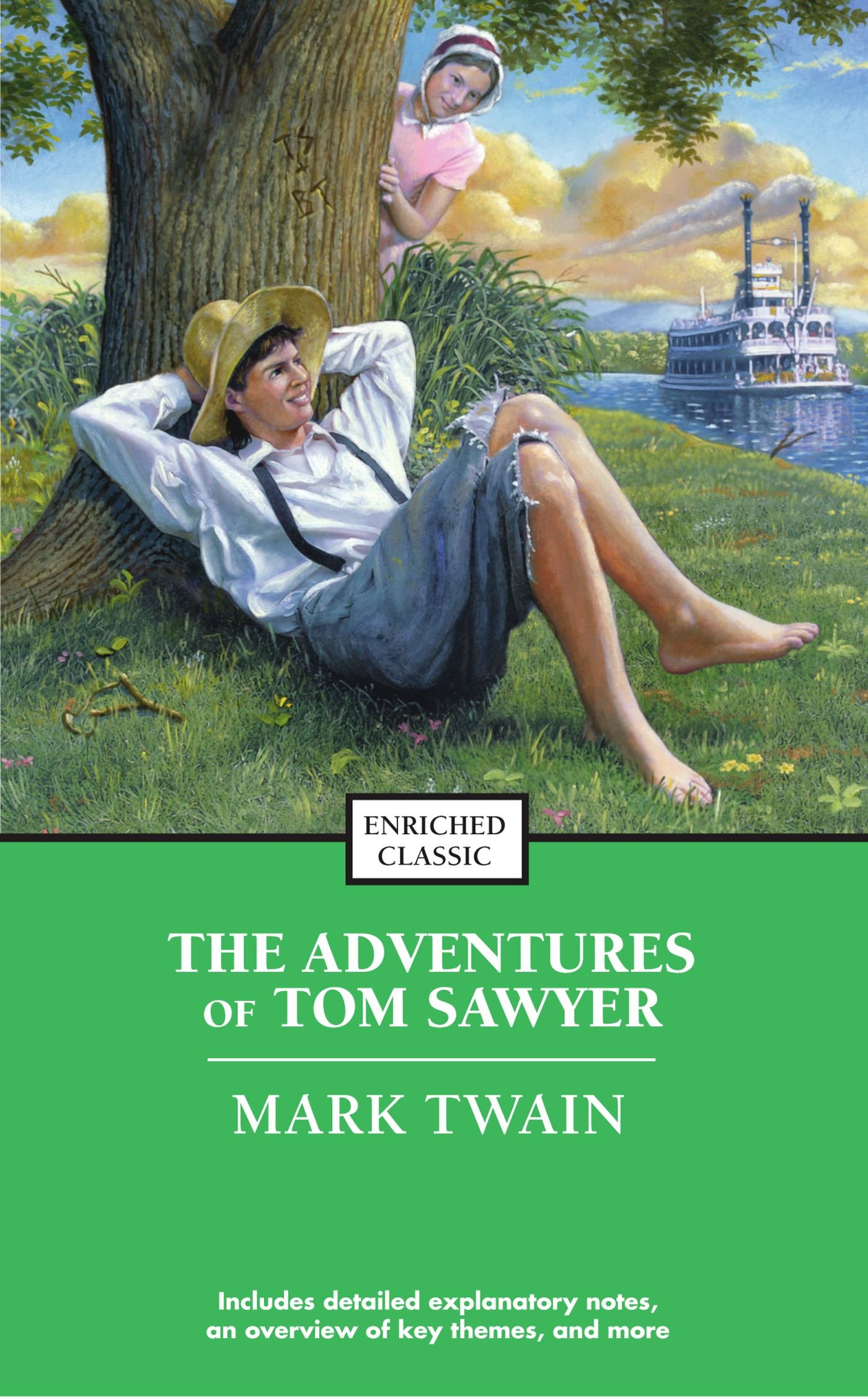



Enriched Classics offer readers accessible editions of great works of literature enhanced by helpful notes and commentary. Each book includes educational tools alongside the text, enabling students and readers alike to gain a deeper and more developed understanding of the writer and their work. Originally published in 1876, The Adventures of Tom Sawyer is the classic tale of a carefree and courageous boy’s coming-of-age in a rural Mississippi River town. Tom and his best friend, Huckleberry Finn, are two of literature’s most enduring and treasured creations. Enriched Classics enhance your engagement by introducing and explaining the historical and cultural significance of the work, the author’s personal history, and what impact this book had on subsequent scholarship. Each book includes discussion questions that help clarify and reinforce major themes and reading recommendations for further research. Read with confidence. Mark Twain, born Samuel Langhorne Clemens in 1835, left school at age 12. His career encompassed such varied occupations as printer, Mississippi riverboat pilot, journalist, travel writer, and publisher, which furnished him with a wide knowledge of humanity and the perfect grasp of local customs and speech manifested in his writing. It wasn't until The Adventures of Huckleberry Finn (1885), that he was recognized by the literary establishment as one of the greatest writers America would ever produce. Toward the end of his life, plagued by personal tragedy and financial failure, Twain grew more and more cynical and pessimistic. Though his fame continued to widen--Yale and Oxford awarded him honorary degrees--he spent his last years in gloom and desperation, but he lives on in American letters as "the Lincoln of our literature." Chapter I: Tom Plays, Fights, and Hides "Tom!" No answer. "Tom!" No answer. "What's gone with that boy, I wonder? You, TOM!" No answer. The old lady pulled her spectacles down and looked over them about the room; then she put them up and looked out under them. She seldom or never looked through them for so small a thing as a boy; they were her state pair, the pride of her heart, and were built for "style," not service -- she could have seen through a pair of stove lids just as well. She looked perplexed for a moment, and then said, not fiercely, but still loud enough for the furniture to hear: "Well, I lay if I get hold of you I'll -- " She did not finish, for by this time she was bending down and punching under the bed with the broom, and so she needed breath to punctuate the punches with. She resurrected nothing but the cat. "I never did see the beat of that boy!" She went to the open door and stood in it and looked out among the tomato vines and "jimpson" weeds that constituted the garden. No Tom. So she lifted up her voice at an angle calculated for distance, and shouted: "Y-o-u-u, Tom!" There was a slight noise behind her and she turned just in time to seize a small boy by the slack of his roundabout and arrest his flight. "There! I might 'a' thought of that closet. What you been doing in there?" "Nothing." "Nothing! Look at your hands. And look at your mouth. What is that truck?" "I don't know, aunt." "Well, I know. It's jam -- that's what it is. Forty times I've said if you didn't let that jam alone I'd skin you. Hand me that switch." The switch hovered in the air -- the peril was desperate -- "My! Look behind you, aunt!" The old lady whirled round, and snatched her skirts out of danger. The lad fled, on the instant, scrambled up the high board fence, and disappeared over it. His aunt Polly stood surprised a moment, and then broke into a gentle laugh. "Hang the boy, can't I never learn anything? Ain't he played me tricks enough like that for me to be looking out for him by this time? But old fools is the biggest fools there is. Can't learn an old dog new tricks, as the saying is. But my goodness, he never plays them alike, two days, and how is a body to know what's coming? He 'pears to know just how long he can torment me before I get my dander up, and he knows if he can make out to put me off for a minute or make me laugh, it's all down again and I can't hit him a lick. I ain't doing my duty by that boy, and that's the Lord's truth, goodness knows. Spare the rod and spile the child, as the Good Book says. I'm a-laying up sin and suffering for us both, I know. He's full of the Old Scratch, but laws-a-me! he's my own dead sister's boy, poor thing, and I ain't got the heart to lash him, somehow. Every time I let him off, my conscience does hurt me so, and every time I hit him my old heart most breaks. Well-a-well, man that is born of woman is of few days and full of trouble, as the Scripture says, and I reckon it's so. He'll play hooky this evening, and I'll just be obleeged to make him work, tomorrow, to punish him. It's mighty hard to make him work Saturdays, when all the boys is having holiday, but he hates work more than he hate