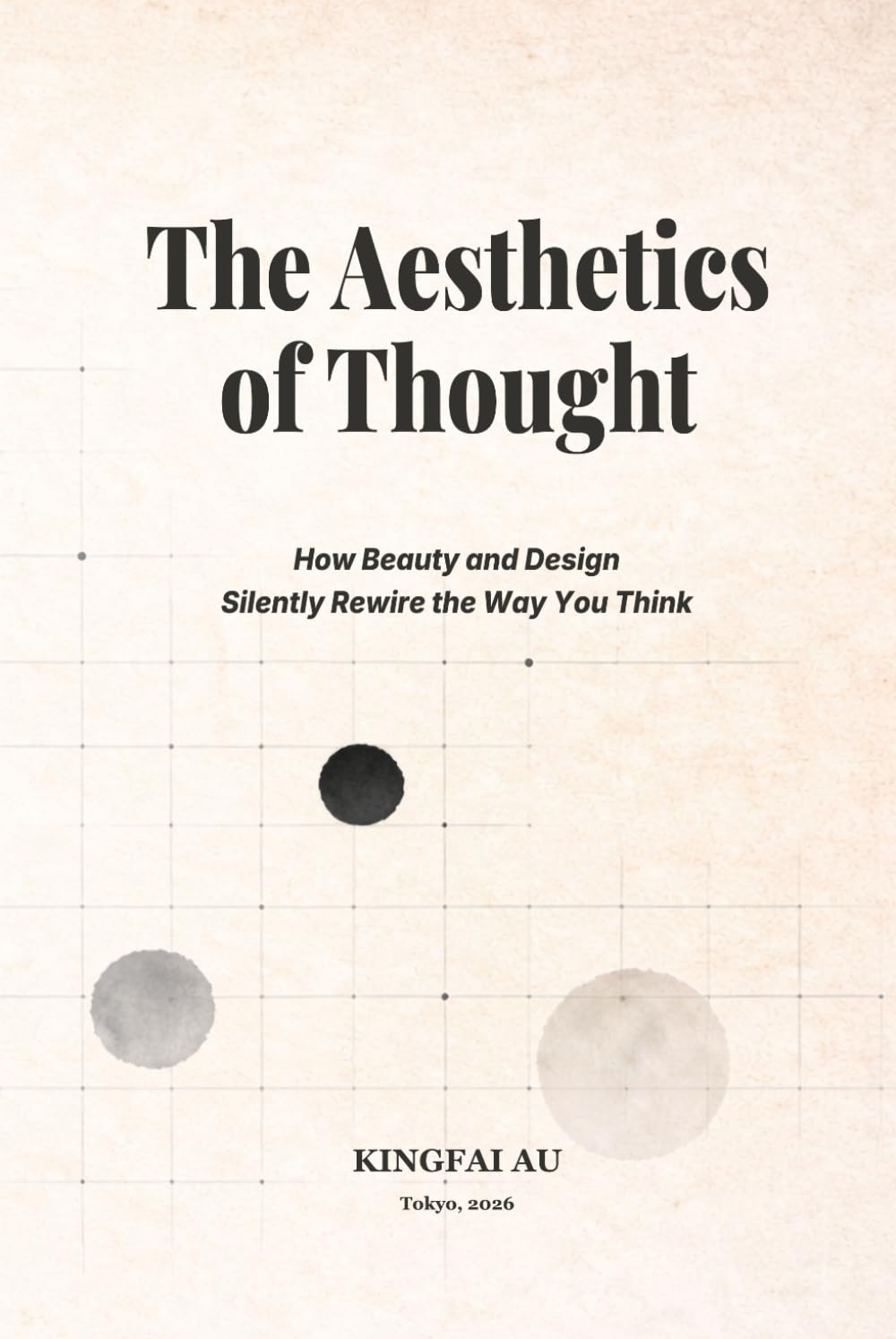
The Aesthetics of Thought: How Beauty and Design Silently Rewire the Way You Think
$25.66
by Kingfai Au



Certain things feel intelligent the moment we see them. Balanced layouts. Clean space. Smooth surfaces. Calm light. Measured rhythm. Before argument begins, something already feels right. The Aesthetics of Thought examines this quiet mechanism. It explores how symmetry reduces cognitive strain, how minimalism signals clarity, how visual hierarchy creates authority, and how sensory context alters judgment across channels. The book does not define beauty as a cultural taste. It traces how aesthetic structure interacts with cognitive energy management, processing fluency, and reasoning itself. When information is arranged in a particular way, it does more than look organized — it reorganizes thought. Ease of processing becomes mistaken for validity. Coherence becomes confused with truth. Visual fluency increases persuasion without improving logic. Under certain conditions, aesthetic harmony can even suppress scrutiny. The aim is neither to reject design nor to expose deception. It is to render visible a layer that normally remains implicit: the interface through which thought passes. Once that layer is seen, beauty does not disappear. It simply relocates — from an unseen influence to a recognized architecture. This book is an exploration of that architecture.