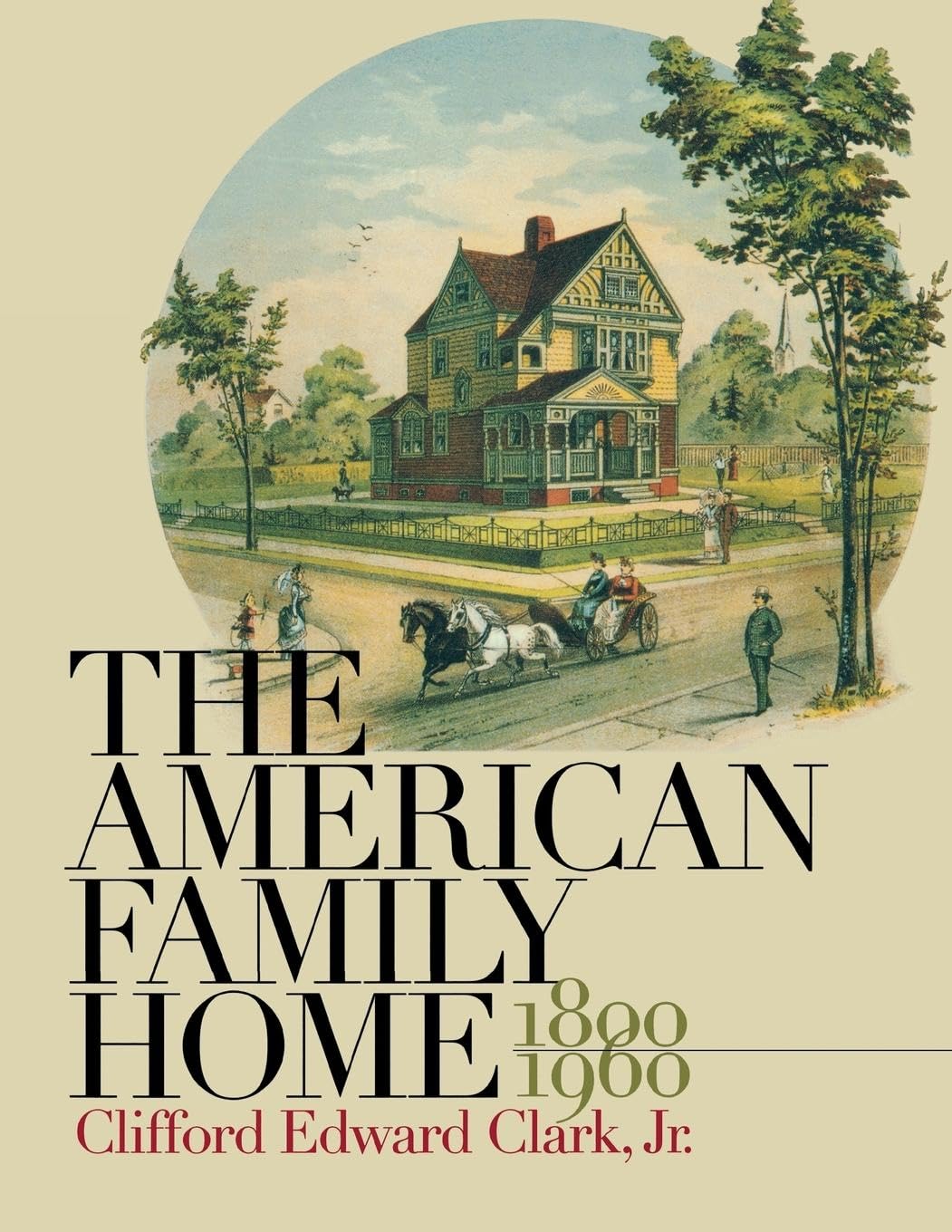



In the nineteenth century, architects and family reformers launched promotional campaigns portraying houses no longer as simply physical structures in which families lived but as emblems for family cohesiveness and identity. Clark explains why, despite the fear of standardization and homogenization, the middle class has persisted in viewing the single-family home as the main symbol of independence as as the distinguishing sign of having achieved middle-class status. Professors Gowans and Clark (History of Art and American Studies respectively) have each authored a scholarly treatment of the American home in its cultural context. Both books include analyses of architectural style, but the authors are also concerned with the symbolic functions of the middle-class home. Both identify the qualities that were of importance in the perception of home and hearth: security, roots in the past, respectability, and the virtue of family stability. The Comfortable House has the narrower scope, as it sorts out the proliferation of house styles in the period when more homes were built than in the country's entire previous history. This was an era of flight from the city, and the "comfortable home" was most importantly one that was removed from the squalor of urban living. Although there were new styles, designs of this time often incorporated architectural traditions of past eras; Gowans explores how the prefabricated models differed in social functions from those of earlier times. The American Family Home, 1800-1960 is broader in both chronology and treatment. Clark chronicles the idealized vision of the middle-class home and uses a variety of sources, including popular magazines, builders' plan books, and advertising. He analyzes four building styles (Gothic, Queen Anne, Bungalow, and Ranch House Modern), setting forth the reformers' vision and comparing those ideals to the houses that were built and the experiences of individual families. His discussion extends to changes in interior space, decor, and furnishings. Both books are heavily illustrated and include extensive notes and bibliographies. Both are highly recommended, although Clark's is the more substantial work and will be of interest to a wider readership. Douglas G. Birdsall, North Dakota State Univ. Lib., Fargo Copyright 1986 Reed Business Information, Inc. “A stimulating book, one that should appeal to readers interested in architecture as well as in family or women’s history.” — North Carolina Historical Review “An excellent and needed study of the important relation between houses and the fabric of American family life.” ― Helen Lefkowitz Horowitz, Scripps College “An excellent and needed study of the important relation between houses and the fabric of American family life.” ― Helen Lefkowitz Horowitz, Scripps College Clifford Edward Clark Jr., is M. A. and A. D. Hulings Professor of American Studies and professor of history at Carleton College. He is author of Henry Ward Beecher: Spokesman for a Middle-Class America .