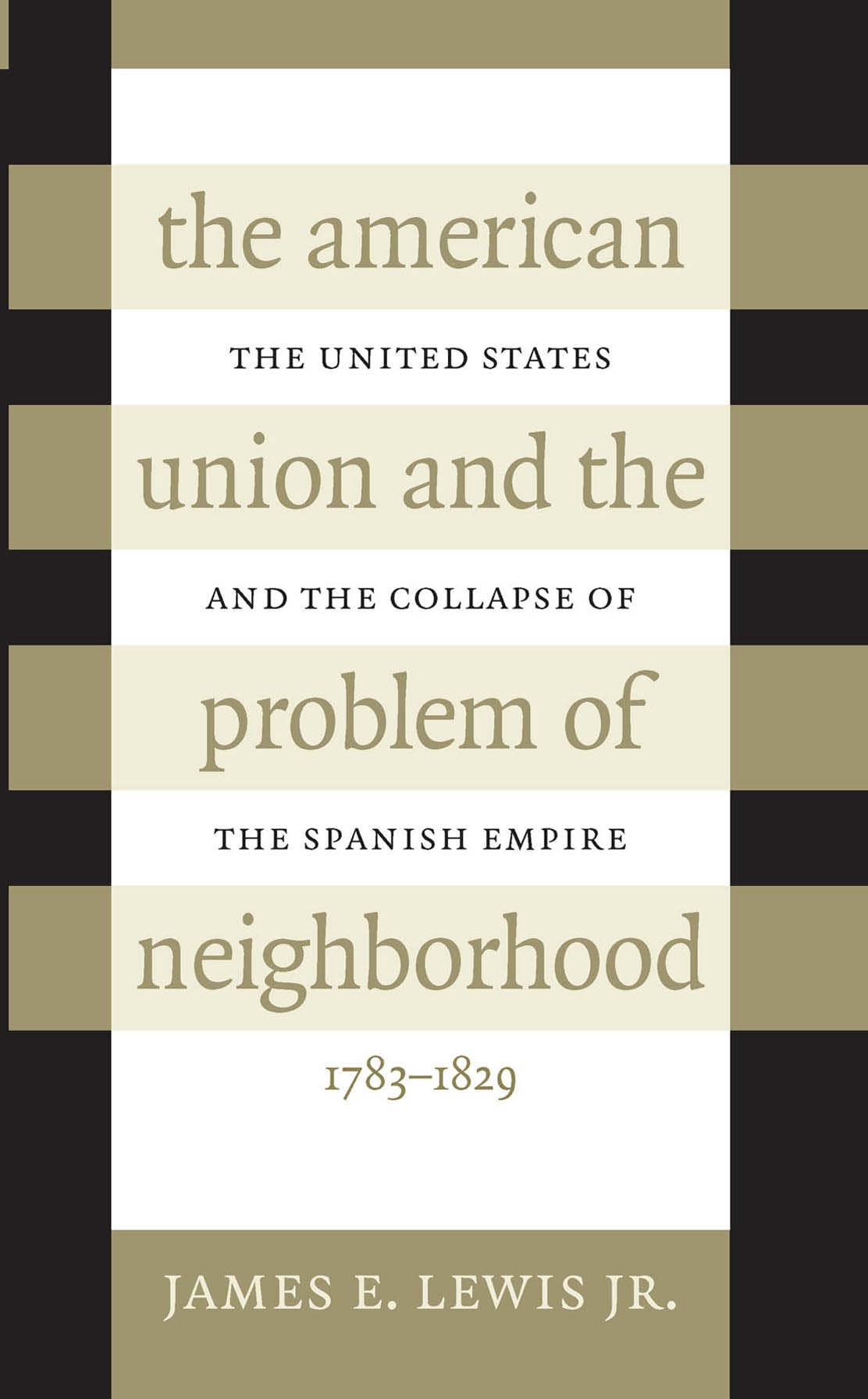
The American Union and the Problem of Neighborhood: The United States and the Collapse of the Spanish Empire, 1783-1829
$37.50
by James E. Lewis Jr



In this book, James Lewis demonstrates the centrality of American ideas about and concern for the union of the states in the policymaking of the early republic. For four decades after the nation's founding in the 1780s, he says, this focus on securing a union operated to blur the line between foreign policies and domestic concerns. Such leading policymakers as Thomas Jefferson, James Madison, James Monroe, John Quincy Adams, and Henry Clay worried about the challenges to the goals of the Revolution that would arise from a hostile neighborhood-whether composed of new nations outside the union or the existing states following a division of the union. At the center of Lewis's story is the American response to the dissolution of Spain's empire in the New World, from the transfer of Louisiana to France in 1800 to the independence of Spain's mainland colonies in the 1820s. The breakup of the Spanish empire, he argues, presented a series of crises for the unionist logic of American policymakers, leading them, finally, to abandon a crucial element of the distinctly American approach to international relations embodied in their own federal union. “The author has explored an aspect of early American foreign policy not before raised. The research is broad and deep, rich in its coverage of secondary material, as one would expect of a book derived from a dissertation. The bibliography will assist specialists and students at all levels, and the book belongs in major libraries that focus on early American history and the history of American foreign affairs.” — American Historical Review “Well reasoned, well researched, and beautifully crafted. . . . His work is both thoughtful and provocative, and serious scholars of the early republic — and general American historians — will find it well worth reading.” — Journal of American History “In this ambitious book James Lewis attempts to refocus our understanding of an important transitional period in American history. By exploring the problem of American union in relation to events occurring in other parts of the hemisphere, he offers a fresh look at two generations of unionist policymakers in the newly independent United States.” ― Drew R. McCoy, Clark University “Lewis has written a new style of 'headquarters history' that social and cultural historians will want to read. Like it or not, persons in office in the new United States made policies that affected ordinary people’s interests as well as the long-term health of the republic. Wading patiently through the swamps of political rhetoric that accompanied the national political process, Lewis has provided us a reliable map of where and how the opinions and actions of 'policymakers' touched the lives of ordinary people and shaped the stories of self-creation that fascinate the latest generation of cultural historians.” ― John Lauritz Larson, Purdue University How external threats helped unite the states Uses the American response to the dissolution of Spain's empire in the New World (1783-1829) to demonstrate that American concern for the union of the states was a major factor in the policymaking of the early republic. James E. Lewis Jr. is assistant professor of history at Louisiana State University in Baton Rouge. Used Book in Good Condition