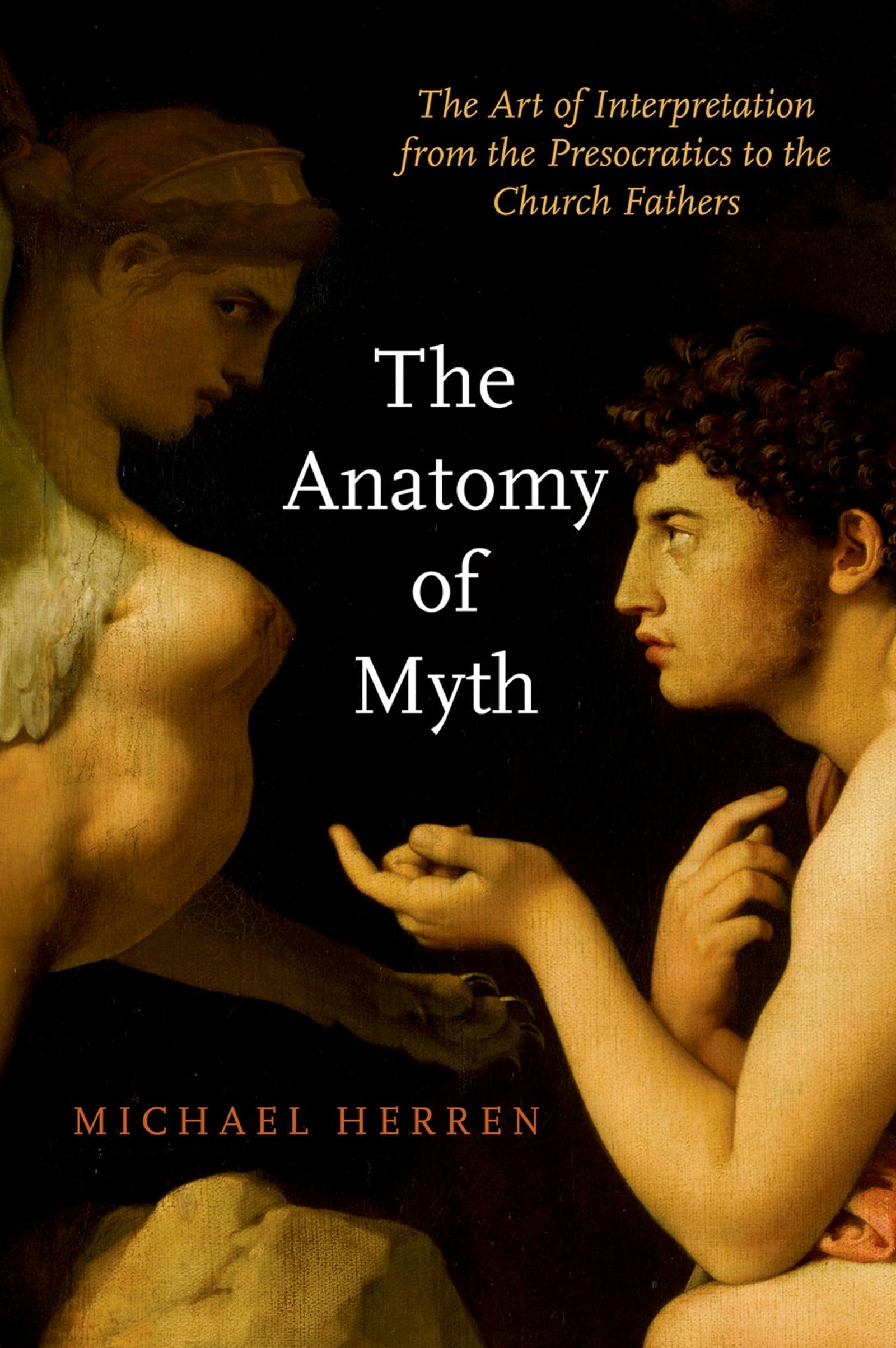
The Anatomy of Myth: The Art of Interpretation from the Presocratics to the Church Fathers
$40.99
by Michael Herren



The Anatomy of Myth is a comprehensive study of the different methods of interpreting myths developed by the Greeks, adopted by the Romans, and eventually passed on to Jewish and Christian interpreters of the Bible. Greek thinkers only rarely saw "myth" as a category of thought in its own right. Most often they viewed myths as the creation of poets, or else as an ancient revelation that had been corrupted by them. In the first instance, critics attempted to find in the intention of the authors some deeper truth, whether physical or spiritual; in the second, they deemed it necessary to clear away poetic falsehoods in order to recapture an ancient revelation. Parallel to the philosophical critiques were the efforts of early historians to explain myths as exaggerated history; myths could be purified by logos (reason) and rendered believable. Practically all of these early methods could be lumped under the term "allegory"--to intend something different from what one expressed. Only occasionally did philosophers veer from a concern for the literal truth of myths but a few thinkers, while acknowledging myths as fictions, defended their value for the examples of good and bad human behavior they offered. These early efforts were invaluable for the development of critical thinking, enabling public criticism of even the most authoritative texts. The Church Fathers took the interpretative methods of their pagan contemporaries and applied them vigorously to their reading of the scriptures. Pagan Greek methods of myth interpretation passed into the Middle Ages and beyond, serving as a perennial defense against the damaging effects of scriptural literalism and fundamentalism. "The value of Herren's book should not be underestimated, and I unequivocally recommend it to anyone interested in the history of myth and myth criticism. It is easy and enjoyable to read and filled with a fascinating array of information, making connections that shape into clear and compelling arguments. Tracing different threads through centuries of discussion leaves the reader a dynamic overview of not only contributions of classical authors to ways of interpreting or anatomizing myths, but also how these relate to one another, evolve over time, and link to the cultures and historical contexts in which they emerged and progressed." -- Folklore "An insightful and accessible analytical overview that so many of us needâ. The value of Herren's book should not be underestimated, and I unequivocally recommend it to anyone interested in the history of myth and myth criticism. It is easy and enjoyable to read and filled with a fascinating array of information, making connections that shape into clear and compelling arguments." -- Folklore "This book is a superb presentation of approaches to Greek myth from the Presocratics down to the Church Fathers Together with a twenty-page glossary, this book is the most useful overview of myth in the ancient world that I have ever read, and I have read many overviews."--Robert A. Segal, Reading Religion "Summing Up: Optional. Lower- and upper-division undergraduates; general readers." --P. E. Ojennus, CHOICE "This book is a superb presentation of approaches to Greek myth from the Presocratics down to the Church Fathers. Michael Herren is Distinguished Research Professor of Classics Emeritus at York University. He offers incisive summaries of Homer and Hesiod, who together formed the Greek equivalent of the Bible. But even more, he focuses on ancient interpreters of Homer and Hesiod and of the cosmos in general. As he points out, many other ancient peoples had their own myths, but they did not have their own interpreters of them. Or at least those interpretations do not survive." --Robert A. Segal, Reading Religion "[Herren] claims to have intended his book for students, including those who have no classical knowledge, and it is indeed blissfully free from academic grandstanding or scholarly jargon. The sweep of the story is wide, and within the summary above there are many enjoyable digressions, such as a chapter on ancient historians discussing such things as the historicity of the Trojan War. A dense subject is made an easy read. But H. has also a serious purpose. He is concerned about the dangers of religious fundamentalism arising from the literalist interpretation of sacred books. His thesis is that the adoption by the Fathers of Greek methods on interpretation, including allegory, enabled the Church to avoid the fundamentalist trap as far as the Renaissance, and that the activity of interpreting authoritative texts, and the freedom to do so, has helped to create 'the society that we currently enjoy'." --Colin McDonald, Classics For All "Building on decades of classroom experience and scholarly research, Herren has produced a lively and original book that traces the evolution of classical myth from its archaic Greek origins down to the fifth C. CE. Both the teacher's irreverent and provocative voi