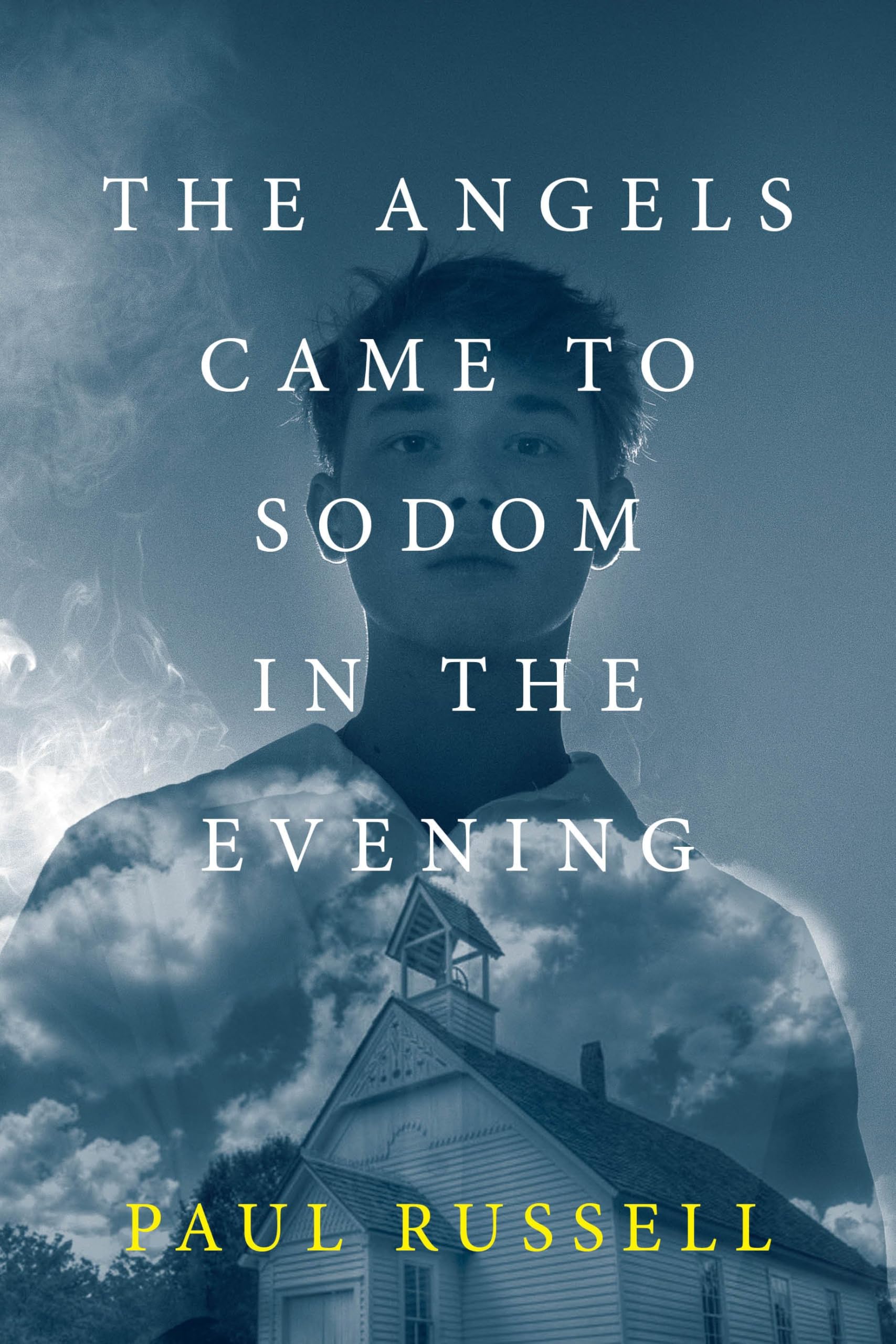



A novel that dares to take on some of the fiercest forces of our times - ones that use Biblical language to cast minorities as evil. Rory's life is built on secrets—from his childhood playing a Crusader in the vanishing woods of Memphis, through his passionate, hidden bond with his friend Drew, to his eventual life as a prominent megachurch pastor. When his carefully constructed world begins to collapse, Rory embarks on a reckoning that takes him from the pulpit to underground queer spaces, from respectability to radical honesty. The Angels Came to Sodom in the Evening is an audacious exploration of desire, faith, and the price of living authentically in a world that demands conformity. With echoes of Flannery O'Connor and James Baldwin, Paul Russell crafts a devastating portrait of American masculinity, religious hypocrisy, and the liberating power of embracing one's true self—no matter the cost. Praise for Paul Russell's novels: “ The Coming Storm takes off from a sensational subject to arrive at unexpected heights and subtleties. It’s both unsettling and touching… well-nigh flawless.”— The Washington Post “If Tennessee Williams were young today and a Yankee, The Salt Point is the novel he might have written. It finds the sacred and poetic even in the slag heap of small-town America.” — Edmund White Boys of Life is simply great writing — risky, honest, horrifying and insightful…. A forthright vision of love’s darkest possibilities.” — Dorothy Allison Paul Russell is the author of several acclaimed novels including The Salt Point , War Against the Animals and the Ferro-Grumley Award winners The Coming Storm and The Unreal Life of Sergey Nabokov. Translated into ten languages, his work has been praised in The New York Times , The Washington Post , The Boston Globe and The Wall Street Journal . He lives in New York’s Hudson Valley. 1 Lawn No ordinary friends, Rory Singleton and Drew Shepherd, when they meet, without so much as a word lower their heads and charge; one will drop the other to the ground and then they’re roughhousing, oblivious to anything around them. No one especially remarks on the boys’ behavior, though certain adults from time to time look for a sign that something’s amiss, some hint of deeper hostility between the two, but finding none they think no more of it. And so the two go on—grappling in the school parking lot before class, on the playground during recess, the lawn in front of Rory’s house on Luxor Cove or Drew’s the next street over, indoors if it’s raining or too hot in summer, though in Memphis winter’s never too cold for outdoor play, and that's what Rory remembers best: brisk afternoons after school, ruddy cheeks, harsh breath, ripe sniff of sweat snatched from an armpit, our two mortal combatants interlocked, entangled, each seeking advantage, the momentary victor upended in a quick reversal, subdued body rising up rebelliously, the enthralling struggle begun anew—everything a couple of adolescent boys can get up to when left to themselves. The woods at the end of the street haven’t yet been bulldozed, and when Rory and Drew aren't engaged in their horseplay they roam that soon-to-vanish wilderness with a pack of other kids from the neighborhood: freckled, ginger-headed twins Mike and Mick O’Shea; an affable long-limbed black boy named Marlon Turner. The woods they inhabit are immense, unfathomable—at least to a boy’s hyper-stimulated imagination. Moccasin Swamp and the Wisdom Oak. Crocodile Gulch spanned by a fallen log too narrow for balancing on so they straddle it and scoot across, a not unpleasing sensation. On the other side lies Barren Mountain and the leaning sycamore with its grapevine that one day spills Marlon into the muddy stream where piranhas almost certainly swim. They're at the mercy of everything—poison ivy, mosquitoes, chiggers. There might even be a rattlesnake at large in those woods they never manage to catch, no matter how much they dream of hacking the serpent to pieces with a shovel. The danger's part of the fun. “Where I used to live,” Marlon boasts, “other side of town, we had this super-cool game. Ya’ll ever hear about Saluting the Sultans?” Nobody has—but they're interested. Maybe. Their own adventures sometimes settle into doldrums. “Not sure where it came from,” Marlon goes on. “Africa, probably. Go back far enough, most everything comes from Africa. Hoodoo, okra, Elvis, you name it.” “Get out,” Drew tells him. “Sultans got swagger like you never seen. That always means Africa.” Rory might envy this nonsense a little. For all the time he and Drew spend wrestling, they never seem to know each other any better. They never banter back and forth like Drew and Marlon. “Anyway,” Marlon continues, “the game was, we each of us had to own up.” “Own up?” Drew says. “Like to what?” “Not superpowers or nothing. Don’t get me wrong. More like hidden stuff you had to fess up to being so you could even be in the game. So not every