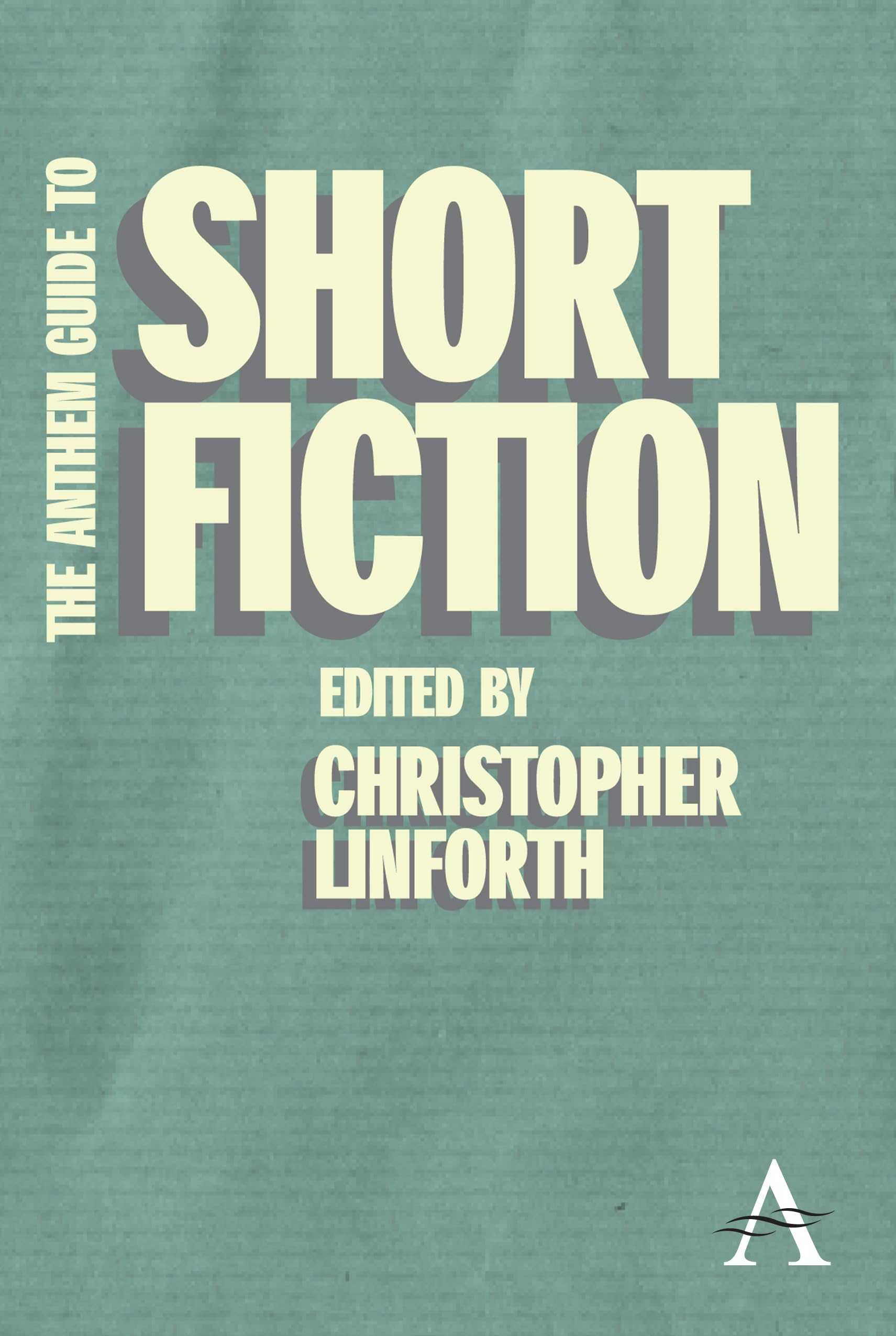



Containing 20 classic short stories by a variety of renowned authors, including Leo Tolstoy, Mark Twain, Kate Chopin, Rudyard Kipling, James Joyce and Edith Wharton, The Anthem Guide to Short Fiction has been designed to offer students and instructors both inspiration and guidance when thinking and writing about literary texts and their construction. Each story is followed by a critical ‘Thinking About the Story’ section, and is accompanied by a set of incisive discussion questions formulated to stimulate insightful literary thought. Similarly, the guide’s creative activities have been devised to engage critical and imaginative thinking, as well as to offer the reader an understanding of authorship and the creative process. Additional features include biographical notes, editorial introductions, and a concise glossary of literary terms. Christopher Linforth was a finalist in the Writers' and Artists' Yearbook Novel Writing Competition in 2007. He has had work published in Denver Quarterly , Permafrost , Camas , and many other literary journals. He was recently awarded a Fellowship to the Colgate Writers' Conference (2010) and a scholarship to the New York State Writers' Conference (2010). For several years he taught writing and literature at Kansas State University, Northern Michigan University, and Virginia Tech. The Anthem Guide to Short Fiction By Christopher Linforth Wimbledon Publishing Company Copyright © 2011 Christopher Linforth All rights reserved. ISBN: 978-0-85728-769-4 Contents Acknowledgments, ix, Preface, xi, Introduction, xiii, The Art of Short Fiction, xiii, Reading Stories, xiv, Writing Stories, xv, How to Use This Book, xvi, Nathaniel Hawthorne, 1, "Young Goodman Brown", 2, Thinking About the Story, Discussion Questions, and Activities, 14, Edgar Allan Poe, 17, "The Man of the Crowd", 18, Thinking About the Story, Discussion Questions, and Activities, 26, Leo Tolstoy, 29, "How Much Land Does a Man Need?", 30, Thinking About the Story, Discussion Questions, and Activities, 44, Mark Twain, 7, "The Californian's Tale", 48, Thinking About the Story, Discussion Questions, and Activities, 55, Ambrose Bierce, 57, "An Occurrence at Owl Creek Bridge", 58, Thinking About the Story, Discussion Questions, and Activities, 66, Sarah Orne Jewett, 69, "A White Heron", 70, Thinking About the Story, Discussion Questions, and Activities, 79, Kate Chopin, 83, "The Story of an Hour", 84, Thinking About the Story, Discussion Questions, and Activities, 86, Arthur Conan Doyle, 89, "A Scandal in Bohemia", 90, Thinking About the Story, Discussion Questions, and Activities, 111, Anton Chekhov, 113, "The Lady with the Dog", 114, Thinking About the Story, Discussion Questions, and Activities, 129, Charlotte Perkins Gilman, 131, "The Yellow Wallpaper", 132, Thinking About the Story, Discussion Questions, and Activities, 147, Edith Wharton, 149, "The Choice", 150, Thinking About the Story, Discussion Questions, and Activities, 163, O. Henry, 165, "The Ransom of Red Chief, 166, Thinking About the Story, Discussion Questions, and Activities, 176, Rudyard Kipling, 179, "Mowgli's Brothers", 180, Thinking About the Story, Discussion Questions, and Activities, 196, H. G. Wells, 199, "A Moth — Genus Novo", 200, Thinking About the Story, Discussion Questions, and Activities, 209, Stephen Crane, 211, "The Open Boat", 212, Thinking About the Story, Discussion Questions, and Activities, 235, Willa Cather, 237, "A Wagner Matinee", 238, Thinking About the Story, Discussion Questions, and Activities, 245, James Joyce, 247, "Araby", 248, Thinking About the Story, Discussion Questions, and Activities, 253, H. P. Lovecraft, 257, "The Outsider", 258, Thinking About the Story, Discussion Questions, and Activities, 264, F. Scott Fitzgerald, 267, "Winter Dreams", 268, Thinking About the Story, Discussion Questions, and Activities, 288, Robert. E. Howard, 291, "Circus Fists", 292, Thinking About the Story, Discussion Questions, and Activities, 308, Copyrights, 311, Glossary of Literary Terms, 313, CHAPTER 1 Nathaniel Hawthorne We must not always talk in the market place of what happens to us in the forest. Nathaniel Hawthorne — The Scarlet Letter (1850) A contemporary of Edgar Allan Poe and Henry Wadsworth Longfellow, Nathaniel Hawthorne (1804–1864) is considered one of the preeminent novelists and short story writers of the nineteenth century. Born in Salem, Massachusetts, to a historically Puritan New England family, the young Hawthorne suffered two catastrophes: his father's death (1808), and a lame leg (1813). Hawthorne's time as an invalid allowed him to read widely, especially William Shakespeare's plays and John Bunyan's Pilgrim's Progress. Later, he attended Bowdoin College and, after graduating, published his first novel, Fanshawe (1828). In 1842, after a three-year engagement, he married a talented painter and linguist,