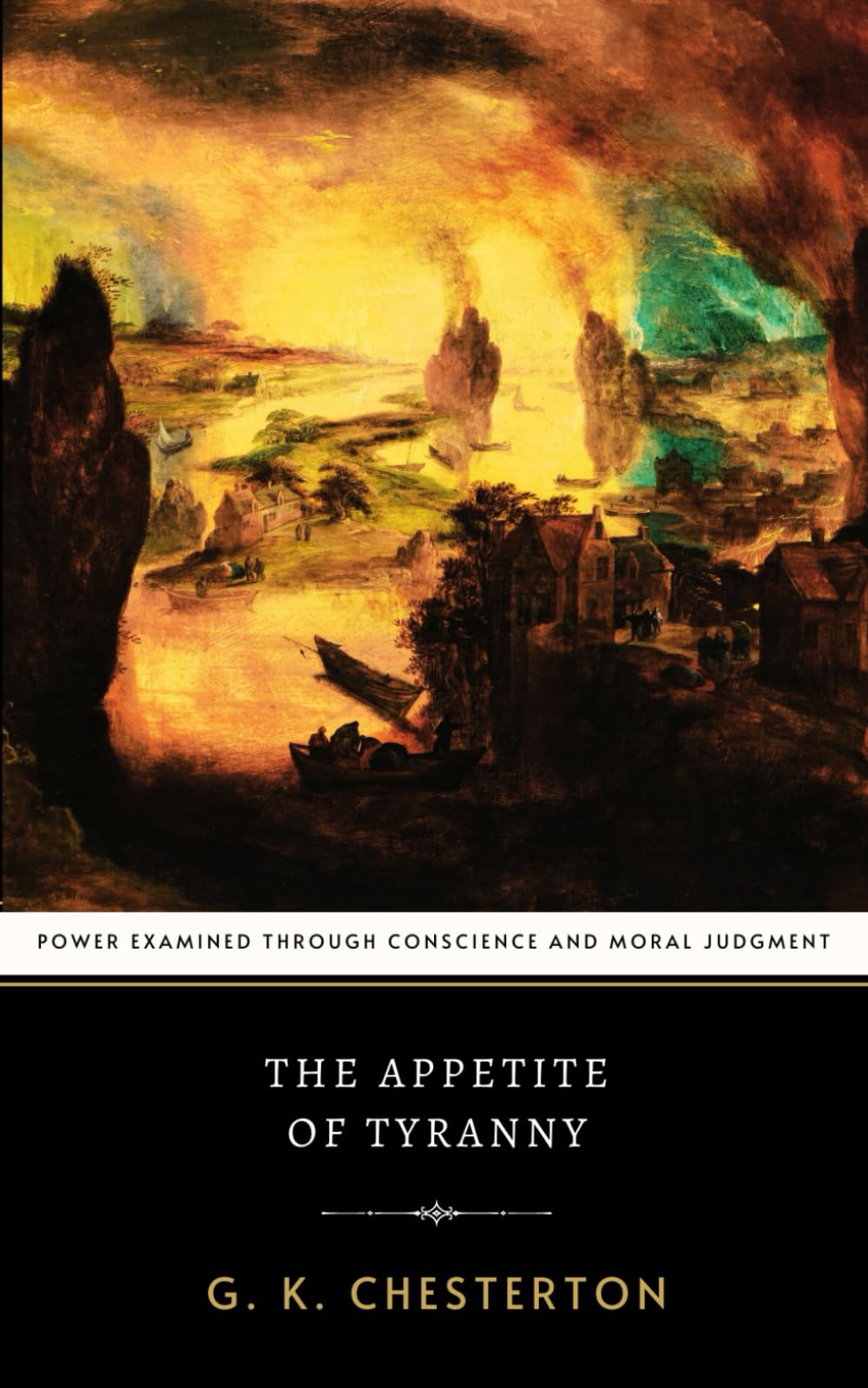
The Appetite of Tyranny: The Original 1915 Essay Collection on Moral Philosophy
$8.99
by G. K. Chesterton



Can Modern Power Survive Without Moral Limits? The Appetite of Tyranny by G. K. Chesterton , first published in 1915, is a collection of essays written in the shadow of the First World War. Chesterton examines the rise of modern power and the habits of thought that allow tyranny to grow. His arguments are sharp, humane, and grounded in moral judgment rather than party politics. Across these essays, political force is weighed against conscience and responsibility. The writing questions how nations excuse cruelty and how language can disguise injustice. What emerges is a sober reflection on power, ethics, and the enduring cost of abandoning moral limits. Don’t miss the chance to explore this timeless classic of ethical reflection and political thought by G. K. Chesterton. G. K. Chesterton (1874–1936) was an English essayist, poet, and cultural critic known for his wit, moral clarity, and breadth of thought. His best-known works include Orthodoxy , The Everlasting Man , and the Father Brown stories. His writing endures for its humane insight into faith, society, and human character.