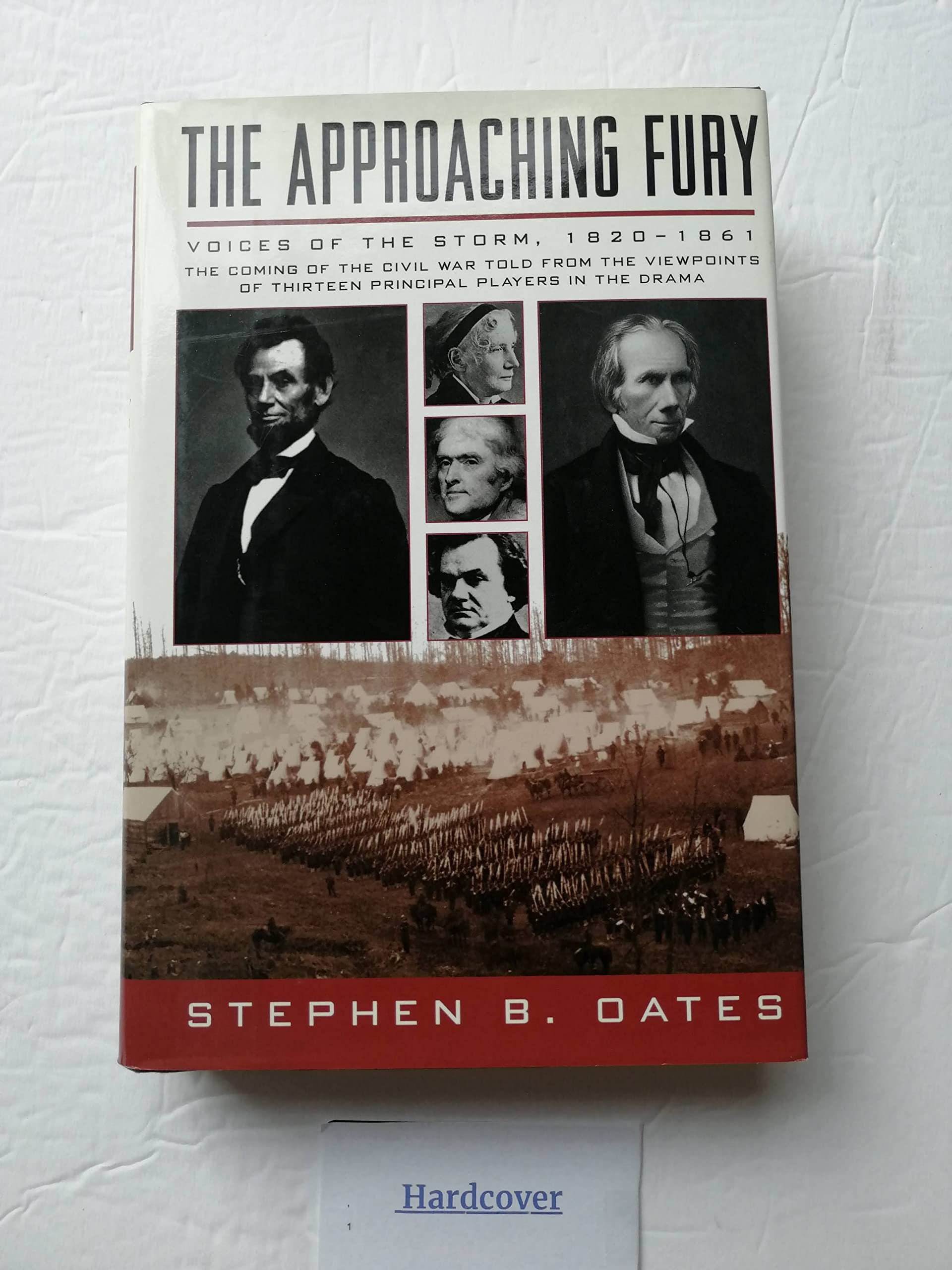



An award-winning historian tells the story of the approach of the Civil War through the voices of thirteen principal figures, from Abraham Lincoln to Frederick Douglass, exploring the different perceptions they had of the reasons for war. Acclaimed and prolific historian Stephen B. Oates looks at the events leading to the American Civil War through the eyes and words of 13 historic figures. Beginning with the Missouri Crisis of 1820 and ending with the outbreak of hostilities, Oates presents the viewpoints of such famous personages as Henry Clay and John Brown. The author blends fact and fiction to bring the people and events to life, and this unique treatment makes the period's complicated history accessible to the general reader. Acclaimed biographer and historian Oates (A Woman of Valor, LJ 4/1/94) draws on his earlier work concerning Nat Turner, John Brown, and Abraham Lincoln to script a series of dramatic autobiographical monologs relating 13 different voices and viewpoints on the coming of the Civil War, from Jefferson Davis's and Lincoln's agonizing over disunion in 1860-61. Turner, Harriet Beecher Stowe, Frederick Douglass, Mary Chestnut, and others make cameo appearances, but Henry Clay, John Calhoun, Stephen A. Douglas, Davis, and Lincoln dominate the discussion. Oates's hybrid of You Are There and Mark Twain Tonight succeeds best when he squares off Lincoln and Douglas in their own words, but his Southern voices do not ring so true. In Oates's hands, the multiple-perspectives approach lacks the mystery and power William Faulkner gave it, but Oates does find "truth" in the method and reminds us that none of "the great men" (or women) controlled events. Their words tell us so. Recommended for college and major public libraries.?Randall M. Miller, St. Joseph's Univ., Philadelphia Copyright 1997 Reed Business Information, Inc. [T]aken on its own terms, this book powerfully re-creates some of the momentous events that produced the catastrophe of 1861. -- The New York Times Book Review, Robert V.Remini