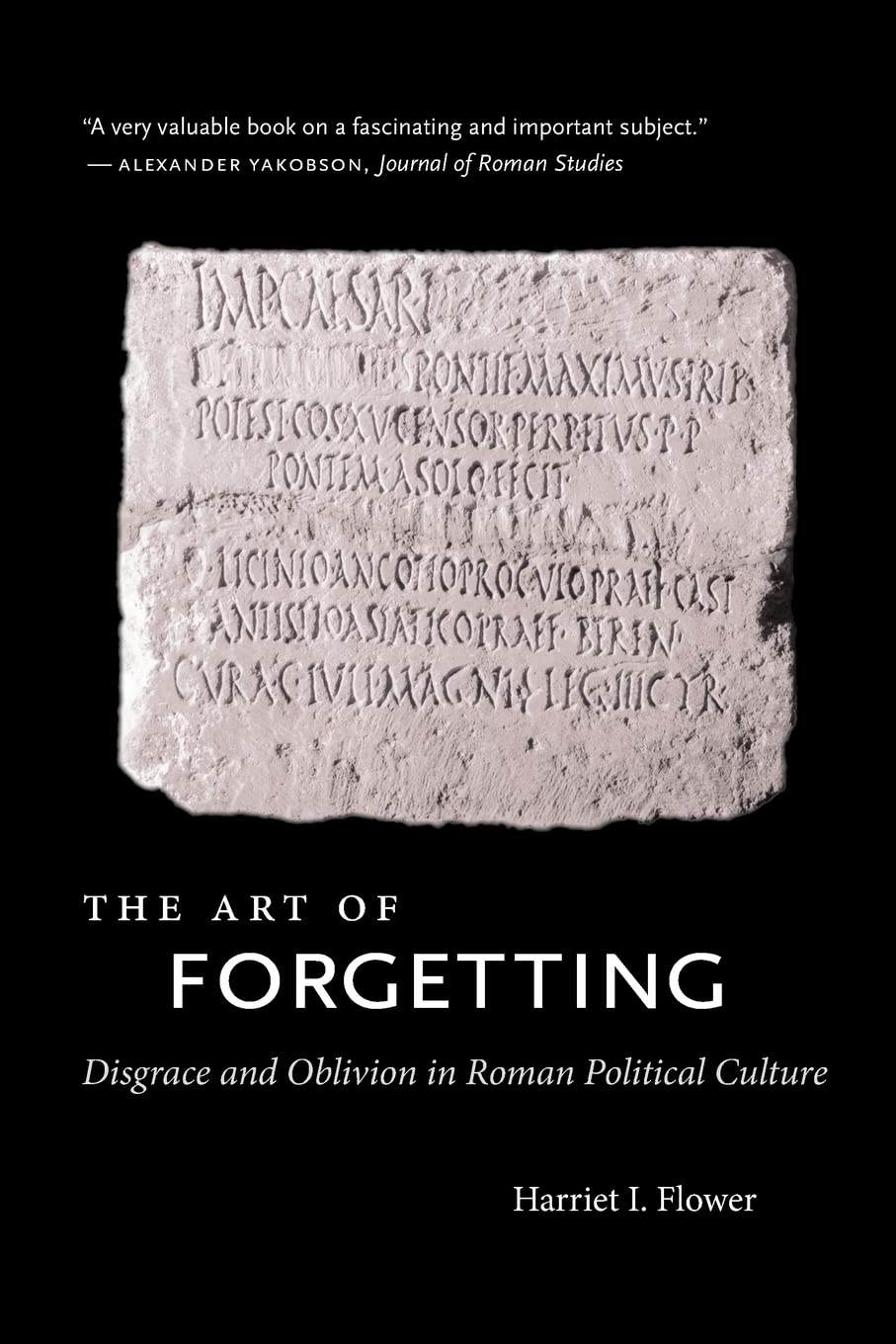
The Art of Forgetting: Disgrace and Oblivion in Roman Political Culture (Studies in the History of Greece and Rome)
$32.98
by Harriet I. Flower



Elite Romans periodically chose to limit or destroy the memory of a leading citizen who was deemed an unworthy member of the community. Sanctions against memory could lead to the removal or mutilation of portraits and public inscriptions. Harriet Flower provides the first chronological overview of the development of this Roman practice — an instruction to forget — from archaic times into the second century A.D. Flower explores Roman memory sanctions against the background of Greek and Hellenistic cultural influence and in the context of the wider Mediterranean world. Combining literary texts, inscriptions, coins, and material evidence, this richly illustrated study contributes to a deeper understanding of Roman political culture. “A very valuable book on a fascinating and important subject.” — Journal of Roman Studies “A much-needed articulation . . . of Roman commemoration practices. . . . An engaging survey of Roman history [for] the nonspecialist. . . . Well illustrated.” — The Historian “An important contribution to the study of commemoration in the classical world. . . . Thorough and well-argued. . . . Lucidly written and enriched by numerous illustrations, this book provides not only a rich source of information about Greek and Roman memory sanctions, but also offers a profound analysis on their development and implications for Roman republican and early imperial politics.” — Tyche “Flower’s stunning book casts a flood of light on this chilling subject, powerfully showing that the punitive sanctions often deemed imperial originated in the republic with its distinctive culture of memory.”— American Historical Review “ The Art of Forgetting is a fascinating study of the battle between the living and the dead or disgraced for prime turf in the memory space of the Roman elite.”— American Journal of Philology “Flower’s writing style is accessible and the examples she cites are interesting enough to take the reader on the curious journey into an unfamiliar aspect of the ancient mind.” — United Nations of Roma Victrix “Closely argued and aptly illustrated. . . . Recommended.” — CHOICE “Flower presents a systematic and well-balanced study with widely informed discussion, up-to-date scholarship, and judicious conclusions. It will be valued above all for its insight into the way this particular commemorative behavior was deployed variously in political image-making at different periods.” — John Bodel, Brown University Rewriting Roman history Flower provides the first chronological overview of the development of the Roman practice of destroying the memory of a leading citizen who was deemed an unworthy member of the community from archaic times into the second century A.D. Flower provides the first chronological overview of the development of the Roman practice of destroying the memory of a leading citizen who was deemed an unworthy member of the community from archaic times into the second century A.D. Harriet I. Flower is professor of classics at Princeton University. She is author of Ancestor Masks and Aristocratic Power in Roman Culture and editor of The Cambridge Companion to the Roman Republic .