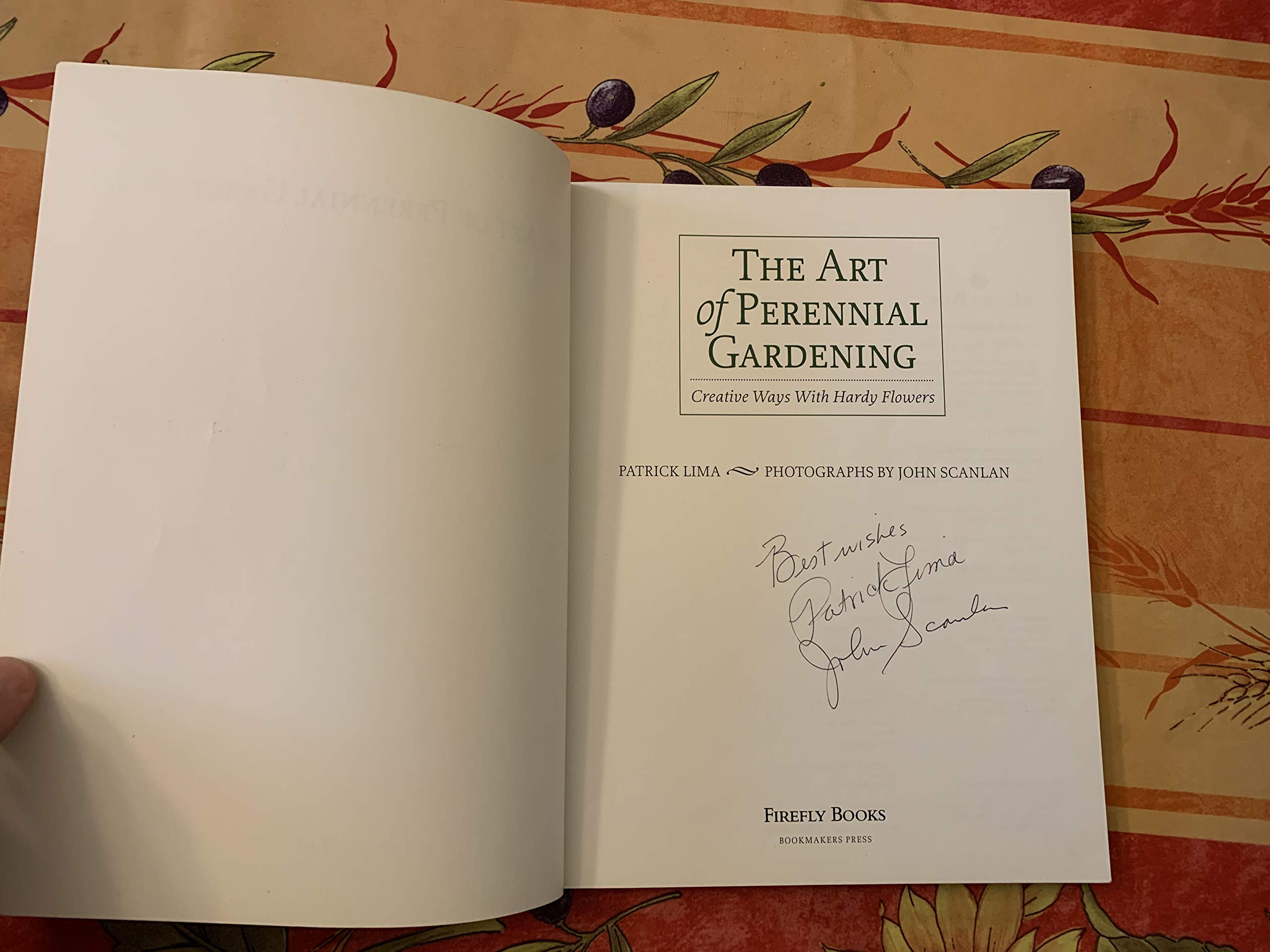



In The Art of Perennial Garding Patrick Lima shares the secrets and strategies he has gleaned from gardening in Ontario's Burce Peninsula, bringing a seasoned, pragmatic perspective to his latest work. Beautifully illustrated, inspiring and often humorous, this book is infused with that staple of good gardening: the promise of what is possible. The author offers hundreds of solutions and options for the perennial garden, suggesting plant combinations for every phase of the growing season. Whether you're cajoling a tiny backyard plot into beauty or facing a landscape of intimidating proportions, Lima has much to teach both the novice and the seasoned gardener about the creative act of garden-making. How delightful to find a visually stunning book that is an equally appealing read: wry, witty, and packed with creative ideas ... a valuable and enjoyable addition to any gardener's library. ( Better Homes and Gardens Special Interests 2000-06-01) Patrick Lima shares his gardening secrets and strategies in several books, including Herbs/i> and The Harrowsmith Perennial Garden . John Scanlan 's photographs have appeared in many books and magazines. Excerpted from the Introduction The Gardener's Art: In Pursuit of Beauty The human spirit responds naturally to beauty. Confronted with something beautiful, most people feel a spontaneous surge of pleasure, perhaps even gratitude or awe. The aesthetic merit of paintings, furniture, buildings and all the other "stuff of human fashioning" may provoke debate, but an appreciation for the loveliness of Nature seems universal. Rare is the person who does not respond in some way to a starry sky, a mountainscape or a lovely lake, a brilliant sunset, a forest of towering trees, a flower-filled meadow or garden. My first book about perennials began: "A flower garden is created for pleasure, pure and simple." Gardeners are not alone in finding a frankly sensual enjoyment in the colors, shapes and scents of flowers. And no flowers, someone once said, are as beautiful as those in your own garden. It has to do with relationship and work: the bond that grows between you and the plants and the place as you design and dig, plant and prune, observe the results of your efforts and make refinements. You exercise your creative muscles and trust that things will turn out more or less as envisioned. A singular satisfaction -- often short-lived in the changing world of nature -- comes when some imagined scene grows into reality. The artist in you feels fulfilled. Which is not to say that discouragement never darkens the garden gate. Something or other is invariably being eaten up, dried up, frosted, attacked by mold and mildew; flopping over, falling down, dying back, creeping around, pricking us, sticking us or taxing our backs. But we keep at it -- for the flowers, and for beauty. In June of 1981, my partner John Scanlan and I went on a three-week bicycle tour of English gardens. For six years, we had been making a garden in an out-of the-way corner of Ontario's Bruce Peninsula, and our exposure to other gardens had been limited to the pages of gardening books, most of them American volumes from the early 1900s. Now, around every bend was another wondrous garden -- a simple rockery full of interesting alpines in front of a row house; an idyllic thatched cottage up to its windowpanes in flowers; perennial borders glimpsed through a wrought-iron gate; roses and clematis dripping from an old stone wall. Almost without knowing it, we absorbed landscaping lessons. On our return home, we began work on a Quiet Garden, an outdoor room enclosed in trelliswork and planted with a silver, green and white theme. We began to introduce more grasses and foliage plants. We also brought back a name for our garden-"Larkwhistle"-borrowed from a hand-painted sign pointing down a country lane to we know not where. The name seemed appropriate: Every summer, meadowlarks sing in the scrubby field behind our garden. And "Larkwhistle" surely had a more dulcet ring than the sonorous "Greystone Gardens" we had been considering. We learned something else in England: Attitude can color a garden as surely as flowers. At one perfectly groomed new garden that centered on a swimming pool, the owner grumbled at every step about the performance of her plants, continually pointing out minor flaws which we would never have noticed. In another garden -- old arbors askew, weeds poking through cracks in the paving -- the maker, now advanced in years, steered us toward plants that were thriving despite unavoidable neglect, speaking so affectionately about the garden's s glory days that what might have been a sad place took on an aura of genuine beauty, a lived-in garden full of character, history and personal touch. Every day during the growing season, John and I walk around our garden to see how things are doing. It is just as easy for us to slip into critical mode, focusing on a pining plant, worms on rosebu