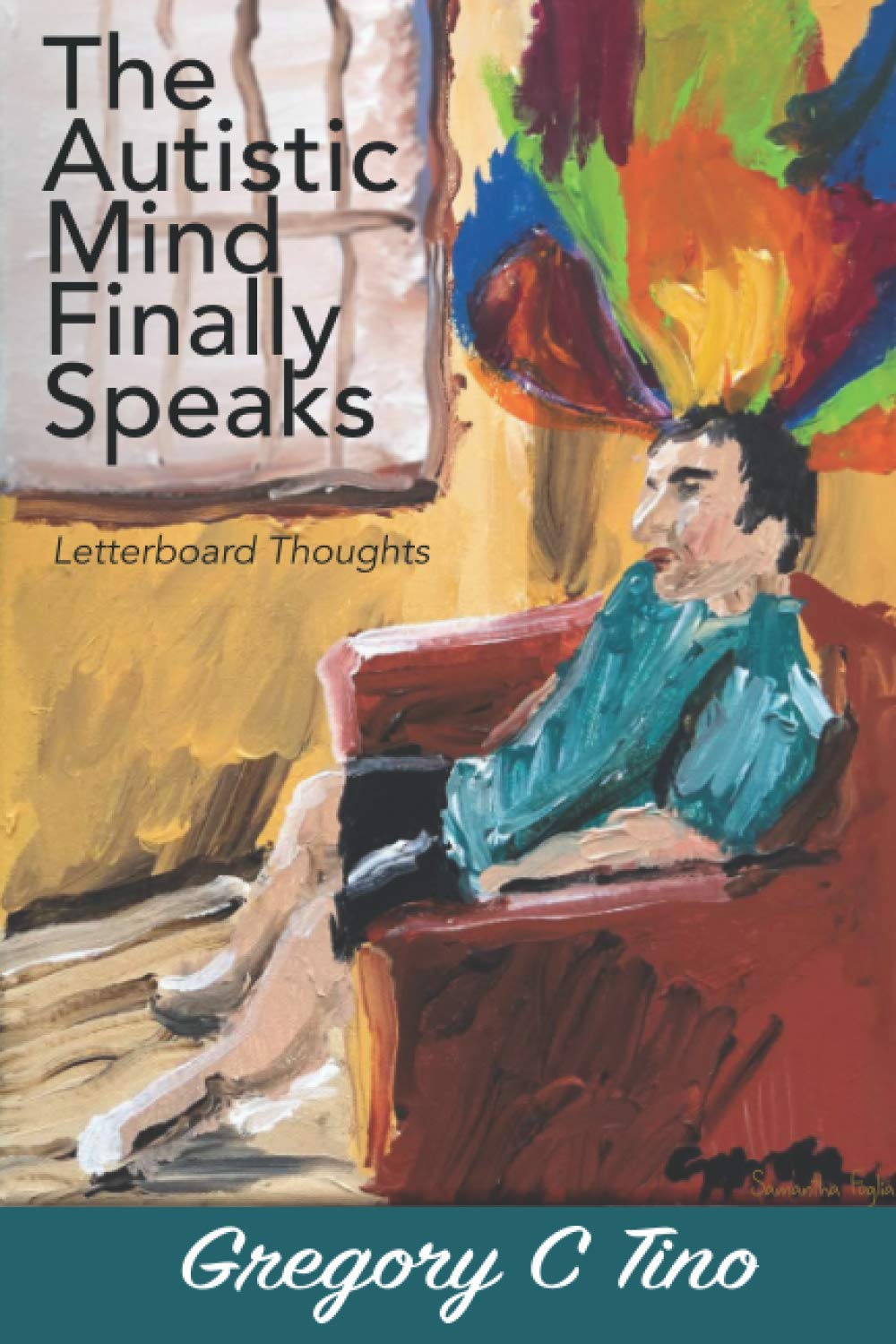



After twenty four years of living in silence, Gregory Tino, a young man with non-speaking autism learns to communicate using a letterboard. By discovering his voice, Gregory teaches us about the disorder of autism from the inside out. He dispels some of the current beliefs of autism, explains the reasons behind many of its common behaviors, and teaches us how we can best handle the challenges of autism. This book is a compilation of his thoughts, experiences, teachings and poetry and is illustrated by his autistic peers. After years of being viewed as having the intellect of a toddler, Gregory has become an exceptionally poignant and eloquent self-taught writer. This book will make its readers laugh, cry, and most importantly change their perception of the misunderstood disorder of autism. All proceeds from book sales are being donated to Inside Voice, the Philadelphia area nonprofit where Gregory Tino learned to communicate using the Spelling To Communicate method. "Enlightening to readers" - I-ASC (The International Association For Spelling as Communication "The Autistic Mind Finally Speaks" is a book written by Gregory Tino, a 28-year-old nonspeaking young man with autism. Tino, who went 25 years without an effective means of communication but with a keen wit and full understanding of the world around him, was introduced in 2017 to "Spelling to Communicate" (S2C), a communication method that gives nonspeaking people a method to communicate through point to letters on a letterboard. The practitioner was Elizabeth Vosseller, the developer of S2C. This communication method gave Gregory a voice and ultimately led him to pen this first-hand account of his experience with autism. The book takes a deep dive into his experiences, his memories, and his hopes and dreams, contrasting his silence to his full-spectrum communication. Tino personifies his neurodivergent state through the use of the phrase "Autism and I", a unique entity both separate from himself and an integral part of who he is. Tino's eloquence and honesty regarding the challenges he faces managing his body,"I am an autistic man with a crazy body that has a mind of its own," (p. 30), are enlightening to readers who might assume they understand the autistic experience from what they see and hear. His instructive and informative tone in addressing the misinterpretations of his actions and words are deeply meaningful to the reader; he is as much an observer of his autism as those around him are, making the use of "Autism" in the third person in his book even more poignant.