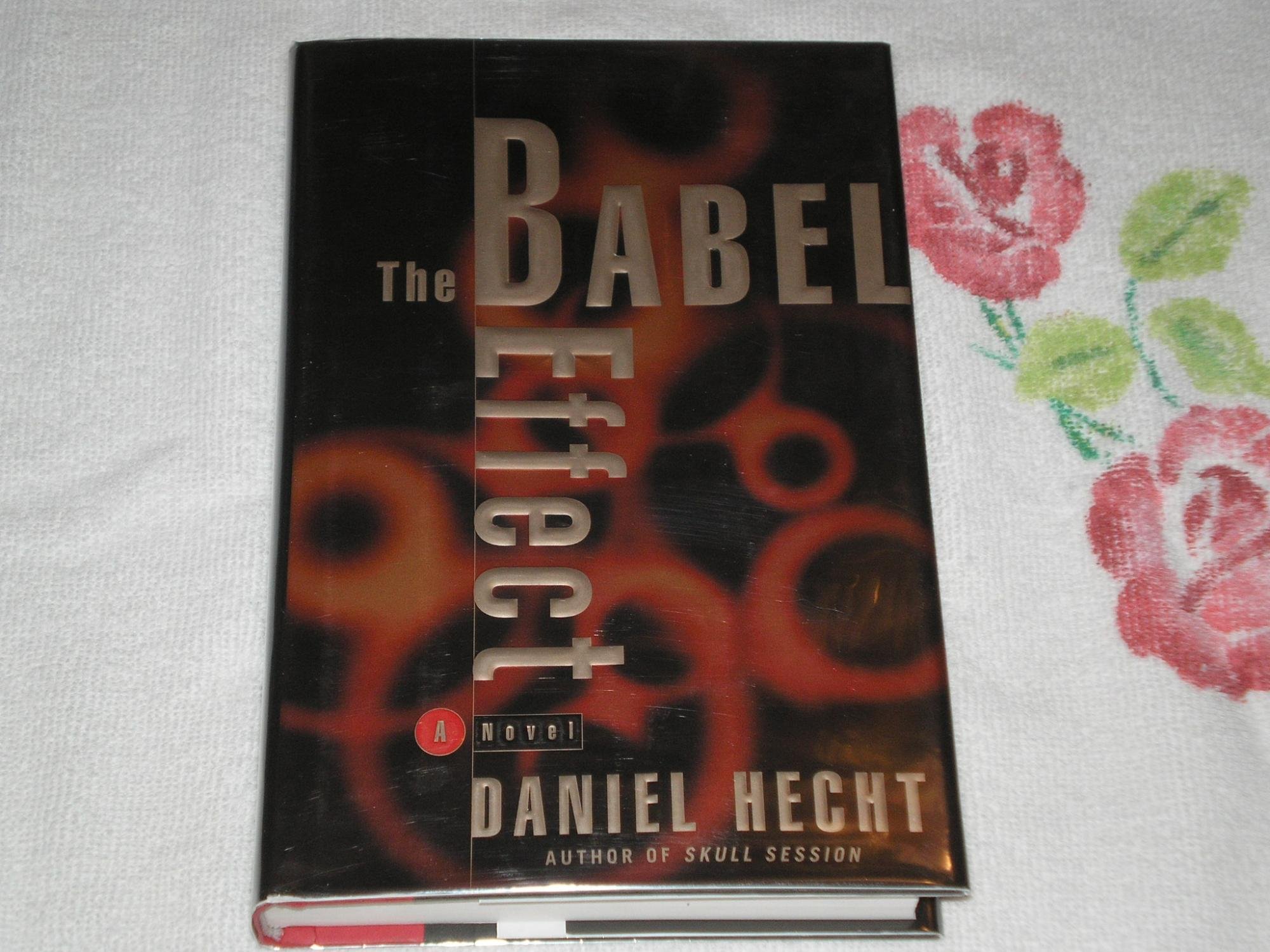



With all the imaginative depth and narrative power of Michael Crichton's Timeline or Jurassic Park, The Babel Effect is an electrifying, thinking person's thriller based on cutting-edge neurological and genetic research. From the author of the widely acclaimed Skull Session , The Babel Effect artfully brings the speculative thriller to new literary heights. Is violence a virus? Can your genes make you a killer? Why are we so willing to hurt each other? In The Babel Effect , the brilliant husband-and-wife research team of Ryan and Jessamine McCloud are charged with answering these urgent questions. Beginning as a neurological study of murderers on death row, their research explodes into an investigation into the biomedical foundations of human history. The quest takes them from prison cells to research labs to war zones throughout the world and forces them to doubt their most basic assumptions about the human species, about themselves, and about their marriage. Combining systems theory with modern epidemiology, they soon learn that our propensity for violence resembles a contagious disease. But is the human carnage of the last hundred years an ancient plague or a new nightmare? Can they identify the cause and find a cure? As their discoveries reveal frightening secrets about multinational corporations, clandestine military programs, and millennial religious cults, they realize that finding the answers depends on a still more urgent and terrifying question: Can they survive the search? When an unknown enemy steals their data and abducts Jessamine, the FBI investigation stalls, and Ryan realizes that it is up to him alone to find his pregnant wife. He soon finds that to learn where she is, he must discover who she is -- and confront the question of whether we can ever really know the one we love. As real as the astonishing and disquieting news coming out of today's biotechnology revolution and as disturbing as our suspicions of global conspiracy, The Babel Effect provokes us with an astonishing perspective on human nature as it brings us face-to-face with our most unspeakable fears -- and our brightest hopes. Though The Babel Effect is part thriller, part mystery, it is at its core the very human tale of one man who simply seeks to know his wife -- to find her and love her again. The Genesis Project, headed by Ryan and Jess McCloud, is researching a fascinating thesis: that violence is a virus, that evil is genetically based, and that neurology can prove what psychology only suggests. A billionaire who heads the world's largest media and technology empire believes the McClouds are onto something with enormous potential value and agrees to underwrite their project, which starts with brain scans of death row inmates and progresses to war zones and killing fields all over the world. When pregnant Jess is kidnapped by a religious leader, who fears that science will destroy his faith-based empire, the action ratchets up several levels, skipping over some of the hard science that keeps this would-be thriller mired in detail much of the time. Author Daniel Hecht posits as good a raison d'être for the root causes of violence as any other suspense novelist; it's an intriguing idea, well-worked out in the plot. And Jess McCloud, vainly trying to reconcile her decidedly unscientific faith with scientific empiricism, is an interestingly complex character. Unfortunately, she's missing for much of the novel, and her husband, whose efforts to retrace her research in order to find her, is a much less fascinating hero. But that won't stop fans of Robin Cook, Michael Crichton, et al. for sticking with Hecht to the last page. --Jane Adams Adult/High School-Ryan and Jessamine McCloud are scientific geniuses, an interracial husband-and-wife team who own their own think tank. They and their partners are renowned for finding solutions to questions nobody else has been able to solve. When they undertake an investigation of the neurological functioning of evil, and then cross that knowledge with other recent discoveries in the area of epidemiology, they find themselves in some very scary intellectual-and personal-territory. Their work soon outgrows its original purpose and as they commit all of their resources to finding the truth, they are caught between the powerful political forces of government, the military, global commerce, and religion. This is essentially a novel of ideas, based upon real science; but through its sympathetic characters, it is well grounded in human truths. Creative thinkers, or indeed anyone who has wondered about the nature of good and evil, will find kindred spirits in the McClouds and their friends. Thoughtful readers will be fascinated and terrified by this well-crafted story. They also will learn a great deal of science as the heroes endure, and eventually triumph over, the fearful conditions of social chaos, political terrorism, and personal trauma that are all too familiar to viewers