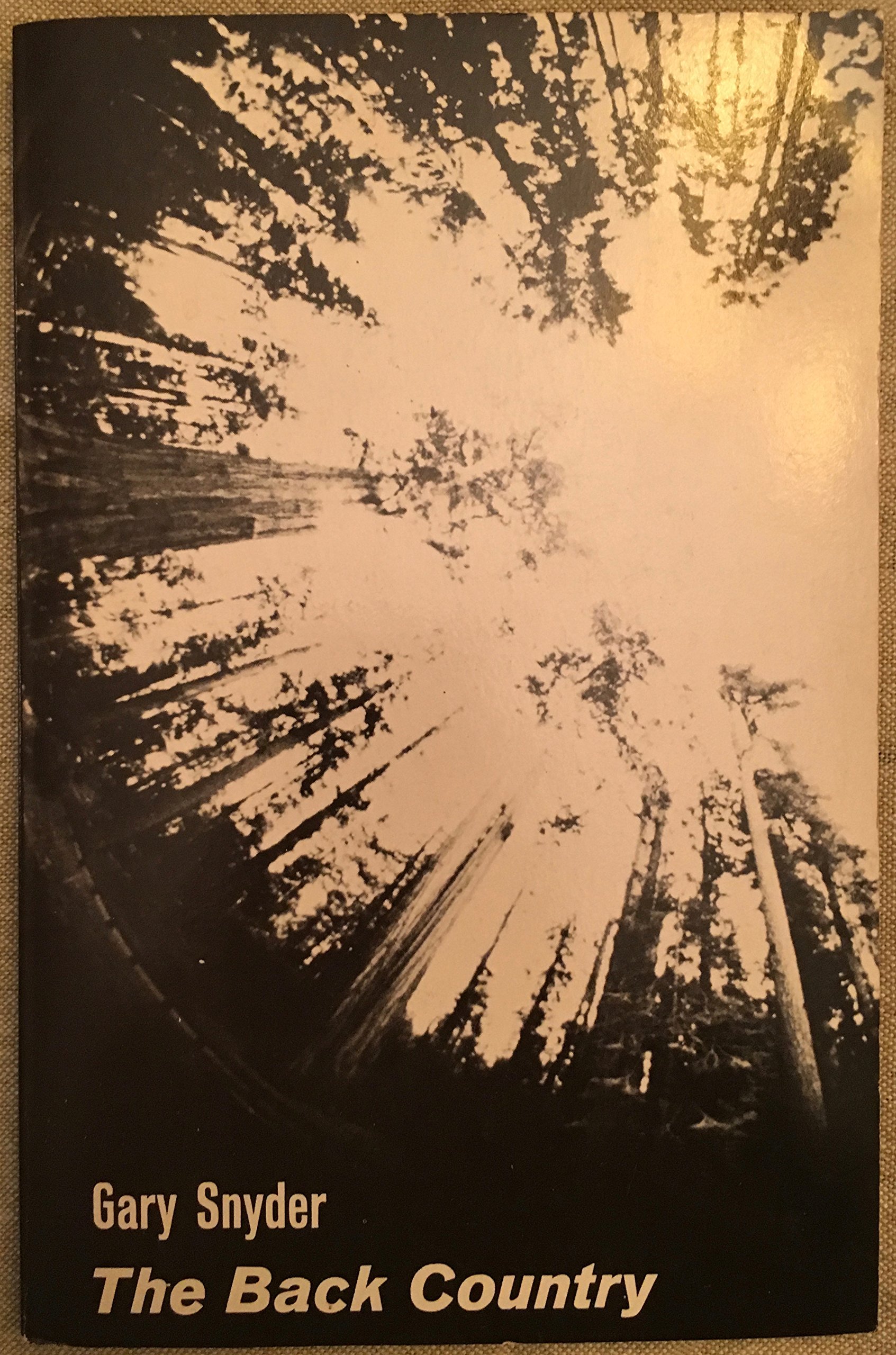



“A reaffirmation of a back country of the spirit."― Kirkus Reviews This collection is made up of four sections: "Far West"―poems of the Western mountain country where, as a young man. Gary Snyder worked as a logger and forest ranger; "Far East"―poems written between 1956 and 1964 in Japan where he studied Zen at the monastery in Kyoto; "Kali"―poems inspired by a visit to India and his reading of Indian religious texts, particularly those of Shivaism and Tibetan Buddhism; and "Back"―poems done on his return to this country in 1964 which look again at our West with the eyes of India and Japan. The book concludes with a group of translations of the Japanese poet Miyazawa Kenji (1896-1933), with whose work Snyder feels a close affinity. The title, The Back Country , has three major associations; wilderness. the "backward" countries, and the “back country" of the mind with its levels of being in the unconscious. The Back Country is one of Gary Snyder's most serious engagements with Eastern culture and thought. Much of the book works to achieve a perspective by means of contrast, as in "Hitch Haiku," a series of haiku (a Japanese form of imagistic, syllabic verse) mostly set in the American West. Perhaps the strongest poem is "Oil," in which Snyder envisions a tanker as a needle bringing our addicted nation "long injections of pure oil." 'A reaffirmation of a back country of the spirit', this collection is made up of four sections: 'Far West', 'Far East', 'Kali', and 'Back'. The book concludes with a group of translations of the Japanese poet Miyazawa Kenji, with whose work Synder feels a close affinity. Born in 1930 in San Francisco, Gary Snyder grew up in the rural Pacific Northwest. He graduated from Reed College in 1951 with degrees in anthropology and literature, and later, 1953–56, studied Japanese and Chinese civilization at Berkeley, returning there to teach in the English Department. After participating in the San Francisco revival, the beginning of the beat poetry movement, with Ginsberg, Whalen, Rexroth and McClure, Snyder quietly went off to Japan in 1955 where he stayed for eighteen months, living in a Zen monastery. In 1958, he joined the tanker "Sappa Creek" and traveled around the world. In early 1959 he again returned to Japan where, apart from six months in India, he studied Kyoto under Oda Sesso Roshi, the Zen master and Head Abbot of Daitoku-Ji. He has spent further time (1966–67) in Japan on a Bollingen research grant. In 1969 he received a Guggenheim grant and toured the Southwestern United States visiting various Indian tribes.