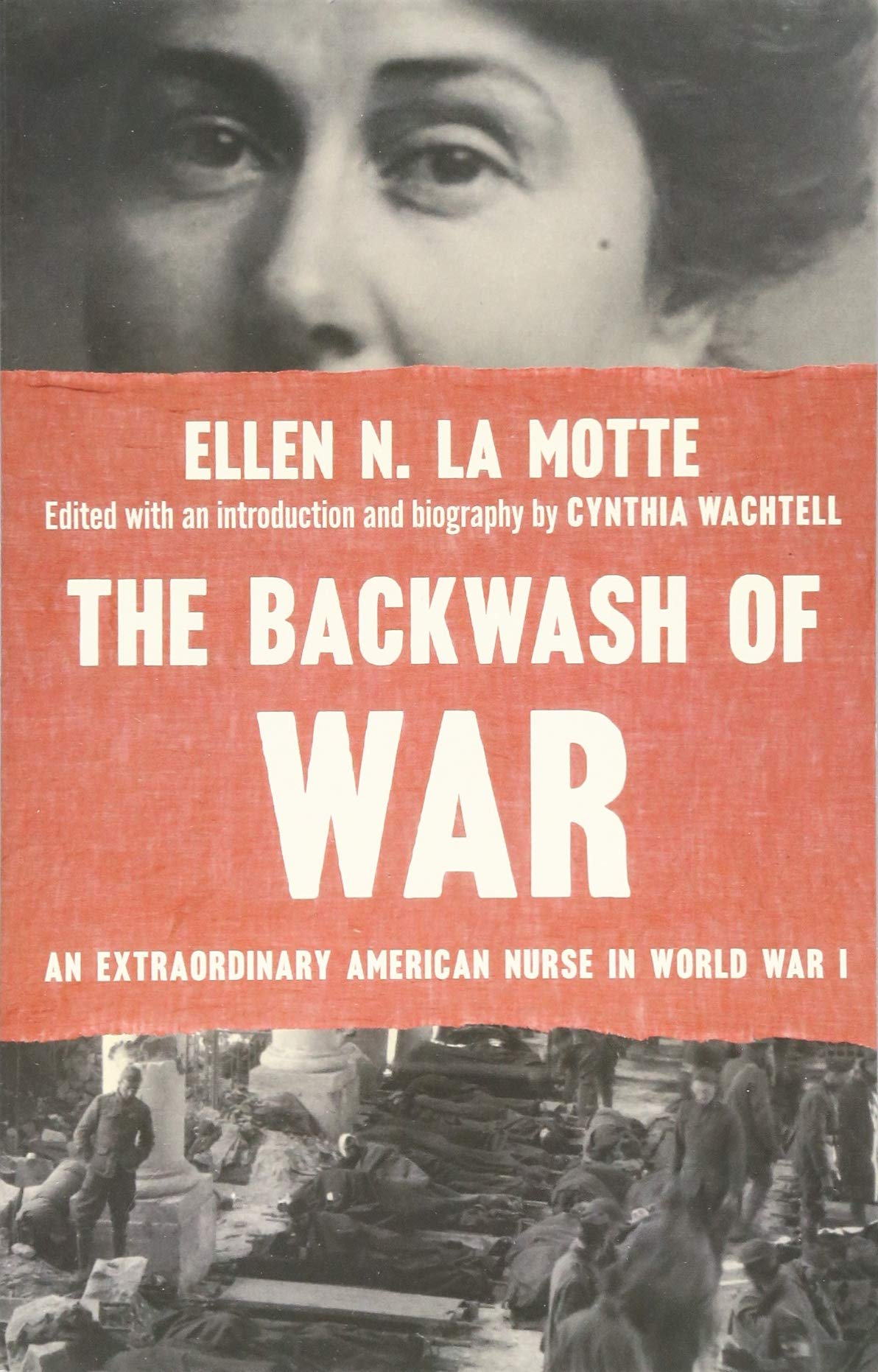
The Backwash of War: An Extraordinary American Nurse in World War I
$24.99
by Ellen N. La Motte



Banned in multiple countries for its frank depiction of the horrors of war, Ellen N. La Motte's The Backwash of War is one of the most stunning antiwar books ever published. "We are witnessing a phase in the evolution of humanity, a phase called War―and the slow, onward progress stirs up the slime in the shallows, and this is the Backwash of War. It is very ugly."―Ellen N. La Motte In September 1916, as World War I advanced into a third deadly year, an American woman named Ellen N. La Motte published a collection of stories about her experience as a war nurse. Deemed damaging to morale, The Backwash of War was immediately banned in both England and France and later censored in wartime America. At once deeply unsettling and darkly humorous, this compelling book presents a unique view of the destruction wrought by war to the human body and spirit. Long neglected, it is an astounding book by an extraordinary woman and merits a place among major works of WWI literature. This volume gathers, for the first time, La Motte's published writing about the First World War. In addition to Backwash , it includes three long-forgotten essays. Annotated for a modern audience, the book features both a comprehensive introduction to La Motte's war-time writing in its historical and literary contexts and the first extended biography of the "lost" author of this "lost classic." Not only did La Motte boldly breach decorum in writing The Backwash of War , but she also forcefully challenged societal norms in other equally remarkable ways, as a debutante turned Johns Hopkins–trained nurse, pathbreaking public health advocate and administrator, suffragette, journalist, writer, lesbian, and self-proclaimed anarchist. In editing the new scholarly edition of Backwash , Wachtell added illuminating introductory and biographical essays robustly researched from primary sources; a bibliography; timeline; photographs; and three wartime essays by La Motte . . . More than a century after its appearance, Backwash remains a truth bomb. ―Rosemary Hutzler Raun, Johns Hopkins Magazine The Wachtell edition - a fascinating mix of history, literature and women's studies - is a very important piece of scholarship, deserving of a wide audience . . . When one thinks of literary classics of WWI, Hemingway's A Farewell to Arms , Remarque's All Quiet on the Western Front , and perhaps E.E. Cummings' The Enormous Room usually come to mind . . . And now there's this one, The Backwash of War: An Extraordinary American Nurse in World War I , which came before any of those others . . . My congratulations to Dr. Wachtell. My highest recommendation. ―Tim Bazzett, Library Thing The most comprehensive and authoritative edition of a classic . . . The editor's exhaustive research has resulted in a rounded, impressive and sympathetic portrait of a fascinating woman who was a great humanitarian and whose claim to fame is not confined to The Backwash of War . The book should be compulsory reading for anyone considering joining the military and also their dearest and nearest. ―Peter van den Dungen, Bertha von Suttner Peace Institute, The Hague, Medicine, Conflict and Survival The Backwash of War is an important book. Through her sensitive and informed editing, Wachtell paints a subtle picture of LaMotte that includes censorship, suffragism, her relationship with the lesbian avant-garde scene in Paris, political activism, and her influence on other American writers. ―Kate McLoughlin, University of Oxford, author of Authoring War: The Literary Representation of War from the Iliad to Iraq With The Backwash of War , Cynthia Wachtell not only makes available a forgotten classic anti-war book, but also provides an insightful biography and an astute introduction to the war writing of Ellen La Motte, whose approach to describing the human cost of war was genuinely innovative. ―Lynn Dumenil, Occidental College, author of The Second Line of Defense: American Women and World War I Long before A Farewell to Arms or All Quiet on the Western Front , a trailblazing American nurse captured the bloody absurdity of World War I so perfectly she was censored for telling the truth. Read now; don't let Ellen La Motte sit in obscurity a moment longer. But be warned―these devastating stories, like a German shell, will rip your guts out. ―Brian Castner, bestselling author of The Long Walk and All the Ways We Kill and Die In this volume [an] American hospital nurse lays bare some of the most hideous effects of the war as seen in an evacuation hospital a few miles behind the French lines. These sketches are far from pleasant reading, but they are absolutely truthful and accurate reports of what went on at the front. ― The American Review of Reviews A glance at any of Miss La Motte's articles will show that she has no illusions whatever concerning war. The scales have fallen from her eyes; she sees the struggle as Swift might have seen it. ― The Atlantic M