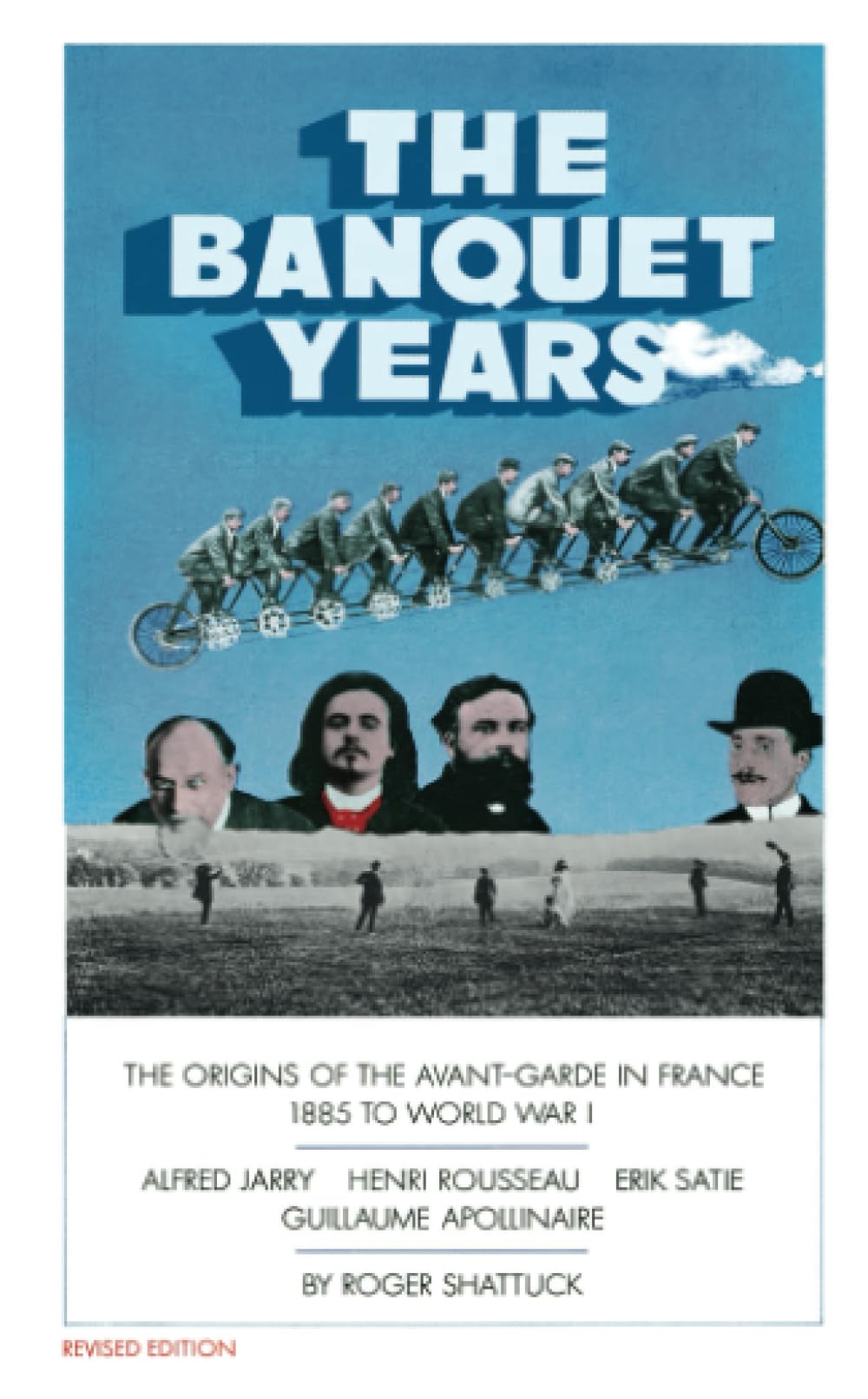
The Banquet Years: The Origins of the Avant-Garde in France - 1885 to World War I
$14.39
by Roger Shattuck



The definitive chronicle of the origins of French avant-garde literature and art, Roger Shattuck's classic portrays the cultural bohemia of turn-of-the-century Paris who carried the arts into a period of renewal and accomplishment and laid the groundwork for Dadaism and Surrealism. Shattuck focuses on the careers of Alfred Jarry, Henri Rousseau, Erik Satie, and Guillaume Apollinaire, using the quartet as window into the era as he exploring a culture whose influence is at the very foundation of modern art. "A sweeping portrait of an era." --Justin O' Brien "...a fascinating and often brilliant account..."--Alfred Kazin "...I am full of admiration for a book which searches very deeply into the social and philosophic foundations of modern art, and presents a theory that is at once comprehensive and convincing."--Herbert Read, The London Magazine Portrays the cultural bohemia of turn-of-the-century Paris who carried the arts into a period of renewal and accomplishment, who laid the ground-work for Dadaism and Surrealism. Portrays the cultural bohemia of turn-of-the-century Paris who carried the arts into a period of renewal and accomplishment, who laid the ground-work for Dadaism and Surrealism. Roger Shattuck was a scholar, writer and literary critic, best known for his studies on French literature, culture, and Proust. He was born in 1923, received his B.A. at Yale, and was appointed to the Society of Fellows at Harvard. He has been a recipient of both a Fulbright and a Guggenheim grant. He taught at Harvard, the University of Texas, the University of Virginia and Boston University, from which he retired in 1997. He is the author of several books of literary criticism as well as several definitive texts on Proust. His biography of Proust won the National Book Award in 1975. Shattuck died in 2005.