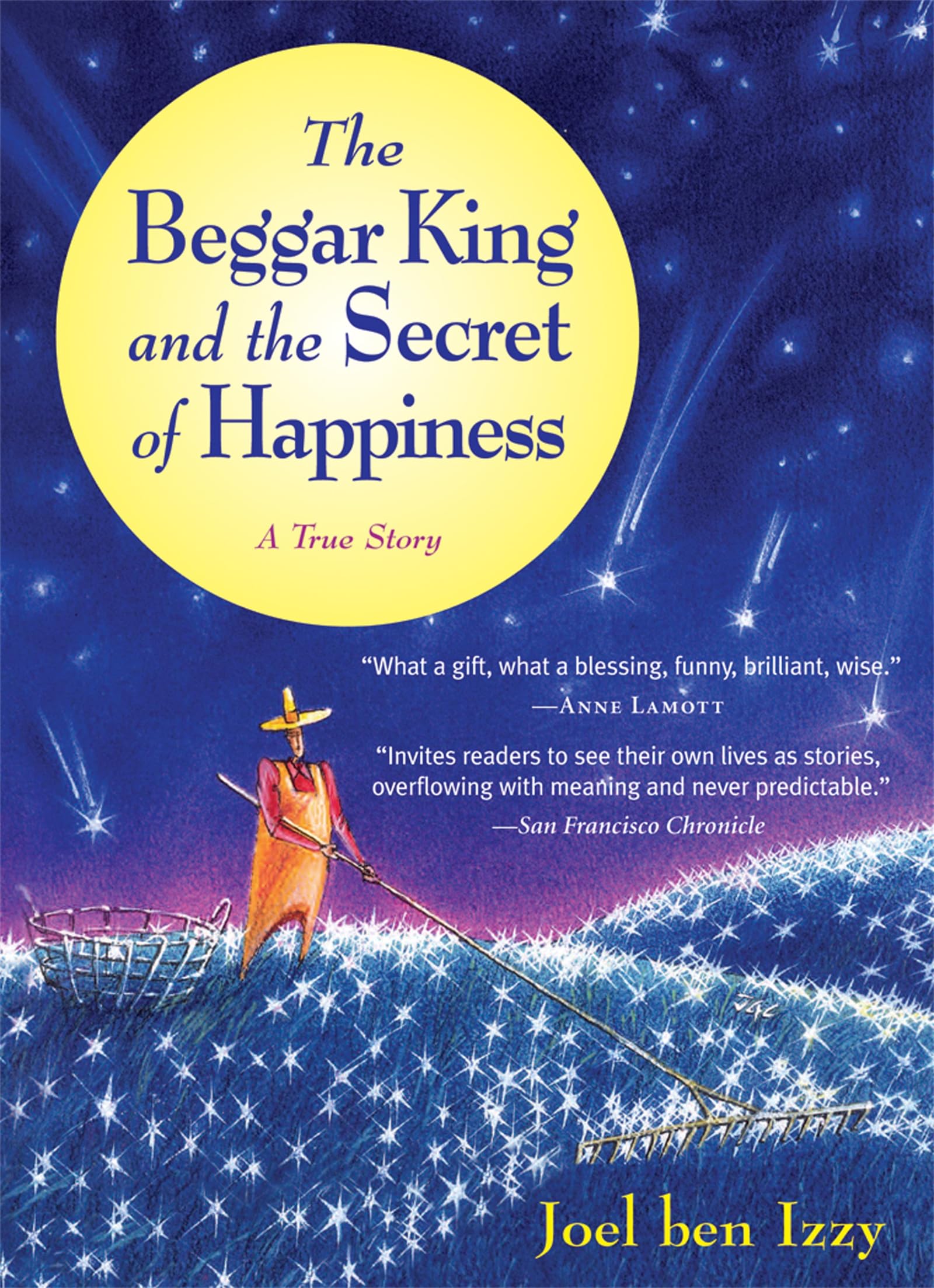



"Wonderful!” (Grace Paley). “Heartwarming and smart and wonderfully written” ( Detroit Free Press ). “Provides edifying advice, intimately given, like the best-selling Tuesdays with Morrie ” (the Dallas Morning News ). “Altogether original” (Dr. Laura Schlessinger). “This story will speak to the humanity of the reader” ( Jewish Book World ). The Beggar King and the Secret of Happiness is that rare, magical book—a book that tells a good story but also shows us how the tales we learned when we were children shed light on our adult lives. Joel ben Izzy had the unusual opportunity to relive those lessons when he lost his voice and reconnected with his old teacher, Lenny, a retired storyteller. Through his meetings with Lenny, Joel rediscovers the wisdom of ancient tales and takes us on a journey into a world of beggars and kings, monks and tigers, lost horses and buried treasures—and in the end tells us the secret of happiness. "Invites readers to see their own lives as stories, overflowing with meaning and never predictable." — San Francisco Chronicle The Beggar Kind and the Secret of Happiness is an altogether original true story about a storyteller who loses his voice and believes he's lost everything. An encounter with his old teacher shows him that, in fact, he's been given a great gift. Their meetings lead him on a journey into the timeless wisdom of ancient tales—a world of beggars and kings, monks and tigers, lost horses and buried treasures—and, ultimately, toward the secret of happiness. JOEL BEN IZZY tells stories at festivals throughout the world and has written and produced six CDs, which have won awards from the American Library Association and the Parents’ Choice Foundation. He’s been a storytelling consultant to various companies, including Hewlett-Packard, the W. K. Kellogg Foundation, and Pixar Animation Studios. He lives in Berkeley, California, with his wife and two children. Story Origin: China The Lost Horse Long ago in a village in northern China, there lived a man who owned a magnificent horse. So beautiful was this horse that people came from miles around just to admire it. They told him he was blessed to own such a horse. "Perhaps," he said. "But what seems like a blessing may be a curse." One day, the horse ran off. It was gone. People came to say how sorry they were for his bad luck. "Perhaps," he said. "But what seems like a curse may be a blessing." A few weeks later, the horse returned. It was not alone. It was followed by twenty-one wild horses. By the law of the land, they became his property. He was rich with horses. His neighbors came to congratulate him on his good fortune. "Truly," they said, "you have been blessed." "Perhaps. But what seems like a blessing may be a curse." Shortly after that his son-his only son-tried to ride one of the wild horses. He was thrown from it and broke his leg. The man's neighbors came to say how sorry they were. Surely, he had been cursed. "Perhaps," he said. "But what seems like a curse may be a blessing." A week later, the king came through that village, drafting every able-bodied young man for a war against the people of the north. It was a horrible war. Everyone who went from that village was killed. Only that man's son survived, because of his broken leg. To this day, in that village, they say, "What seems like a blessing may be a curse. What seems like a curse may be a blessing." Chapter One The Lost Horse Just how I came to be a storyteller is a story in itself, a tale of curses turned to blessings. I certainly wasn't born into the art, though I've met many who were. In a pub at the southernmost tip of Ireland I heard a genuine seanachie, who sang the ancient ballads with such resonance that you could hear the ghosts of his ancestors singing the chorus. In the Jewish quarter of Jerusalem I came to know a Hassidic maggid who could trace his lineage back to Rabbi Nachman of Bratzlav, the great eighteenth-century mystic teller of tales. And once, on the north shore of Oahu, in Hawaii, I shared the stage with a woman who had been chosen as treasurer of five thousand years' worth of her ancestors' stories. Me, I had no such credentials, and it always left me feeling a little embarrassed among other storytellers. I had grown up in the least magical place on earth, the suburbs of the suburbs to the east of Los Angeles. Where my family lived there were no movie stars, no beaches-no water of any sort, for that matter. In fact, there was no geography at all, as far as we could tell; though we were told of purple mountains to the north, we could not see them through the smog. It was called the San Gabriel Valley-not to be confused with "the Valley," which is so well known. Ours was "the Other Valley," a world flat and square, with relentlessly straight streets leading to freeways in every direction. Those freeways led to other freeways which led to still more freeways. As far as I knew, this was the world. I can't say