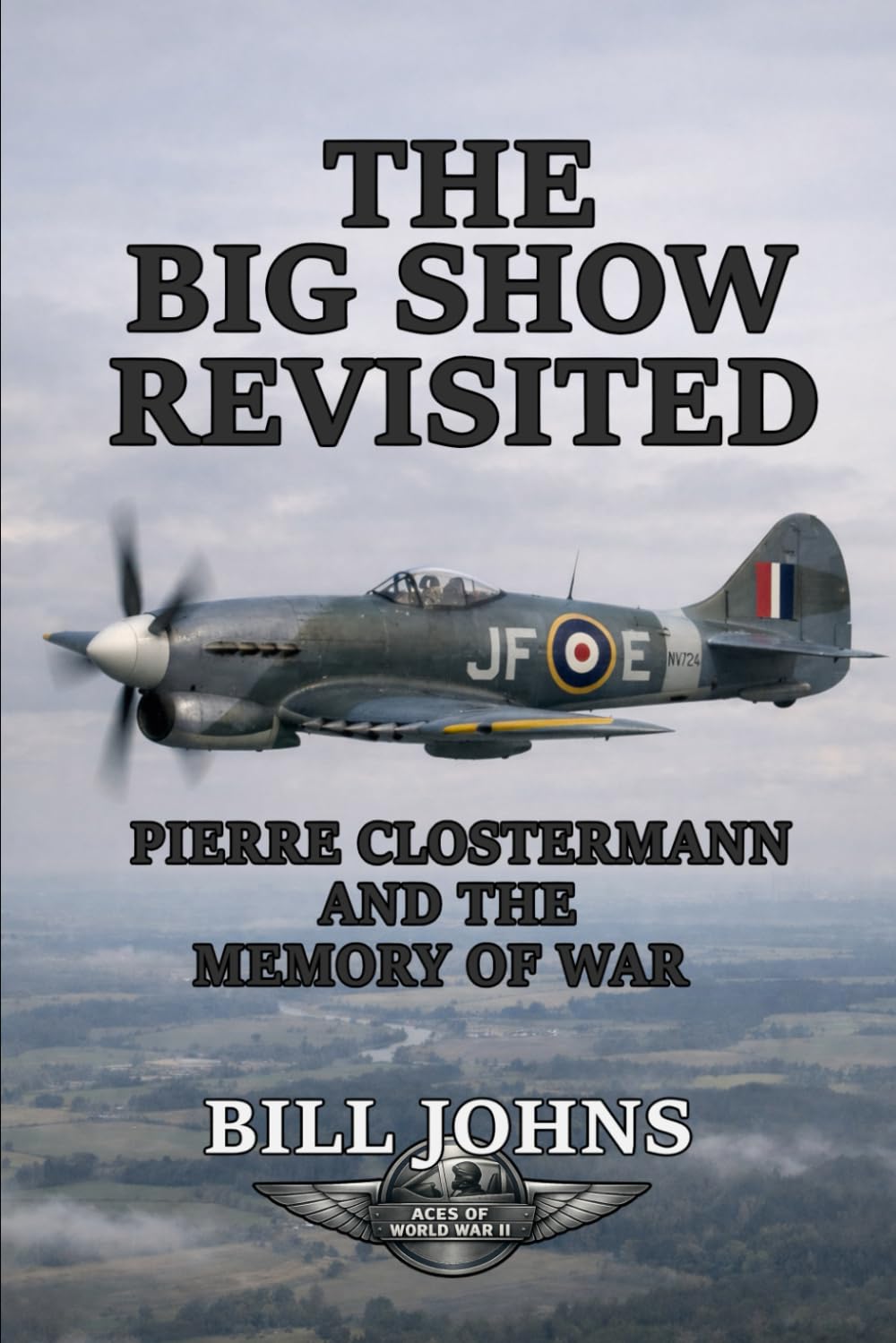
The Big Show Revisited: Pierre Clostermann and the Memory of War (Aces of the Second World War)
$19.99
by Bill Johns



Experience the drama of WWII aerial combat and the enduring legacy of Pierre Clostermann in this immersive cultural history that revisits The Big Show and the way war is remembered across generations. Blending military aviation history, fighter pilot memoir, and the emotional archaeology of conflict, The Big Show Revisited examines how one man’s story became a touchstone for understanding the air war in Europe. When Pierre Clostermann first published Le Grand Cirque in 1948, it became one of the most widely read aviation memoirs of the twentieth century. This book returns to the world he captured—the Spitfire and Tempest squadrons, the tension of operational flying, the thin line between skill and survival—to explore not only what happened in the sky, but how the memory of those battles was shaped, contested, and transformed over decades. Moving beyond biography, it examines the cultural afterlife of the memoir, from postwar reconstruction to the evolving identity of the Free French, from Cold War reinterpretations to the late-life controversies that revealed the moral pressure placed upon public veterans whose stories become national property. Drawing on archival records, contemporary reporting, personal essays, and the shifting language of remembrance, the narrative shows how Clostermann’s wartime experience became part of a larger conversation about courage, loss, and the limits of heroic mythmaking. His flight logs, squadron histories, and political writings unfold alongside France’s changing relationship to its own past. As the number of surviving aviators dwindled, his voice acquired new weight, not as a flawless record of combat, but as a testament to the human texture of war—the fear, exhilaration, exhaustion, and duty that collided in every mission. The book traces the transformation of his legacy, from international icon to reflective witness, and reveals how the memory of war is shaped as much by silence as by speech. At its core, this is a study of how stories endure. It examines the fragile boundary between personal testimony and collective myth, showing how air combat—so often depicted through spectacle—carries a subtler emotional truth that resists simplification. Readers are invited into the morally charged space where history, memoir, and national identity intersect, and where the meaning of war continues to evolve long after the engines fall silent. Enter this story with curiosity and leave with a deeper understanding of the responsibilities of memory, the burdens carried by those who survive, and the enduring question of what war asks us to remember.