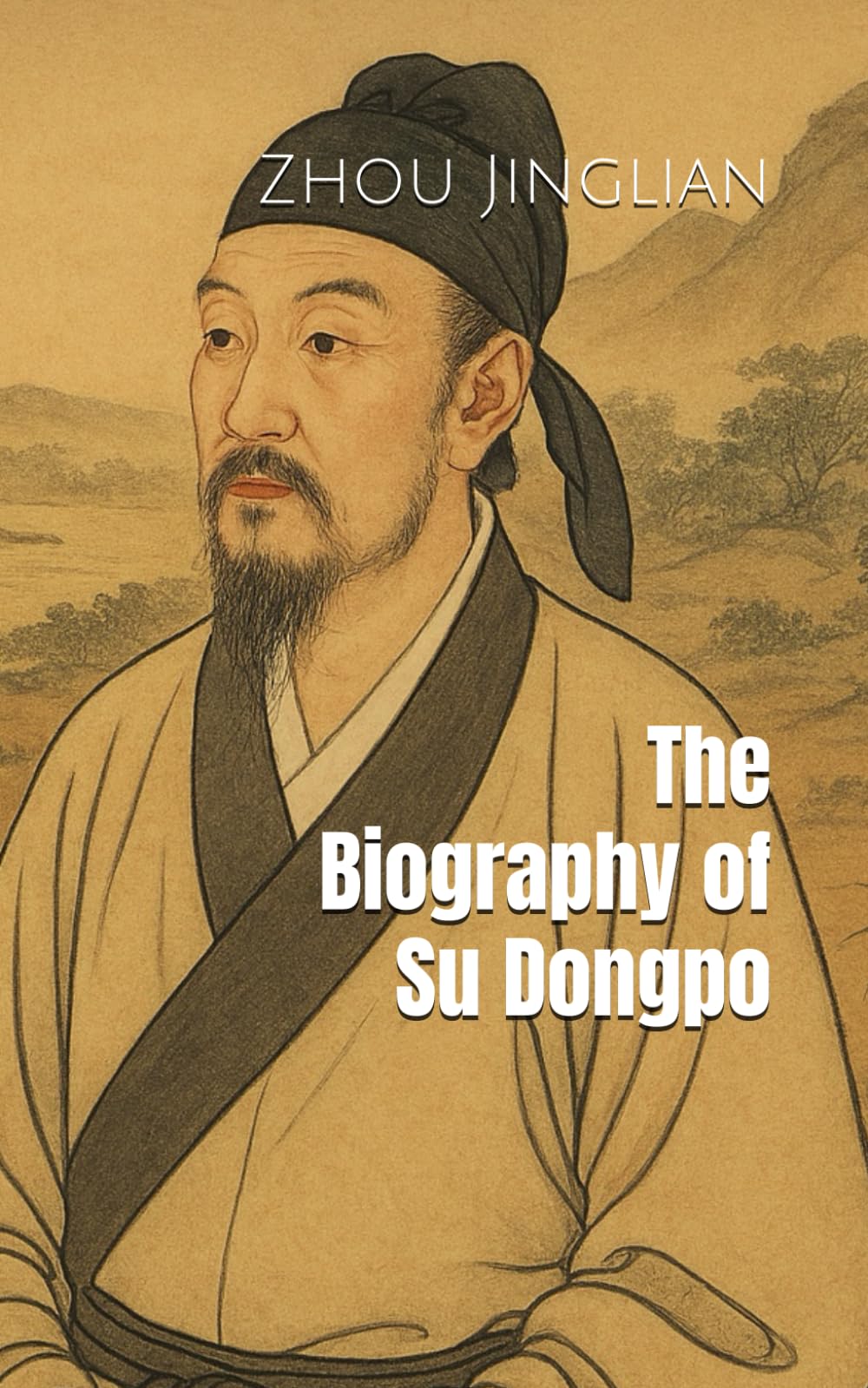



The Biography of Su Dongpo by Zhou Jinglian is not merely a chronicle of a great writer’s life; it is an intellectual and spiritual portrait of one of the most luminous figures in Chinese cultural history. At its center stands Su Dongpo—poet, prose master, calligrapher, statesman, thinker—whose life unfolded amid the turbulence of the Northern Song dynasty and whose voice continues to resonate across centuries. Su Dongpo’s greatness lies not in any single achievement, but in the rare unity of his life and art. His poetry, essays, and letters are inseparable from his temperament: expansive yet humane, ironic yet compassionate, resilient without bitterness. Zhou Jinglian approaches this complexity with a scholar’s rigor and a writer’s sensitivity. Rather than reducing Su Dongpo to a monument of genius, he restores him as a living person—one who laughed easily, suffered deeply, erred often, and transformed adversity into creative freedom. This biography distinguishes itself by the way it intertwines historical context with inner development. Political exile, factional struggle, and repeated demotion were not incidental episodes in Su Dongpo’s career; they shaped his worldview and refined his style. Zhou shows how banishment did not diminish Su Dongpo but liberated him from ambition, allowing his writing to become more natural, more capacious, and more humane. In the harsh landscapes of Huangzhou, Huizhou, and Danzhou, Su Dongpo learned to look steadily at suffering without surrendering joy—a lesson that permeates his prose and poetry alike. Equally important is Zhou Jinglian’s treatment of Su Dongpo’s intellectual breadth. Confucian responsibility, Daoist spontaneity, and Buddhist insight coexist in his thought without hard boundaries. Zhou does not force these traditions into a neat system; instead, he reveals how Su Dongpo lived them intuitively, responding to life with a flexible wisdom that refused dogma. This openness explains why Su Dongpo could write with equal authority about governance and gardening, metaphysics and meals, cosmic impermanence and everyday friendship. What makes this biography especially compelling is its attention to style. Zhou Jinglian writes about literature as a practitioner of literary understanding, not as a distant archivist. He listens closely to Su Dongpo’s language—its river-like movement, its sudden turns, its ease that conceals depth. Through careful reading, Zhou demonstrates how Su Dongpo’s prose achieves freedom without chaos, structure without stiffness, and emotional range without excess. The reader comes to see that Su Dongpo’s famed “naturalness” was not naïveté, but the result of profound cultivation. For modern readers, The Biography of Su Dongpo offers more than historical knowledge. It proposes a way of inhabiting the world: to accept impermanence without despair, to engage society without becoming enslaved by it, and to preserve inner clarity amid external constraint. In an age that often equates success with speed and visibility, Su Dongpo’s life—patient, resilient, and generous—stands as a quiet alternative.