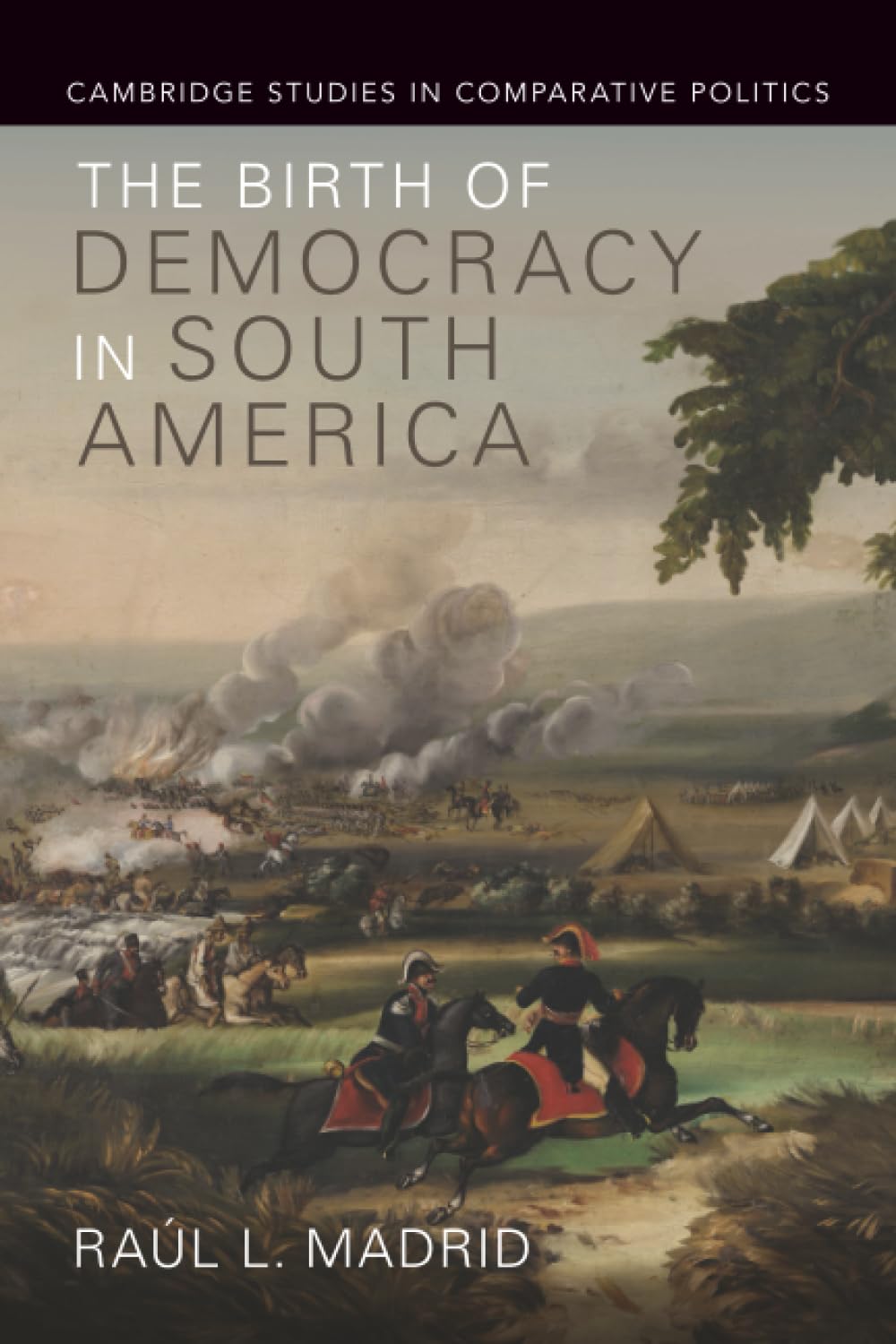
The Birth of Democracy in South America (Cambridge Studies in Comparative Politics)
$35.99
by Raul L. Madrid



South America contains some of the oldest democracies in the world, yet we still know relatively little about how and why democracy arose in the region. Raúl L. Madrid argues that three main developments – the professionalization of the military, the growth of parties, and splits within the ruling party – led to democratization in the early twentieth century. Military professionalization increased the incentives for the opposition to abandon the armed struggle and focus on the electoral path to power. The growth of parties boosted the capacity of the opposition to enact and enforce democratic reforms that would level the electoral playing field. And ruling party splits created the opportunity for the opposition and ruling party dissidents to ally and push through reforms. This persuasive and original book offers important implications for the study of democracy. This title is also available as Open Access on Cambridge Core. ‘Raúl L. Madrid's The Birth of Democracy in South America is a superb book. It is one of the best books I've read on Latin America, and it is the best comparative analysis I've read of the origins of democracy. The book offers a clear, very original, and parsimonious theoretical argument; engagement with the existing literature; outstanding empirical research; a highly important research topic; excellent knowledge of the cases; and a very disciplined approach to the case studies.' Scott Mainwaring, University of Notre Dame ‘This book offers highly innovative and empirically very well supported theoretical arguments explaining the emergence of (proto)democratic regimes in Latin America. Combining impressive data collection with compelling comparative historical analysis, Raúl L. Madrid demonstrates the impact of military professionalization, strong opposition parties, and splits in the ruling party on chances for early democratization. A must-read for all those interested in democratization and Latin America.' Evelyne Huber, University of North Carolina, Chapel Hill 'At last! Raúl L. Madrid delivers the foundational book on the first epoch of democracy and authoritarianism in South America. With clarity, originality, and rigor, he shows how professional militaries and strong opposition parties led a few select countries to early democratization. This outstanding work represents what is best about comparative-historical analysis and is an essential touchstone not only for Latin Americanists, but for any scholar who works on regime change.' James Mahoney, Northwestern University Examines how the military and political parties played a central role in the birth of democracy in South America. Raúl L. Madrid is the Harold C. and Alice T. Nowlin Regents Professor in Liberal Arts at the University of Texas at Austin. He is the author of The Rise of Ethnic Politics in Latin America (2012) as well as numerous other books and articles on Latin American politics.