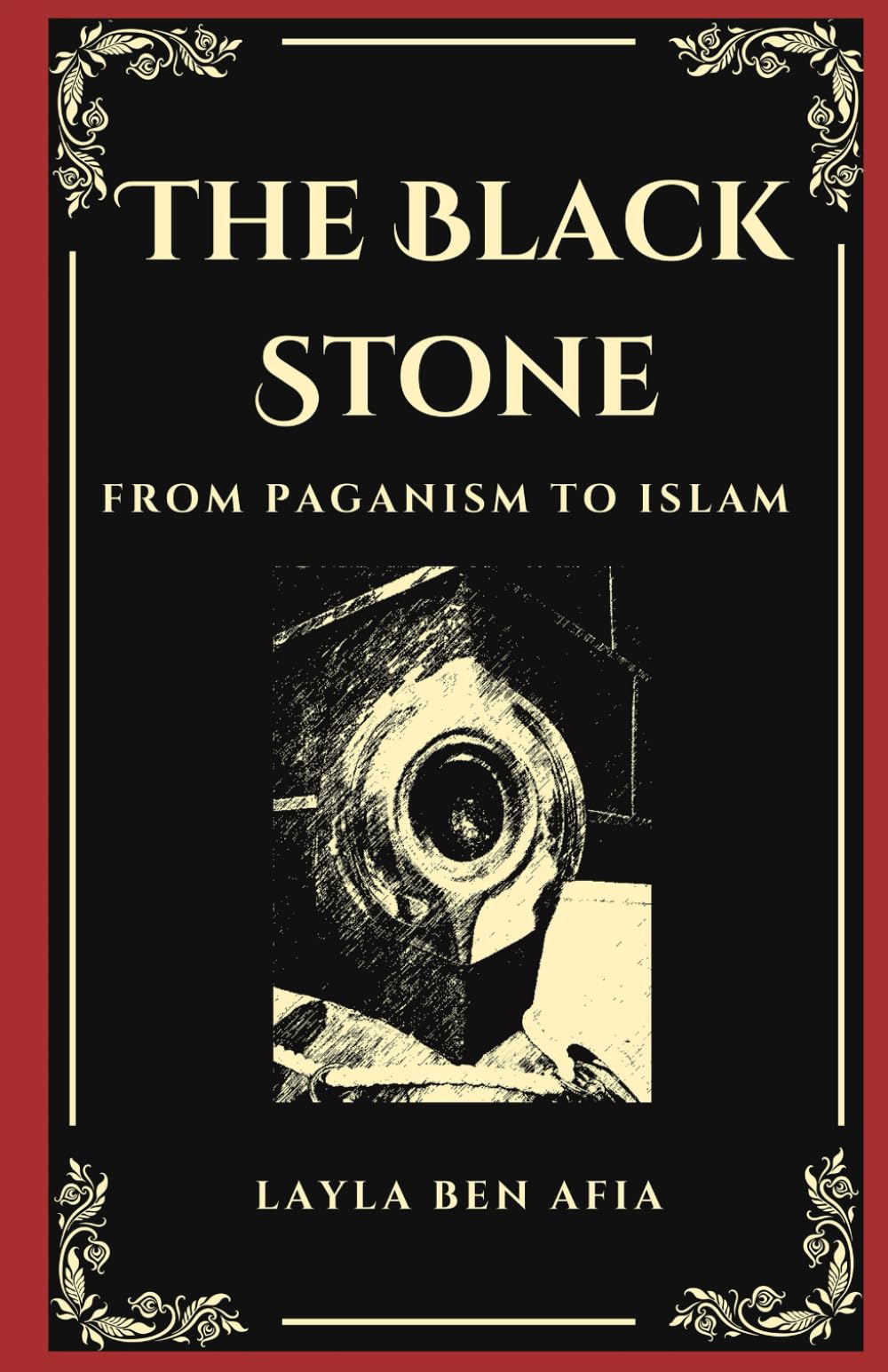



The origins of Islam lie in the ancient paganism of the Middle East. An unprecedented study on the ancient goddess behind the origin of the Kaaba’s Black Stone! English edition of the French bestseller: "La pierre noire du paganisme à l'Islam" In the study of religions, it is recognized that all religious systems have a history. They evolve continuously, drawing from earlier beliefs while introducing new elements to shape distinct doctrines. In recent decades, significant advances have been made in exploring the origins of Islam. Yet, the potential pagan roots of Islam remain a relatively underexplored subject. The author of this book focuses on an emblematic object of the Muslim faith: the Black Stone of the Kaaba. This sacred stone marks the direction Muslims face during their five daily prayers and holds profound significance for pilgrims traveling to Mecca, who seek to touch and kiss it as they circle the Kaaba. At first glance, the Black Stone might seem like a pagan idol, but can this theory be substantiated? Did pre-Islamic Middle Eastern pagan cults venerate a sacred black stone similar to the Islamic one? And if so, do these cults reveal further affinities with the Muslim faith? The findings of this research are striking, uncovering ancient cults that profoundly influenced not only Islam but also the three monotheistic religions. The book, The Black Stone: From Paganism to Islam , explores the worship of a mountain goddess revered as a sacred black stone in the eastern Mediterranean. It reveals her origins, myths, rituals, and the transformation of her cult from ancient paganism to the dawn of Islam. This goddess embodies the archetype of renowned deities of death and resurrection in the ancient Near East. She originates from the Mesopotamian Ishtar and forms part of a sacred couple, where her partner—a less prominent figure—is a dying and rising god brought back to life by the goddess. This cult of death and resurrection served as a foundation for early biblical myths, including the stories of Adam and Eve, the Garden of Eden, and original sin. Over successive waves, it shaped Judaism, Christianity, and Islam. The Near Eastern version of the goddess, symbolized by a sacred black stone and known by names derived from the Semitic root GBL —such as Baalat Gabal, Cybele, and Elagabalus—finds a particularly striking expression in Islam, evidenced by the central role of a sacred black stone in its worship. Entire mythical episodes associated with this goddess echo in the biography of the Prophet Muhammad. This investigation traces the origins of a liturgical tradition, offering insights into practices such as the prohibition of pork, circumcision as symbolic castration, the Christian Eucharist, Sufi ecstatic dances, and Shiite self-mutilation rituals. It is an anthropological exploration of mythology, iconographic symbolism, and ritual practices, following the history of a cult that spanned millennia. This evolution led from prehistoric shamanic systems to ancient polytheism, mystery cults, and eventually monotheism. It is a history of religions shaped by the cultural and political dynamics of a turbulent Middle East, which consistently gave rise to new religious forms in response to its continual upheavals. This journey also sheds light on how a powerful primordial goddess of antiquity was transformed into a male creator god within monotheistic religions, a transformation rooted in a process of gender role inversion that began as early as the 5th century BCE.