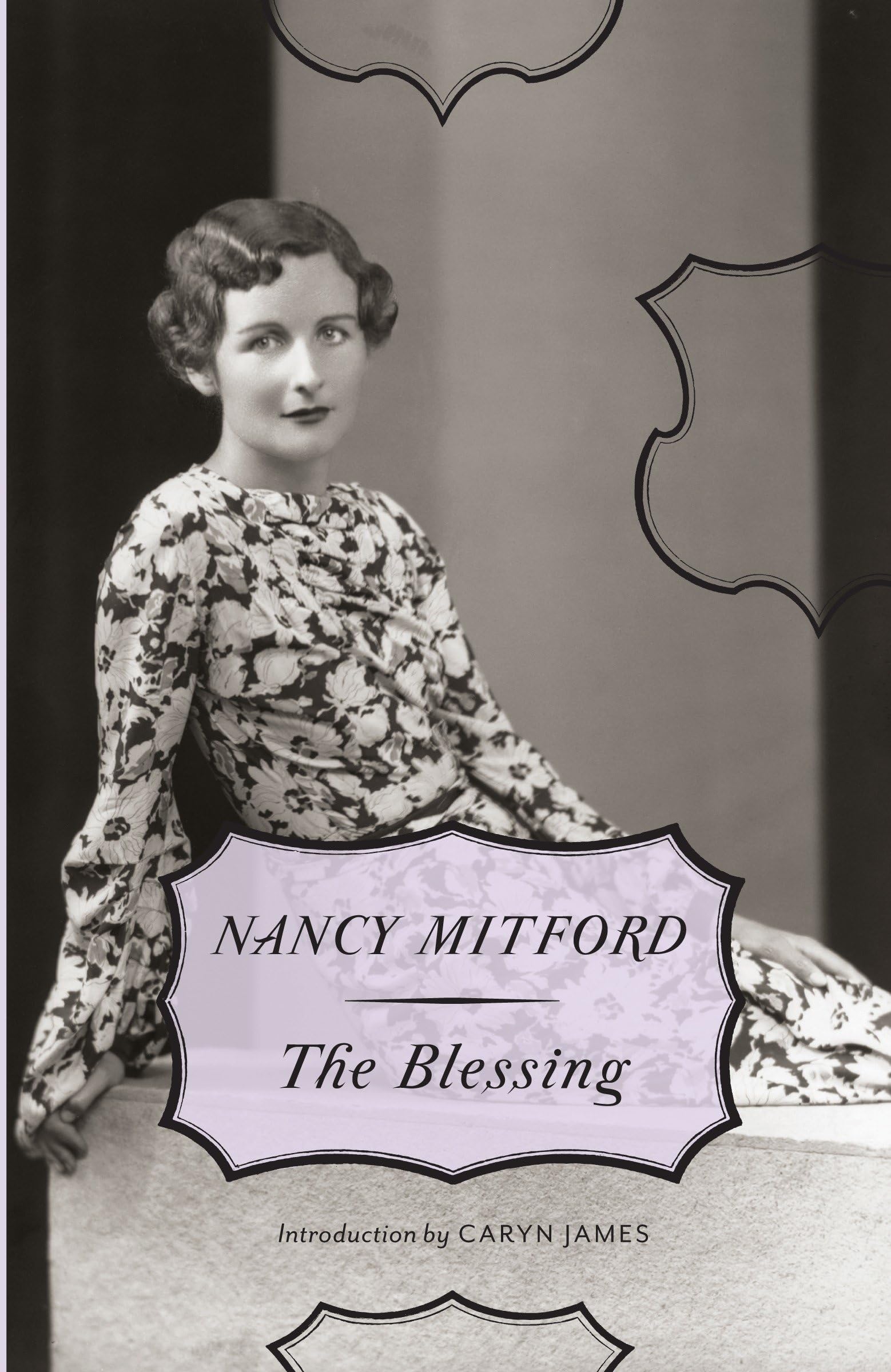



The Blessing is one of Nancy Mitford’s most personal books, a wickedly funny story that asks whether love can survive the clash of cultures. When Grace Allingham, a naïve young Englishwoman, goes to live in France with her dashingly aristocratic husband Charles-Edouard, she finds herself overwhelmed by the bewilderingly foreign cuisine and the shockingly decadent manners and mores of the French. But it is the discovery of her husband’s French notion of marriage—which includes a permanent mistress and a string of casual affairs—that sends Grace packing back to London with their “blessing,” young Sigismond, in tow. While others urge the couple to reconcile, little Sigi—convinced that it will improve his chances of being spoiled—applies all his juvenile cunning to keeping his parents apart. Drawing on her own years in Paris and her long affair with a Frenchman, Mitford elevates cultural and romantic misunderstandings to the heights of comedy. “A refreshment to the mind and the spirit. . . . Cunningly constructed, artfully written, and divinely farcical.” — The New York Times Book Review “Mitford tells her story with much wit, intelligence, and polish.” — The Times (London) “Deliciously funny.” —Evelyn Waugh Nancy Mitford , daughter of Lord and Lady Redesdale and the eldest of the six legendary Mitford sisters, was born in 1904 and educated at home on the family estate in Oxfordshire. She made her debut in London and soon became one of the bright young things of the 1920s, a close friend of Henry Green, Evelyn Waugh, John Betjeman, and their circle. A beauty and a wit, she began writing for magazines and writing novels while she was still in her twenties. In all, she wrote eight novels as well as biographies of Madame de Pompadour, Voltaire, Louis XIV, and Frederick the Great. She died in 1973. More information can be found at www.nancymitford.com. 1 ‘The foreign gentleman seems to be in a terrible hurry, dear.’ And indeed the house, though quite large, what used to be called a family house, in Queen Anne’s Gate, was filled with sounds of impatience. Somebody was stamping about, moving furniture, throwing windows up and down, and clearing his throat exaggeratedly. ‘Ahem! Ahem!’ ‘How long has he been here, Nanny?’ ‘Nearly an hour I should think. He played the piano, very fast and loud, for a while, which seemed to keep him quiet. He’s only started this shindy since John went and told him you were in and would be down presently.’ ‘You go, darling, and tell him he must wait while I change out of these trousers,’ said Grace, who was vigorously cleaning her neck with cotton wool. ‘Oh, the dirt. What I need is a bath.’ The drawing-room door was now flung open. ‘Do I see you or not?’ The voice was certainly foreign. ‘All right – very well. I’ll come down now, this minute.’ She looked at Nanny, laughing, and said, ‘He might go through the floor, like Rumpelstiltskin.’ But Nanny said, ‘Put on a dress dear, you can’t go down like that.’ ‘Shall I come upstairs?’ said the voice. ‘No, don’t, here I am,’ and Grace ran down, still in her A.R.P.trousers. The Frenchman, tall, dark and elegant, in French Air Force uniform, was on the drawing-room landing, both hands on the banister rail. He seemed about to uproot the delicate woodwork. When he saw Grace he said ‘Ah!’ as though her appearance caused him gratified surprise, then, ‘Is this a uniform? It’s not bad. Did you receive my note?’ ‘Only now,’ said Grace. ‘I’ve been at the A.R.P. all day.’ They went into the drawing-room. ‘Your writing is very difficult. I was still puzzling over it when I heard all that noise – it was like the French Revolution. You must be a very impatient man.’ ‘No. But I don’t like to be kept waiting, though this room has more compensations than most, I confess.’ ‘I wouldn’t have kept you waiting if I’d known a little sooner – why didn’t you . . .’ He was no longer listening, he had turned to the pictures on the walls. ‘I do love this Olivier,’ he said. ‘You must give it to me.’ ‘Except that it belongs to Papa.’ ‘Ah yes, I suppose it does. Sir Conrad. He is very well known in the Middle East – I needn’t tell you, however. The Allingham Commission, ah! cunning Sir Conrad. He owes something to my country, after that.’ He turned from the picture to Grace looking at her rather as if she were a picture, and said, ‘Natoire, or Rosalba. You could be by either. Well, we shall see, and time will show.’ ‘Papa loves France.’ ‘I’m sure he does. The Englishmen who love France are always the worst.’ ‘The worst?’ ‘Each man kills the thing he loves, you know. Never mind.’ ‘You’ve come from Cairo?’ she said. ‘I thought I read Cairo in your letter and something about Hughie? You saw him?’ ‘The fiancé I saw.’ ‘And you’ve come to give me news of him?’ ‘Good news – that is to say no news. Why is this picture labeled Drouais?’ ‘I suppose it i