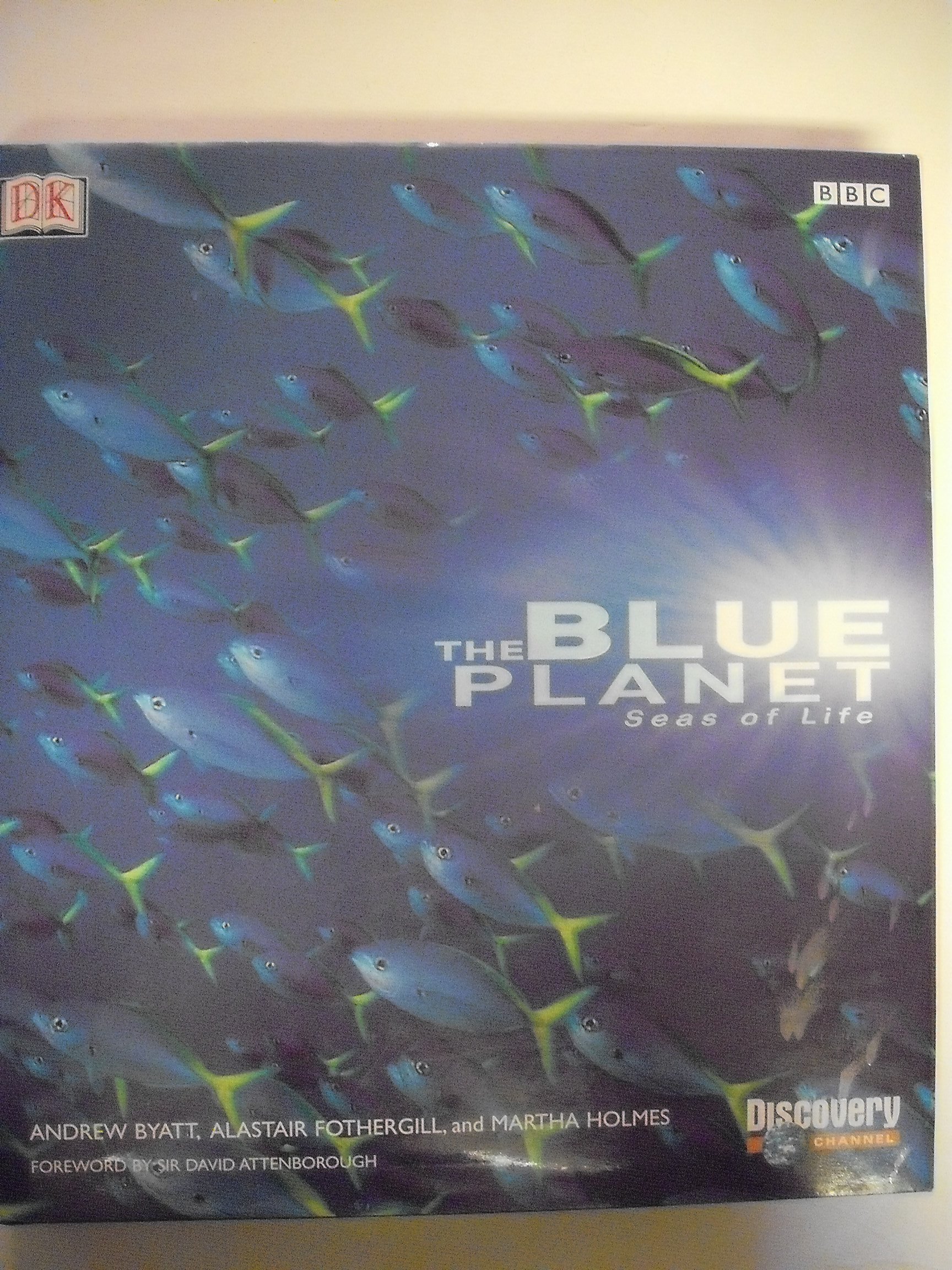



"From space, Planet Earth is blue. It floats like a jewel in the inky black void. The reflection of the sun's light from the vast expanse of water covering its surface creates it gemlike blue color. In the entire solar system, Earth is the only planet that has water in liquid form in such quantities." Scientist have calculated that 70 percent of our planet is covered by water; small wonder that the human being shave always been so fascinated by the oceans and what lies beneath. Today, while we still have so much more of the ocean realm to uncover, we have discovered enough to know that beneath the waves lies a vast treasure-trove of rich and diverse life. Accompanying the television series of the same name, The Blue Planet leads up on a voyage of exploration from the coasts, the very edges of the oceans, to the deep where weird and monstrous fish lurk in a world of perpetual darkness. Along the way we are introduced to a whole host of wonderful creatures -- from tiny copepods to majestic blue whales, and from the grotesque hairy anglerfish, to the amazing tripod fish that stands on its three delicate legs waiting to snap up unsuspecting prey. Complete with a foreword by Sir David Attenborough and 400 full-color photographs, The Blue Planet is the first complete and comprehensive portrait of the whole ocean system. This companion volume to the forthcoming BBC/Discovery Channel miniseries The Blue Planet is a broad-ranging, nonthreatening introduction to our planet's oceans for the reader who is interested, but not well versed, in science. Six of seven chapters cover the basic ocean environments (e.g., tropical seas, frozen seas, and the deep), with an emphasis on the plant and animal life found in these regions. Although the focus is on biological oceanography, one full chapter covers physical oceanography and marine geology. The relevant chemistry, geology, and physics of the ocean are also introduced as needed. Spectacular photographs are plentiful throughout. Although lacking a bibliography or suggestions for further reading, the book contains a good index, a glossary, and even cross references in the text when appropriate. The science is thorough and up-to-date. A good introduction to the oceans for the scientific novice, this book is recommended for public, high school, and middle school libraries that do not have extensive marine science collections, as well as for public libraries whose patrons are fans of the Discovery Channel. Margaret Rioux, MBL/WHOI Lib., Woods Hole Oceanographic Inst., MA Copyright 2002 Cahners Business Information, Inc. Published in conjunction with the BBC/Discovery Channel special of the same name, this stunning new book reveals the secrets of our water planet. When viewed from space, Earth, 70 percent of which is covered with water, appears blue. Only 1 percent of these vast oceans has been studied, and these mysteries and discoveries are discussed in seven chapters. The first chapters explain the mechanics of the water planet, including the chemistry of water; the interactions of atmosphere and ocean; and how water moves in waves, currents, and tides. The remaining sections discuss the different realms of the oceans: the seas of the tropics, temperate regions, and the poles; the open oceans far from land; and the deep-sea regions. The plant and animal life adapted to each environment are depicted in beautiful photographs, and more information appears in sidebars. The informative text is conversational and highly readable and extensively illustrated with maps, illustrations, charts, and photographs, many of which show rarely seen creatures. Nancy Bent Copyright © American Library Association. All rights reserved Alastair Fothergill was educated at the universities of St. Andrew's and Durham in the UK, joining the BBC Natural History Unit in 1983. He has worked on a wide range of the department's programs, including the award winning The Really Wild Show, Wildlife on One, and the innovative Reefwatch. He worked with Sir David Attenborough on The Trials of Life and again, in 1993, when he produced Life in the Freezer, for which he also wrote the accompanying BBC book. In 1992 he was appointed head of the BBC Natural History Unit. In June 1998 he stepped down as head of the unit in order to concentrate on his role as series producer of The Blue Planet TV series. Martha Holmes specialized in marine biology and gained her Ph.D. at the University of York in UK. She started work with the BBC in 1998, presenting programs such as Reefwatch, a live underwater broadcast from the northern Red Sea, and The Natural World: Splashdown, which was followed by the award-winning wildlife adventure series Sea Trek, for which she wrote the accompanying BBC book. She worked in Antarctica for Sir David Attenborough's Life in the Freezer and has produced a number of other natural history films, such as Hippos out of Water, Deadly Liaisons, Otters -- The Truth and Reefwise. More recently, she produ