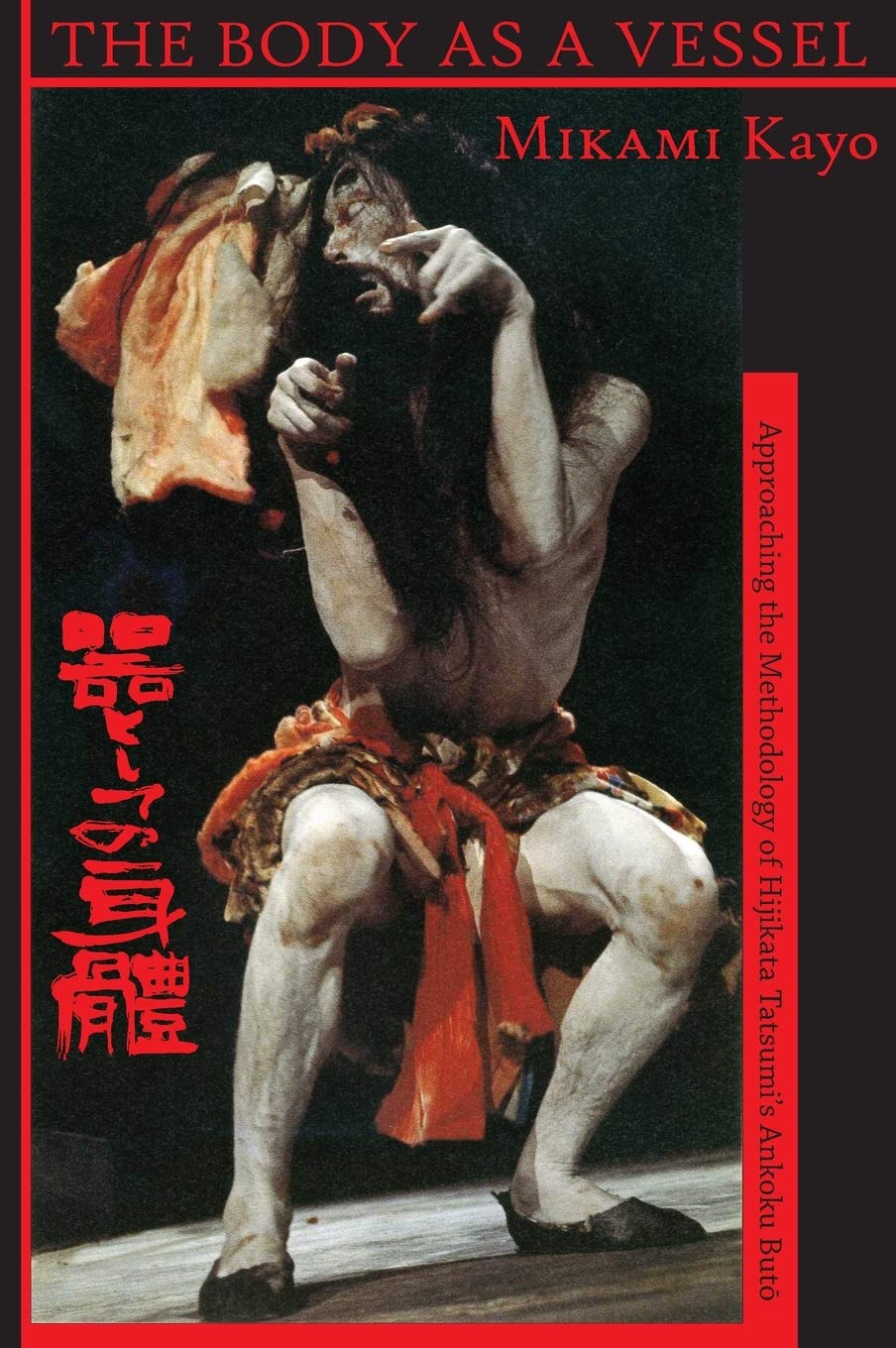



When Hijikata Tatsumi's "Ankoku Butō" appeared in 1959, it revolutionized not only Japanese dance but also the concept of performance art worldwide. It has however proved notoriously difficult to define or tie down. Mikami Kayo was a disciple of Hijikata for three years. In "The Body as a Vessel", which is partly based on her graduate and doctoral theses, she combines the insights from these years with earlier notes from other butō dancers to decode the ideas and processes behind Hijikata's novel form of theatre. This book is the first full translation of Mikami's work, and also includes fresh material not published in the Japanese edition, as well as numerous photographs, many in full colour. BEN JONES: After winning a scholarship to Oxford University to study Japanese, he moved to Japan and trained in the Bujinkan, interpreting for Dr. Hatsumi at seminars around the world. Former head of the Institute of Translation and Interpreting's Japanese Network, he now runs a successful translation and typesetting business from his home in Kent, UK. Mikami Kayo was born in Tokushima, and attended Ochanomizu University in Tokyo, where she obtained a first degree in Japanese Language & Literature, followed by a masters in Dance & Dance Education and a doctorate in Human Development. After working in the media for a while, she became a disciple of Hijikata Tatsumi, founder of Butoh, and later went on to study also with Noguchi Michizo, founder of Noguchi Taiso. In 1991 she founded Torifune Butoh Sha together with her husband Mikami Yukio (ex Tenjo Sajiki), and continues to perform in many countries including Scotland, France, Italy, Greece, Russia and Canada. On the academic side, she is currently a professor in the Faculty of Humanities at Kyoto Seika University, researching physical expression and communication, and has lectured in Korea, Slovenia, Ireland and the USA. Rosa van Hensbergen travelled to Japan on a Harper-Wood Studentship and then a Daiwa Scholarship to study the Japanese language and Japanese dance, including a period at the Hijikata Tatsumi Archive at Keio University. Following an MSc in Modern Japanese Studies at Oxford, she is now at Cambridge researching Hijikatas notational language and poetic prose texts.