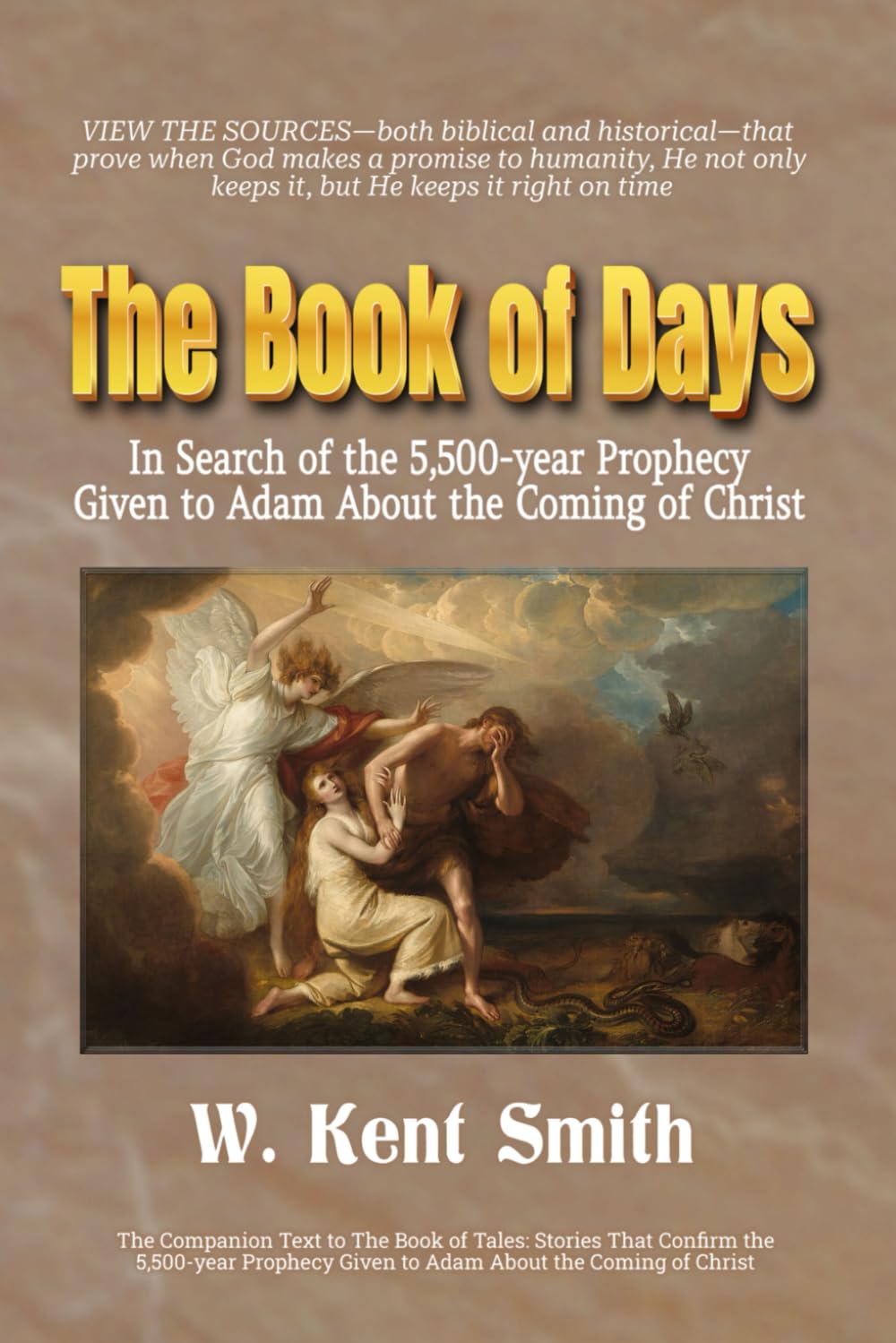
The Book of Days: In Search of the 5,500-year Prophecy Given to Adam About the Coming of Christ
$17.99
by W Kent Smith



The Book of Days sheds new light on a lost chapter of biblical history by connecting the 5,500-year genealogy from Adam to Christ, found in The Septuagint Bible , with The Great Five and a Half Day prophecy so prevalent in parabiblical literature. If this can be adequately accomplished, then it is my hope they will never again stand apart and so will finally be seen in the context that the God of The Bible originally intended for them. Hello, I'm Richard Price, Academia CEO, and today I'm talking about a fascinating work by W. Kent Smith titled The Book of Days: In Search of the 5,500-year Prophecy Given to Adam About the Coming of Christ . Now I have to say this is one of those titles that takes you on a wild ride through time. The book essentially challenges the familiar 4,000-year-old timeline from Adam to Christ that most of us are used to from The Bible , proposing instead that it should actually span 5,500 years. Quite the leap, right? But Smith presents an intriguing case, pulling together historical texts, biblical lore, and even sacred artifacts to make his point. So, what's the core question at the heart of this work? Well, Smith is asking: Is the conventional biblical chronology really accurate, and if not, why haven't we challenged it sooner? It's kind of like discovering there's a whole chapter missing from your favorite book, and suddenly the story makes a whole lot more sense once it's included. But it's not just about adjusting the dates. Smith argues that this 5,500-year timeline actually reinforces the idea of God's faithfulness, because if it's accurate, it essentially confirms that God fulfilled a promise made to Adam in the earliest days of creation. This work is pretty dense and maybe a bit controversial to some. Smith dives deep into the nitty-gritty of ancient texts like The Septuagint and The First Book of Adam and Eve . Isn't it wild how some books didn't quite make the final cut into The Bible as we know it today? This leads us to puzzle over theological politics and how certain decisions of the past have shaped our present beliefs. Kind of like discovering how your favorite dish became the way it is today—someone left out that secret ingredient that changes everything about it. Now, Smith alleges that early Church Fathers like Justin Martyr and Tertullian had it right with this extended timeline, but lost traction due to the standardization at the Council of Jamnia and the influence of Rabbinic Judaism. This hidden gem of a prophecy—the Great Five and a Half Days—suggests The Bible isn't just a set of words but a divine clock ticking down to salvation. Isn't it fascinating to think about time this way, that there's a divine schedule to it all? There's also something intriguingly cinematic about how Smith aligns the numbers with significant biblical events and artifacts. Take for example how the dimensions of The Ark of the Covenant supposedly echo this timeline. Five and a half cubits suggests it's interwoven with the 5,500-year prophecy. Smith paints a picture not just with words but with numbers and history, suggesting that maybe, just maybe, all these elements were crafted to fit into this staggering prophecy. As for Smith's methodology, it's like piecing together a massive historical jigsaw puzzle with text like The Septuagint , evaluating ancient scholarly wisdom often overlooked. Smith delivers this with a passion that's kind of infectious really. When you're reading, it feels like you're uncovering some grand cosmic mystery. Smith's exploration is as tangled as it is tantalizing. He leaves us with not just a timeline but an invitation to consider how we perceive history and promises. It's an opportunity to reassess the narratives we've taken as gospel truths, literally. So, whether you find yourself agreeing with Smith or not, it's undeniable that his work offers a provocative glimpse into the labyrinth of theology and timelines. It serves to remind us all that our understanding of history is always evolving, and there's an endless reservoir of knowledge to tap into and learn from, even if the past isn't quite what we expected. In 1650, Archbishop James Ussher published one of the most influential biblical chronologies ever set forth as the unassailable word of God. By using texts in The Book of Genesis , together with other passages from Scripture, Ussher calculated that the world was created on the 23rd day of October, in the year 4,004 B.C. To this day, most Christians would never think to dispute such a finding, and if ever challenged would defend this "fact" to the death, not knowing why, other than that it had been included in so many copies of their Bible . But sadly, as well-intentioned as these defenders of the faith are, they may, upon further review of all things scriptural, actually be defending a proverbial Trojan horse. Nearly lost to history is the knowledge that long before Archbishop Ussher offered his chronology as the "gospel truth,"