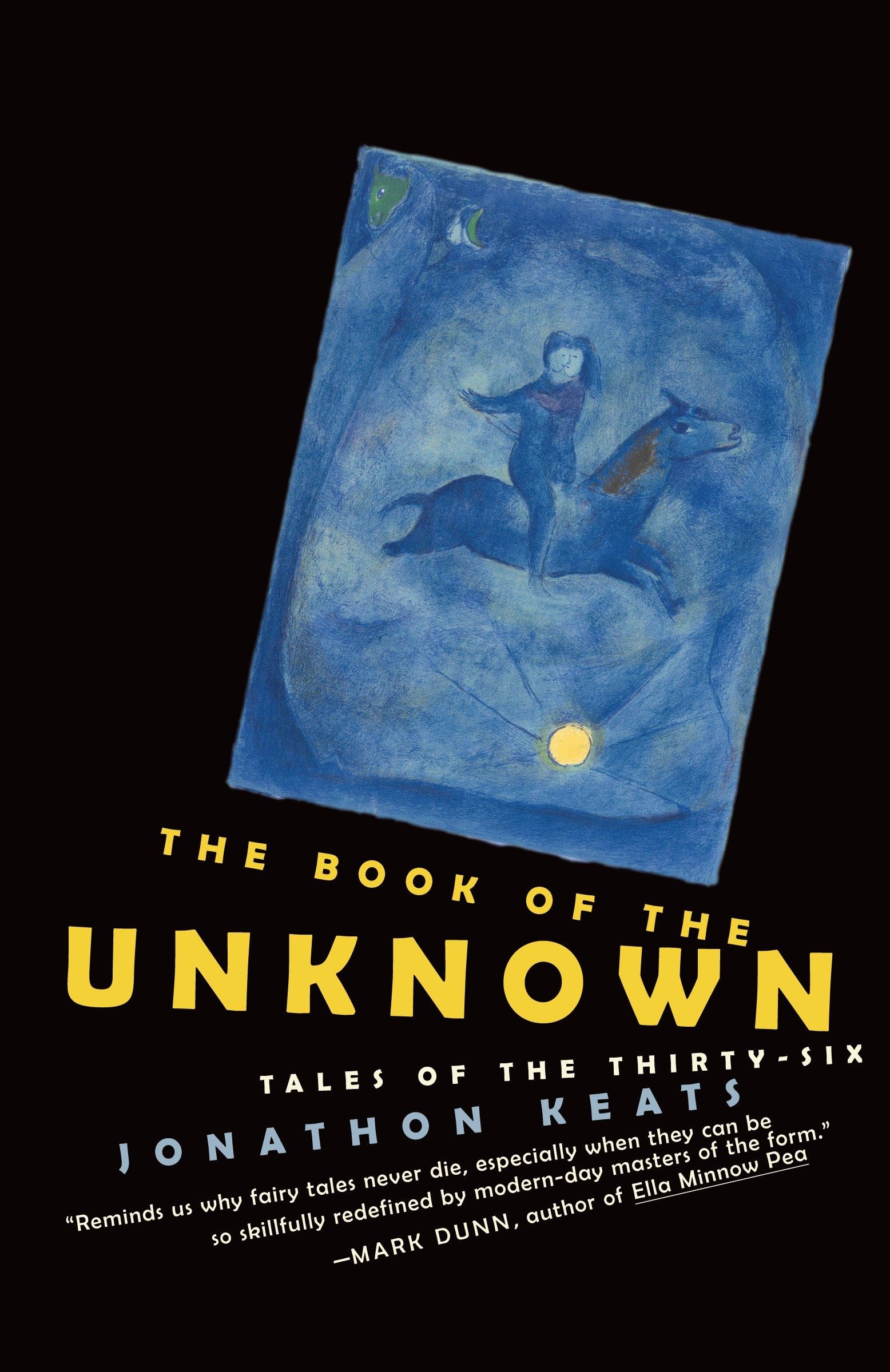



Marvelous and mystical stories of the thirty-six anonymous saints whose decency sustains the world–reimagined from Jewish folklore. A liar, a cheat, a degenerate, and a whore. These are the last people one might expect to be virtuous. But a legendary Kabbalist has discovered the truth: they are just some of the thirty-six hidden ones, the righteous individuals who ultimately make the world a better place. In these captivating stories, we meet twelve of the secret benefactors, including a timekeeper’s son who shows a sleepless village the beauty of dreams; a gambler who teaches a king ruled by the tyranny of the past to roll the dice; a thief who realizes that his job is to keep his fellow townsfolk honest; and a golem–a woman made of mud–who teaches kings and peasants the real nature of humanity. With boundless imagination and a delightful sense of humor, acclaimed writer and artist Jonathon Keats has turned the traditional folktale on its head, creating heroes from the unlikeliest of characters, and enchanting readers with these stunningly original fables. Adult/High School—This slender book opens with a foreword by its fictional author, Jay Katz, PhD, in which he describes how, many years earlier, he had unearthed a list of names buried deep beneath the ruins of a German city. Determined to understand just what the list might mean, he took to the road to interview local villagers, who told him that they are the names of the "Lamedh-Vov," the 36 anonymous people who must exist on Earth to make it a better place. Among them are a whore, a fool, a thief, and a gambler. Written in a folkloric style, with short lyrical sentences that incorporate some modern wording, the tales appear to be easy reads, but have a depth that creates questions that beg for discussion. They are rich with Jewish tradition, and teens who lack that knowledge may need guidance in order to fully understand them.— Connie Williams, Kenilworth Jr. High, Petaluma, CA Copyright © Reed Business Information, a division of Reed Elsevier Inc. All rights reserved. Keats’ world is a fun one. His allegorical world resembles some hybrid of Robin Hood’s Sherwood Forest and Shrek’s moss-covered environs. Visions of cloaks and pushcarts and thatched roofs abound throughout each wonderful fable as it weaves together mysticism and conflict. Magic and exaggeration exist, not in an attempt for wizardry and the supernatural but to facilitate the human relationships within each fable. Passing from fable to fable, a recognition of something odd arises: each protagonist is likable and deserves championing. The characters are unique: a thief is encouraged, a liar rewarded, and a luckless gambler knows nothing but happiness. Each character suffers some moralistic adversity yet continues striving for goodness. Although they might stumble, they eventually find redemption and happiness. Keats’ characters occupy a world where goodness prevails and redemption finds the right person. Our world is not so tidy, but perhaps if characters can be good, we can be, too. This is not our world, but it is most definitely one worth reading. --Blair Parsons “Echoes of Isaac Bashevis Singer, Sholom Aleichem and S.Y. Agnon sound throughout this high-concept collection’s engaging stories….Unusual and charming stories that successfully revive a nearly forgotten form of storytelling. One hopes we will hear more of these Lamedh-Vov and their all-too-human struggles and triumphs.” — Kirkus Reviews “These charming stories, told with authority–yet oddly delicate and wholly delightful–are enchanting. To read them is to become transfixed with that long-forgotten childhood wonder. One feels in the hands of a masterful and magical storyteller.”–Elizabeth Strout, author of Olive Kitteridge “In his fantastic and fantastical collection, Jonathon Keats creates an original and captivating world of surprise where scoundrels are saints and dreams descend on villages like rain. There’s mystery and magic on every page, and a deeply inspiring humanity at the heart of every fable. Finally, a writer who understands that adults need fairy tales as much, if not more, than children.”—Bret Anthony Johnston, author of Corpus Christi: Stories , and director of the creative writing program at Harvard University“ The Book of the Unknown is based on ancient Jewish lore and set in pre-modern Eastern Europe. Add Jonathon Keats’ 21st-century American sensibility, and the result is a delightful and provocative brew–one of a kind.” —Janet Hadda, author of Isaac Bashevis Singer: A Life , and Professor of Yiddish Emerita at UCLA " The Book of the Unknown earns Jonathon Keats a place in line with Rabbi Nahman of Bratslav and Isaac Bashevis Singer. In language at once phantasmagorical, seductive, and reverent, Keats imagines the preposterous misadventures of people who are so holy they are unknown even to themselves. And, in so doing, he reopens the Jewish folk imagination–and our own." —Lawrence Kushner, au