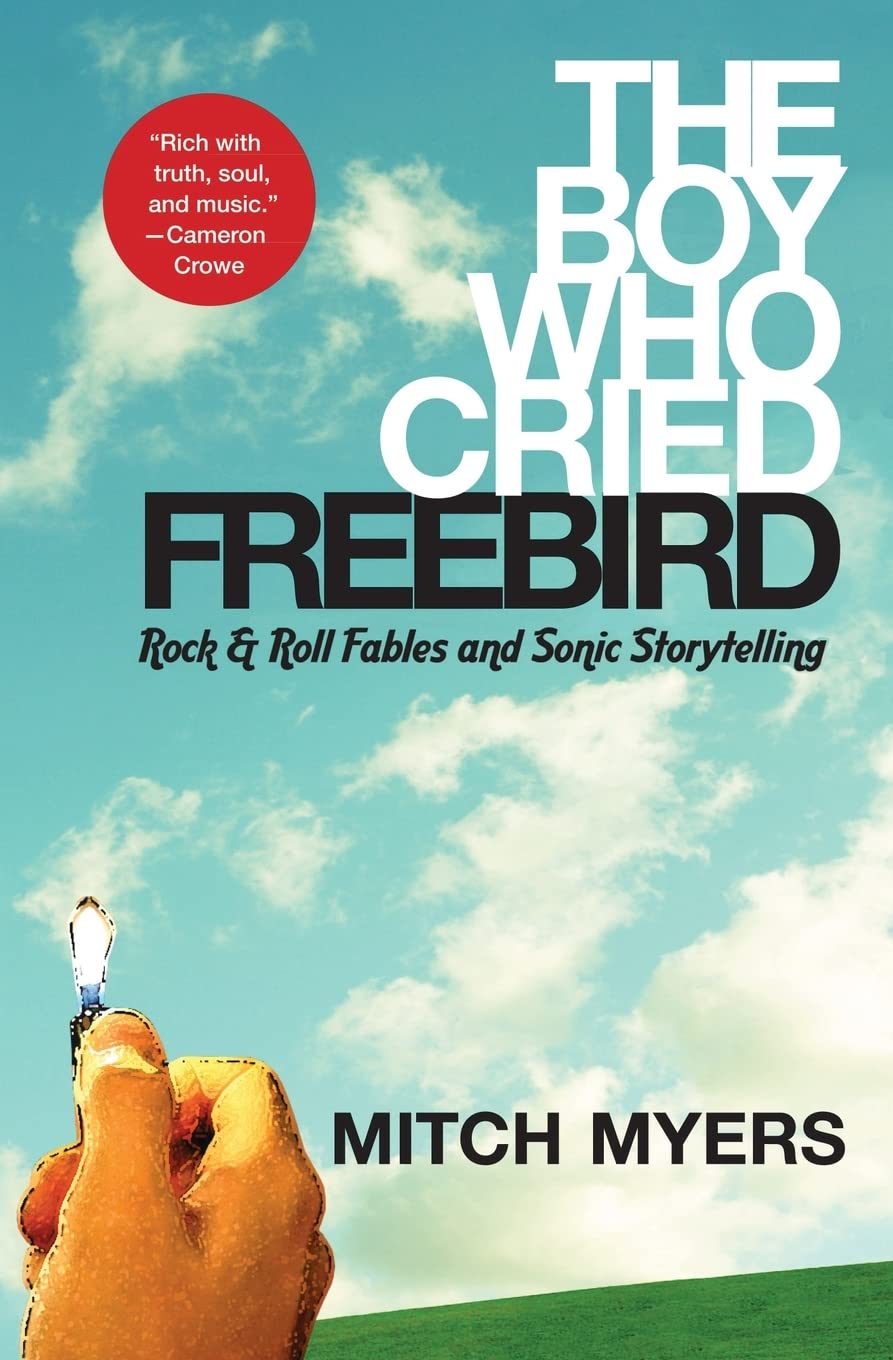
The Boy Who Cried Freebird: Rock & Roll Fables and Sonic Storytelling – An Insightful Collection of Music Essays and Memoirs from NPR on Pop Culture
$20.99
by Mitch Myers



Wedding the American oral storytelling tradition with progressive music journalism, Mitch Myers' The Boy Who Cried Freebird is a treatise on the popular music culture of the twentieth century. Trenchant, insightful, and wonderfully strange, this literary mix-tape is authentic music history . . . except when it isn't. Myers outrageously blends short fiction, straight journalism, comic interludes, memoirs, serious artist profiles, satire, and related fan-boy hokum—including the classic stories he first narrated on NPR's All Things Considered . Focusing on iconic recordings, events, communities, and individuals, Myers riffs on Deadheads, sixties nostalgia, rock concert decorum, glockenspiels, and all manner of pop phenomena. From tales of rock-and-roll time travel to science fiction revealing Black Sabbath's power to melt space aliens, The Boy Who Cried Freebird is about music, culture, legend, and lore—all to be lovingly passed on to future generations. “Chicago’s hyperliterate answer to Lester Bangs writes straightforward criticism in addition to trippy time-travel Grateful Dead adventures.” - Time Out Chicago “Dr. Myers can tell a story...When you read his fiction, you understand the facts.” - Bob Boilen Director, All Things Considered “He is one of my favorite living storytellers.” - Dave Marsh Author of THE HEART OF ROCK & SOUL: The 1001 Greatest Singles Ever Made “Mitch truly lives within the music.” - Jason Koransky Editor, DownBeat “Mitch’s ‘Rock & Roll Fables’ are departures from the norm, alternately fresh, smart and unique.” - Steve Bloom Editor, High Times “Mitch Myers has an agile mind and a deft pen.” - David Wally, author of NO COMMERCIAL POTENTIAL: The Life and Times of Frank Zappa and TEENAGE NERVOUS BREAKDOWN: Music and Politics in the Post-Elvis Age “…Tasty musical goodness…Smashing.” - Kirkus Reviews “...like an extraordinary jam session... a rhythmic nirvana that is as compelling as it is hilariously absurd.” - Blogcritics.org “...an insightful and entertaining look at popular music culture.” - Publishers Weekly “He’s a stone soul groove with stories most supersonic.” - Harp Magazine “Music journalism is a tricky animal to tame, but Myers proves he’s got the touch ...” - Booklist “Highly recommended.” - Library Journal “[The Boy Who Cried Freebird] is a much-needed and very welcome collection. - Chicago Sun-Times “Music fanatics will appreciate Myers’ expertise and imagination.” - Booklist “A wonderful writer...[Myers] has a wide range of influences, and he riffs on them all.” - St. Petersburg Times “...you will love every page of THE BOY WHO CRIED FREEBIRD.” - musicangle.com Wedding the American oral storytelling tradition with progressive music journalism, Mitch Myers' The Boy Who Cried Freebird is a treatise on the popular music culture of the twentieth century. Trenchant, insightful, and wonderfully strange, this literary mix-tape is authentic music history . . . except when it isn't. Myers outrageously blends short fiction, straight journalism, comic interludes, memoirs, serious artist profiles, satire, and related fan-boy hokum—including the classic stories he first narrated on NPR's All Things Considered . Focusing on iconic recordings, events, communities, and individuals, Myers riffs on Deadheads, sixties nostalgia, rock concert decorum, glockenspiels, and all manner of pop phenomena. From tales of rock-and-roll time travel to science fiction revealing Black Sabbath's power to melt space aliens, The Boy Who Cried Freebird is about music, culture, legend, and lore—all to be lovingly passed on to future generations. Mitch Myers is a writer, historian, and psychologist based in Chicago and New York City. His unique pop commentaries have been broadcast on NPR's All Things Considered and published in a variety of journals, magazines, and websites. He also maintains the Shel Silverstein Archive in Chicago. The Boy Who Cried Freebird Rock & Roll Fables and Sonic Storytelling By Mitch Myers HarperCollins Publishers, Inc. Copyright © 2008 Mitch Myers All right reserved. ISBN: 9780061139024 Chapter One River Deep A few years ago, I was in Los Angeles and found myself at a quiet bar in the middle of the afternoon. There were just two guys shooting pool and an older fellow drinking by himself. The older fellow had long sideburns and wore a fringed leather jacket. He told me that he was a studio musician who'd played on a lot of recording sessions during the 1960s. "Wow," I said. "That sounds exciting. What instrument do you play?" "Glockenspiel," he answered. "Glockenspiel?" I barely contained my sarcasm. "Man, you must have sat in on some pretty heavy sessions." The musician became stern, "Listen kid, you think you're smart? Let me tell you something, I worked on one of the greatest recording sessions of all time. Have you ever heard the song 'River Deep, Mountain High,' produced by Phil Spector?" "Sure," I said. "Ike and Tina Turner recorde